

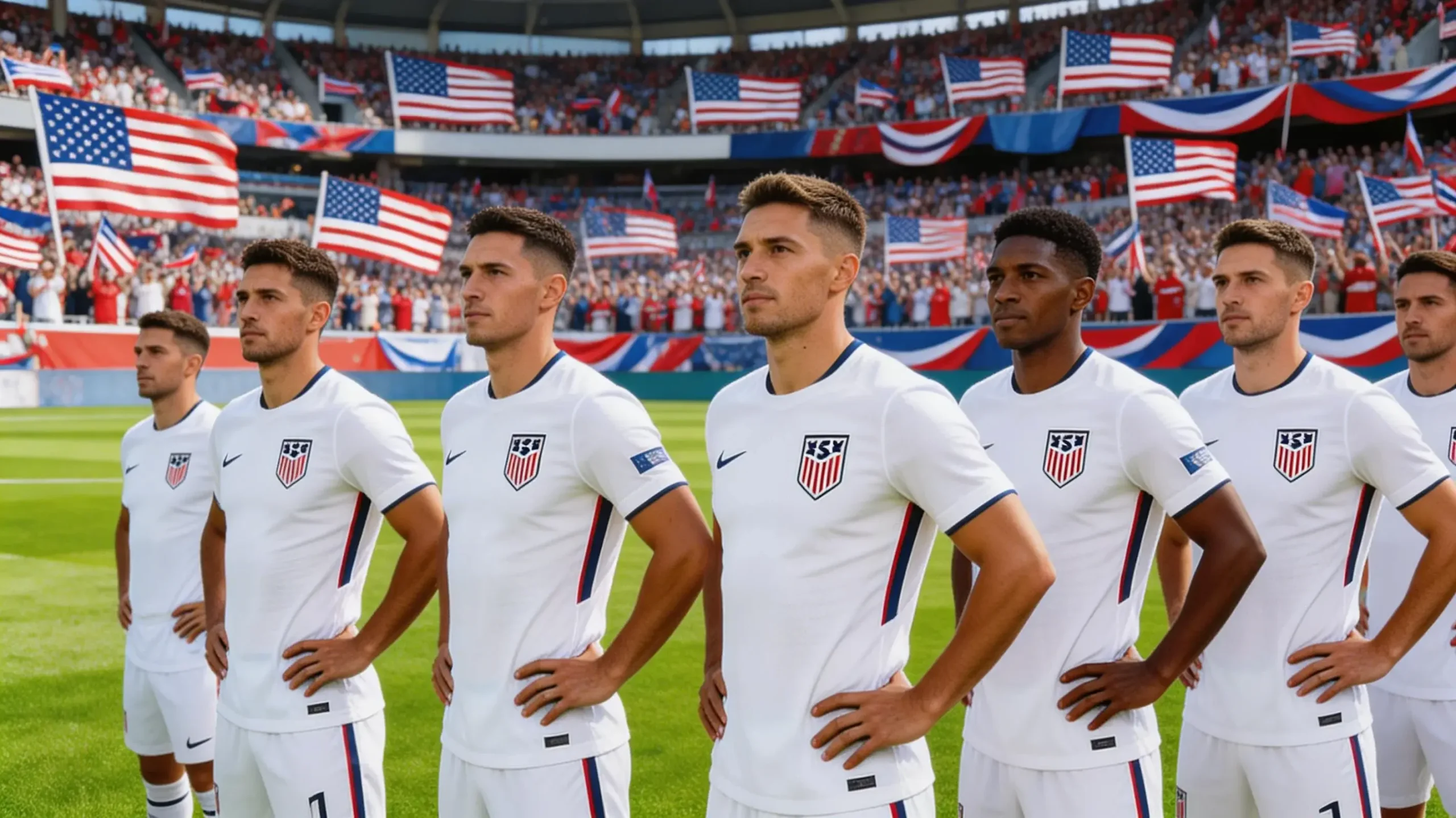
The last time the United States hosted a World Cup, in 1994, American soccer barely existed as a mainstream sport. No Major League Soccer, limited professional infrastructure, and a national team that qualified as hosts with little expectation of advancement. Thirty-two years later, soccer’s American footprint has transformed beyond recognition – and so have expectations for the USMNT in 2026. This isn’t a participation trophy anymore. Playing on home soil, with the deepest talent pool American soccer has ever produced, the United States enters as genuine contenders for a tournament result that would have seemed delusional a generation ago.
The home tournament factor deserves immediate emphasis because it shapes every betting calculation about American prospects. Eleven of sixteen venues sit on US soil. The crowd energy, the familiar conditions, the absence of international travel – these advantages accumulate across seven potential matches in ways that neutral-site tournaments can’t replicate. From a betting standpoint, the question isn’t whether home advantage exists but how significantly to weight it when assessing American odds.
Home Soil Advantage
The statistical case for host nation advantage in World Cup football is overwhelming. Since 1930, host nations have won six of 22 tournaments – a 27% rate that far exceeds what talent assessment would predict. Beyond outright victories, hosts consistently outperform their pre-tournament odds: South Korea’s 2002 semifinal run, Russia’s 2018 quarterfinal appearance, France’s 1998 triumph on home soil. The pattern holds even when adjusting for squad quality.
The United States benefits from specific home advantages that other host nations haven’t possessed. The venue spread across American geography creates travel demands for opponents while the US can base strategically. The time zones work against European powers accustomed to different schedules. The crowd composition will be overwhelmingly American regardless of opponent, creating hostile atmospheres for visiting teams that neutral venues don’t produce.
The climate factor particularly advantages Americans. June and July temperatures in Houston, Dallas, and Miami create conditions that European and South American players find challenging. The US squad includes players from MLS who understand American summer conditions, while European-based Americans have had years to adapt. This edge matters most in match second halves and extra time, when fatigue amplifies environmental factors.
The co-host dynamic with Canada and Mexico slightly dilutes American home advantage compared to single-host tournaments. Some US group matches might occur in Canadian or Mexican venues depending on draw, and the later rounds include matches outside American territory. Still, the majority of critical matches will occur in the United States with American crowds creating advantages that pure away matches wouldn’t offer.
For betting purposes, I’m adding approximately 5-10% to American probability estimates compared to neutral-site assessment. This adjustment reflects the combination of crowd advantage, logistical familiarity, and historical host nation performance. Whether the betting markets have fully incorporated this adjustment determines where value exists in USMNT-related positions.
USMNT’s Golden Generation
American soccer discourse has applied “golden generation” labels to previous squads that didn’t deliver on the promise. The 2026 group differs because the evidence supporting the label comes from European performance rather than domestic hope. Christian Pulisic, Weston McKennie, Tyler Adams, Giovanni Reyna – these players have contributed at Champions League level rather than simply projecting potential.
The developmental pipeline that produced this generation began with conscious investment in youth systems and European pathways. Previous American generations relied on college soccer followed by MLS, with occasional European moves for exceptional talents. The current generation reversed this model – players moved to European academies as teenagers, developed in competitive environments that MLS couldn’t provide, and earned professional minutes before traditional American players would have finished college.
The depth behind the established names continues expanding. Yunus Musah’s Valencia and then Milan development, Ricardo Pepi’s European striker progression, Timothy Weah’s Juventus tenure – these players provide quality that previous American squads lacked. The bench options for 2026 exceed what started for American teams in previous tournaments.
The age profile optimizes for 2026 specifically. Pulisic at 27, McKennie at 27, Adams at 26 – the core reaches physical peak precisely during the home tournament. Younger options like Musah at 23 and Pepi at 23 provide energy that complements experience. This generational timing creates a specific window where American quality aligns with home advantage – a combination unlikely to recur for decades.
The ceiling question involves whether this talent translates to knockout round performance against elite opponents. American success against European powers in friendlies and Nations League provides limited evidence. The 2022 World Cup showed competitiveness (draw against England, close loss to Netherlands) without breakthrough victory. Whether 2026’s home environment elevates American performance against tournament favorites remains the central unknown in their odds assessment.
The European club experience matters specifically for tournament football. These players understand the pressure of knockout matches, the tactical discipline required against elite opponents, and the mental demands of must-win situations. Previous American generations faced these challenges without adequate preparation. The 2026 squad enters with Champions League experience, relegation battles, and title races that provide psychological foundation for World Cup pressure.
Christian Pulisic – Captain America
The American soccer system has produced exactly one genuine world-class player, and Christian Pulisic carries that burden with awareness of what it means. His AC Milan resurgence after Chelsea struggles established that his Borussia Dortmund breakthrough wasn’t anomaly – Pulisic performs at elite European level when the system suits his talents.
The playing profile creates specific value in tournament football. Pulisic’s dribbling and pace on the wing generate chances against defensive opponents. His improved finishing converts those chances at rates that previous seasons didn’t show. His experience in high-pressure environments – Dortmund title races, Champions League knockouts – provides composure that younger American players are still developing.
The captain’s armband formalized what was already true: Pulisic leads this generation. His personality combines competitive intensity with team-first mentality that American locker rooms have historically lacked. Whether that leadership translates to knockout-round performance when tournament pressure peaks will define his legacy in American soccer history.
The individual markets around Pulisic offer interesting angles. Tournament top scorer for USA at around -150 reflects his central role in American attacking patterns. Golden Boot finish at approximately +2500 provides longer odds for a genuine scoring threat if America advances deep. Anytime scorer in specific matches captures his consistent involvement without requiring outright victory.
The injury history creates concern that can’t be ignored. Pulisic has missed significant time throughout his career with various muscular issues. A tournament requiring seven matches across four weeks tests durability differently than club seasons with rotation options. If Pulisic remains healthy throughout, American ceiling rises significantly. If he misses crucial matches, their attacking patterns become less predictable and less dangerous.
Squad Depth Analysis
Beyond the established names, American squad composition for 2026 involves selection decisions that previous generations didn’t face. The talent pool has expanded enough that genuine competition exists for positions that once relied on limited options.
Central midfield showcases this depth evolution. Adams provides defensive reliability when healthy, his Leeds United and then Bournemouth career demonstrating quality that anchors midfields. McKennie’s Juventus tenure established him at elite level despite positional questions about his best role. Musah’s development from Valencia prospect to Milan contributor adds different qualities – the ball-carrying and dribbling that neither Adams nor McKennie prioritize.
The attacking positions feature genuine alternatives. Weah’s versatility across the front line provides tactical flexibility. Reyna’s creative ability when healthy creates patterns that American teams have historically lacked. Brenden Aaronson, despite a challenging Premier League spell, offers energy and pressing that suit certain opponents. The striker situation – Pepi’s development, Josh Sargent’s Norwich form, Folarin Balogun’s international choice – provides options that play differently.
Defensive concerns remain despite overall squad improvement. The center-back position lacks the European experience that midfield and attack possess. Chris Richards’ sporadic playing time, Cameron Carter-Vickers’ Scottish level, Miles Robinson’s MLS base – these represent the weakest position group relative to American ambitions. How this defensive foundation performs against elite attacking talent determines whether American advancement continues beyond quarterfinals.
The goalkeeping situation has settled on Matt Turner after years of position battles. His Arsenal backup role limits match experience but provides training environment exposure. Ethan Horvath offers experienced alternative. The position represents solid rather than exceptional quality – adequate for knockout progression but potentially exposed against elite finishing.
The manager’s squad management across seven potential matches tests American depth differently than 32-team tournaments required. Rotation possibilities exist without significant quality drop – a statement that couldn’t apply to previous American World Cup squads. This depth advantage increases importance of tactical flexibility and substitution timing that exploits tired opponents.
Group D Preview
The draw places United States in Group D alongside Paraguay, Australia, and Türkiye. This composition presents manageable challenges with enough quality that comfortable advancement shouldn’t be assumed.
Paraguay arrives from CONMEBOL qualification, their South American toughness creating different challenges than European technical opponents. The defensive organization and counter-attacking threat that characterize Paraguayan football could frustrate American attacking patterns. Expect a physical, contested match where individual American quality might struggle against collective Paraguayan resistance.
Australia’s Socceroos have established themselves as consistent World Cup participants, their 2022 Round of 16 appearance demonstrating capability that their ranking undersells. The European-based core provides technical quality, while the team’s defensive structure limits opponents despite lacking elite individual talent. The USA-Australia match could prove more competitive than betting markets suggest.
Türkiye represents the group’s most talented third opponent. Their Euro 2024 quarterfinal run, with young talents emerging alongside experienced performers, established them as genuine European contenders. Against the United States, Türkiye provides the sternest group-stage test – a match that could determine group positioning with knockout implications.
The scheduling sequence affects American group stage approach. The specific order of opponents determines whether US can rotate for a secured-qualification scenario or must maintain intensity throughout. Home venue assignments for American matches provide additional advantages that group stage betting should incorporate.
Group D betting: USA -200 to top the group reflects home advantage but may slightly overstate certainty given Türkiye’s quality. USA to advance at -500 appropriately prices near-certain advancement without offering value. The interesting positions involve match totals and margins – USA covering spreads against Paraguay and Australia at reasonable prices, while the Türkiye match presents more competitive dynamics.
The venue assignments within Group D affect American preparation advantages. Playing group matches at familiar US stadiums while opponents travel between cities creates cumulative benefits that compound across three matches. The specific cities – their altitudes, climates, and crowd compositions – all favor American players who understand these environments. This logistical advantage supplements pure football quality in ways that Group D betting should incorporate.
USA World Cup Odds
The outright market prices United States between +1200 and +2000, reflecting both their talent limitations relative to elite nations and their home advantage. The implied probability of 5-8% captures a team capable of advancement but facing substantial challenges against established powers.
I find the price range appropriate rather than dramatically mispriced. American talent genuinely trails Argentina, France, Brazil, and England – the players simply haven’t reached equivalent European levels. But the home advantage closes some of that gap, and tournament variance means American deep runs are plausible even against technically superior opponents.
The value in American markets involves specific scenarios rather than outright victory. USA to reach quarterfinals at approximately +100 offers genuine value given home advantage through group and Round of 32 stages. The path to quarterfinals likely features beatable opponents – this progression price undersells American probability of reaching that stage.
USA to reach semifinals at approximately +300 becomes the higher-variance position that captures American ceiling outcomes. If the bracket draw provides favorable matchups through quarterfinals, American advancement probability increases substantially. At +300 implied probability of roughly 25%, the semifinal position offers value if you weight home advantage appropriately.
The group winner position at -200 deserves scrutiny based on Türkiye’s quality. If that match occurs late in the group stage with positioning implications, American dominance isn’t guaranteed. For group stage betting, individual match positions may offer better value than group outcome markets.
Betting on the USMNT
American betting markets require understanding how home advantage manifests across different bet types. The opportunities exist in positions that leverage American strengths while avoiding exposure to their limitations.
Match totals in American games trend toward moderate scoring rather than extremes. The USMNT doesn’t dominate possession in ways that produce 4-0 and 5-0 margins, but they also defend well enough to prevent high-scoring affairs against most opponents. Under 3.5 goals at reasonable prices captures this tendency in most American matches.
American crowds create atmospheres that affect opponents differently than players. First-half American leads at approximately +140 in group stage matches capture how crowd energy and environmental advantage manifest most strongly in match openings before opponents adjust. This edge diminishes against elite opponents who handle hostile environments regularly.
Avoid American clean sheet bets against quality attacking opponents. The defensive structure lacks the elite center-back quality that produces consistent shutouts. Conceding to Paraguay’s counters or Türkiye’s talented attackers represents realistic probability that clean sheet prices don’t adequately reflect.
The knockout round approach should emphasize progression over scorelines. American advancement from Round of 32 and potentially Round of 16 at individual match prices compounds expected value better than accumulator positions that require multiple correct predictions. Building ladder positions – advance from R32 at one price, then R16 at another – captures American ceiling without requiring championship victory.
Pulisic-related individual markets mentioned earlier deserve emphasis as American best betting opportunities. His goal involvement in American patterns creates scoring probability that team-level bets don’t capture. Pulisic anytime scorer in multiple matches at compounded prices offers expected value that outright American positions can’t match.
USA World Cup History
American World Cup history features a single memorable run surrounded by qualifications and early exits. The 2002 quarterfinal appearance remains the high-water mark that 2026 seeks to exceed.
That 2002 tournament in Korea and Japan showcased what American soccer could achieve under specific circumstances. Victories over Portugal (3-2) and Mexico (2-0 in knockout round) demonstrated capability that previous American teams hadn’t shown. The quarterfinal loss to Germany (1-0) came on a controversial non-called handball – a margin that suggested American quality approached elite levels.
The subsequent tournaments produced disappointment relative to 2002’s benchmark. The 2006 group-stage exit, 2010’s Round of 16 loss to Ghana, 2014’s Round of 16 loss to Belgium in extra time – consistent patterns of reaching knockout rounds without advancement. The 2018 failure to qualify represented American soccer’s lowest point in decades.
The 2022 Qatar tournament provided context for 2026 expectations. Drawing England, losing narrowly to Netherlands in the Round of 16 – this performance showed competitiveness without breakthrough. The young squad gained tournament experience that 2026 benefits from directly. Those players know what World Cup pressure feels like.
The 1994 host tournament offers limited comparison because American soccer has transformed so completely. That squad featured players primarily from domestic leagues with minimal European experience. The current generation’s European development creates different expectations and capabilities. The 1994 Round of 16 exit to Brazil came against opponents that seemed from different sporting universes – that gap has narrowed substantially.
Realistic Expectations
American expectations for 2026 span from national championship dreams to more measured assessments of probable outcomes. Understanding the realistic range helps calibrate betting positions appropriately.
The floor for the United States involves group stage exit – a scenario that would represent catastrophic failure for a host nation. Given the Group D composition and home advantages, this outcome probability falls below 10%. American baseline performance should involve comfortable group advancement and at least competitive Round of 32 match.
The realistic ceiling involves semifinal appearance. Reaching this stage requires beating opponents that American quality should handle (Group D, Round of 32 likely opponent) plus one victory against tougher opposition. The quarterfinal matchup determines whether this ceiling becomes achievable – facing a beatable opponent opens the path, while drawing Argentina or France likely ends the run.
Tournament victory represents long-shot territory that betting markets appropriately price. American talent simply doesn’t match the elite tier’s quality. Home advantage closes gaps but doesn’t eliminate them. The +1500 range for outright American victory reflects realistic probability – not zero, but requiring variance that shouldn’t form core betting strategy.
My projection for USA: Round of 16 appearance with approximately 85% probability, quarterfinal at 55%, semifinal at 25%, final at 10%, tournament victory at 4%. These numbers slightly exceed market-implied probability for middle stages while agreeing with outright championship odds. The value exists in quarterfinal and semifinal progression bets where home advantage isn’t fully priced.
The bracket draw will clarify American value propositions. If the knockout path avoids elite European powers until semifinals, American progression prices become more attractive. Wait for draw confirmation before committing to specific knockout positions. The World Cup teams analysis helps identify which matchups favor American advancement and which present insurmountable challenges.
