

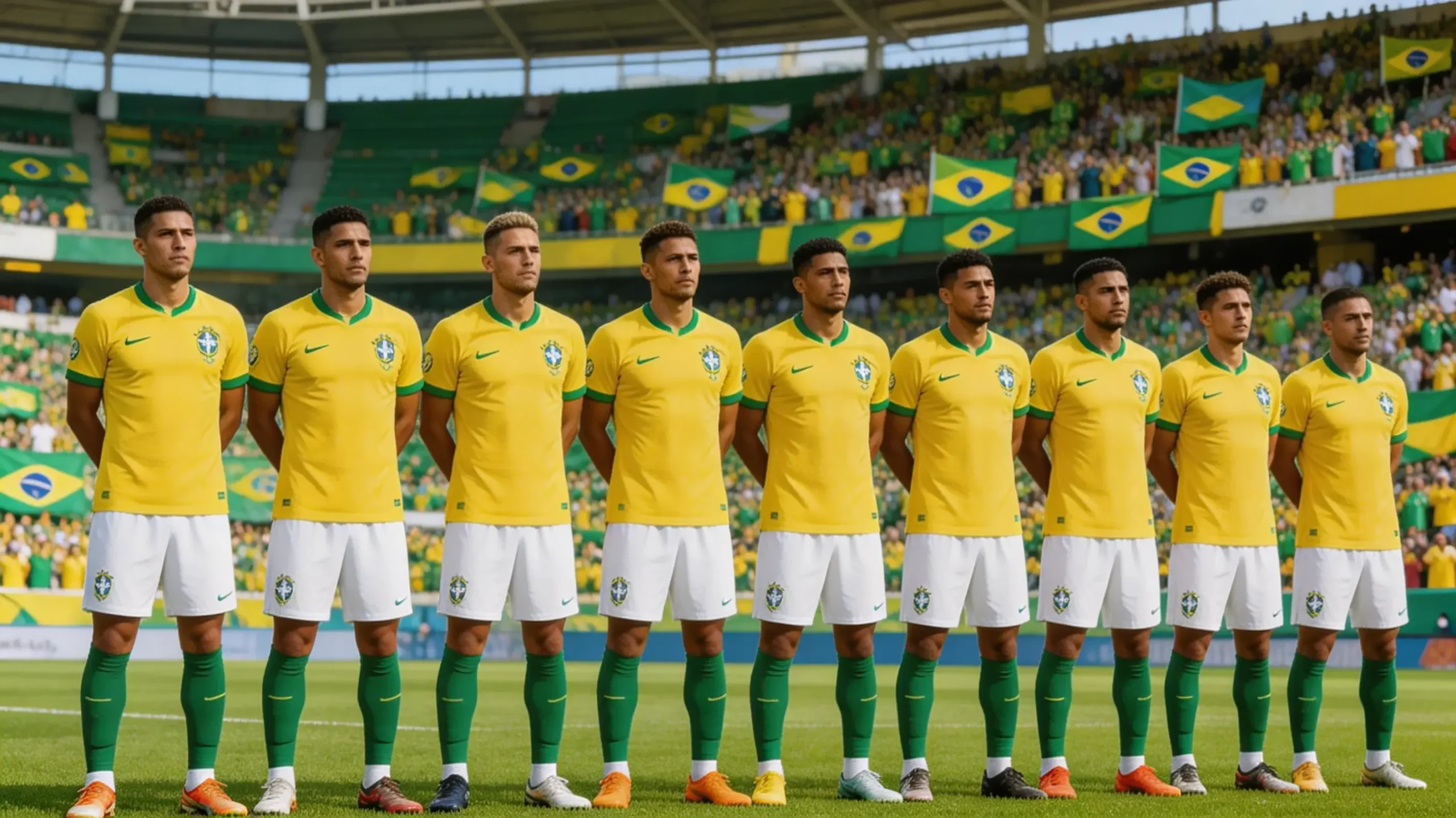
Five World Cup titles. Nine appearances in the final. The most successful nation in tournament history – and yet Brazil enters 2026 carrying wounds from consecutive quarterfinal exits that have shaken the Seleção’s self-image. The Croatia penalty shootout loss in 2022 followed Germany’s 7-1 humiliation in 2014, creating a crisis of confidence that new management must address before June arrives. I’ve tracked Brazil through three World Cup cycles now, and this squad possesses the individual talent to win the tournament while simultaneously carrying systemic problems that could produce another early exit.
The betting markets price Brazil as second or third favourites depending on the book, typically sitting between +550 and +700 to win their sixth title. That range feels appropriate – neither value nor overpriced. What interests me more are the specific markets where Brazil’s strengths and weaknesses create edge opportunities: group stage totals, player props, and advancement betting where Brazil’s group draw affects probability calculations.
CONMEBOL Qualification
I expected Brazil to cruise through South American qualifying. The reality proved messier – a campaign marked by inconsistent performances, managerial changes, and results that suggested fundamental problems beyond any tactical system.
Brazil finished qualifying in fourth position, a placement that would have caused national outrage a generation ago. The 18-match campaign included losses to Argentina, Uruguay, and Colombia at home – results that no Brazilian squad should accept. Away victories papered over domestic struggles, but the underlying numbers showed a team that created fewer chances and conceded more goals than their historical standard.
The positive interpretation: World Cup preparation matters more than qualification performance. Germany looked unconvincing before winning in 2014. Spain struggled through qualifying before their 2010 triumph. Brazil’s individual talent – Vinicius Jr., Rodrygo, Raphinha in attack – provides a ceiling that qualification results can’t diminish. The managerial change mid-cycle allowed new ideas to develop before the tournament pressure arrives.
The concerning interpretation: systemic issues don’t disappear on demand. Brazil’s defensive organization looked vulnerable throughout qualifying, and the midfield transition between defence and attack – historically a Brazilian strength – functioned poorly across multiple managers. Neymar’s injury absences exposed a creative dependency that the current squad hasn’t resolved.
For betting purposes, I’m treating Brazil as a squad with elite individual talent and questionable collective function. That profile suits certain markets (player props, totals) better than others (outright winner, clean sheet props).
Brazil’s Current Squad
Raw talent? World-class. Defensive solidity? Questionable. Creative midfield depth? Genuinely concerning. The Brazil squad for 2026 presents contradictions that make tournament projection challenging.
The forward line includes players any national team would envy. Vinicius Jr. has established himself as one of the world’s three best players, combining dribbling ability, goal threat, and big-match mentality that separates elite performers from talented players. Rodrygo provides similar quality with different attributes – more of a finisher than a creator, but capable of deciding matches individually. Raphinha contributes Premier League-proven consistency from the right flank.
Behind the attack, problems emerge. Brazil’s midfield lacks the controlling presence that characterized their greatest teams – no Casemiro in his prime, no Fernandinho providing the shield that allows creative players freedom. Bruno Guimaraes offers quality but plays a different role than the position requires. Paqueta brings creativity but defensive indiscipline. The balance feels wrong, and qualification results confirmed the imbalance.
Central defence combines experience with uncertainty. Marquinhos remains the anchor – a Champions League level defender who provides leadership and aerial dominance. His partners have rotated frequently without establishing reliability. Gabriel Magalhaes from Arsenal pushes for starts but has shown vulnerability against elite forwards. The full-back positions feature attacking quality (Danilo, emerging options on the left) but defensive questions that sophisticated opponents can exploit.
Goalkeeper Alisson provides genuine world-class security – perhaps Brazil’s most reliable performer across the squad. His shot-stopping and distribution anchor whatever defensive system the manager implements. Ederson offers elite backup, creating goalkeeping depth that few nations can match.
Overall squad assessment: capable of beating any team on talent alone, vulnerable to opponents who can disrupt Brazil’s rhythm and exploit defensive transitions. That profile produces high variance outcomes – brilliant one match, frustrating the next. Betting strategy should account for this unpredictability.
Key Players to Watch
Vinicius Jr. enters this World Cup as the best player Brazil has produced since Ronaldo’s prime. His 2023-24 campaign included Champions League glory, La Liga title, and individual performances that justified Ballon d’Or consideration. The question isn’t whether Vinicius can perform at the World Cup – he can. The question is whether Brazil’s system maximizes his impact.
At Real Madrid, Vinicius operates within a structure that provides defensive cover for his attacking adventures. Brazil’s qualification campaigns showed less organizational protection – Vinicius sometimes tracked back deeper than his club role requires, reducing his attacking threat. The managerial challenge involves balancing defensive responsibility across the squad so Vinicius can focus on match-winning moments.
His development since the 2022 World Cup shows maturity that should translate to tournament success. The raw pace and dribbling ability remain, but now combined with improved decision-making in the final third. Where young Vinicius might have attempted one too many touches, the current version releases the ball at optimal moments. This evolution makes him more dangerous in tournament football, where defensive organization typically exceeds club competition standards.
Rodrygo functions as the secondary attacking threat that Brazil needs. His ability to play across the front line provides tactical flexibility – he can deputize centrally if needed or stretch defences from wide positions. His World Cup experience (limited minutes in 2022) means the tournament’s pressure represents unfamiliar territory, but his Champions League final performances suggest big-stage mentality isn’t a concern.
The partnership between Vinicius and Rodrygo deserves particular attention. At Real Madrid, they’ve developed understanding that club teammates rarely achieve at international level. Their movement patterns, combination play, and spatial awareness transfer directly to the national team setup. When both start together, Brazil’s attacking threat multiplies beyond what either provides individually.
In midfield, Bruno Guimaraes carries the system’s hopes. His Premier League development at Newcastle transformed him from promising talent to complete midfielder – winning aerial duels, progressing the ball under pressure, arriving in the box for goals. If Brazil’s tournament goes well, Guimaraes will have established himself as the midfield conductor that qualification campaigns lacked.
Raphinha’s status as a potential Golden Boot outsider interests me. At +5000 to +6000, his odds reflect Brazil’s expected deep tournament run and his role as primary penalty taker. If Brazil reaches the semifinals (their base expectation), Raphinha could play six or seven matches with spot-kick opportunities in each. The value exists if you believe Brazil advances and Raphinha maintains his set-piece responsibilities.
Tactical Setup and System
Brazilian football philosophy has evolved through national trauma. The 7-1 Germany defeat in 2014 killed the romantic notion that pure attacking football would overcome organizational deficiencies. Modern Brazil attempts to balance traditional flair with European-style structure – a combination that qualification campaigns showed remains unresolved.
The likely formation for 2026 is a 4-2-3-1 or 4-3-3 that prioritizes width and direct attacking. Vinicius Jr. operates from the left, cutting inside onto his stronger right foot. Raphinha provides opposite-wing balance with crossing ability and work rate. The central striker role remains somewhat undefined – Brazil lacks a traditional number nine who commands attention and creates space for runners.
Defensively, the system asks fullbacks to provide attacking width while midfielders cover the space they vacate. This approach worked brilliantly when executed correctly but collapsed against quality opposition who exploited the gaps. Croatia’s 2022 win came partly through targeting Brazil’s defensive transitions – a vulnerability that hasn’t fully resolved.
Set pieces represent both opportunity and concern. Brazil’s attacking set-piece threat has declined from historical standards – fewer aerial presences in the box, predictable routines that organized defences handle. Defensive set pieces showed vulnerability throughout qualifying, with goals conceded from corners and free kicks at rates that suggest structural problems.
For betting, the tactical profile suggests Brazil will dominate possession and territory against weaker opponents but struggle to break down organized defensive blocks. Group stage matches against Scotland and Haiti should produce comfortable victories with high goal counts. The Morocco match and knockout rounds present different challenges where Brazil’s defensive vulnerabilities matter more.
Group C – Brazil’s Draw
Morocco, Scotland, Haiti – a draw that Brazilian supporters should embrace. No obvious danger beyond Morocco, and even the Atlas Lions represent manageable opposition for a squad of Brazil’s quality.
Morocco earned respect through their 2022 semifinal run, becoming the first African nation to reach that stage. Their defensive organization frustrated Spain and Portugal en route before Croatia ended their journey. They’ll provide the stiffest group stage test for Brazil, potentially producing a tight match where single moments decide outcomes.
Scotland returns to World Cup football after missing 2022. Their qualification showed tactical progress under Steve Clarke – compact defensive shape and organized counter-attacking that troubled bigger nations in qualifying. Against Brazil, they’ll park deep and hope for set-piece opportunities. The historical record (Scotland has never beaten Brazil in competitive matches) suggests the gap remains substantial.
Haiti makes their first World Cup appearance since 1974, representing Caribbean football’s resurgence under the expanded 48-team format. Their qualification journey produced moments of quality but exposed fundamental limitations against CONCACAF’s better teams. Brazil should win this match by margins that boost goal difference.
Group C betting: Brazil -400 to win the group feels accurately priced – too short for value but reflecting genuine probability. More interesting markets target specific matches. Brazil over 3.5 goals versus Haiti at approximately even money offers better expected value than outright group markets.
Brazil World Cup Odds
The outright market prices Brazil between +550 and +700 depending on the sportsbook and timing. That range positions them as second or third favourites behind France and alongside England in most books. The implied probability (12-15%) reflects Brazil’s talent ceiling while acknowledging the organizational concerns that qualification exposed.
I’m neither backing nor fading Brazil at current outright prices. The number feels appropriate – Brazil can win this tournament if everything clicks, and “everything clicking” happens at roughly the frequency these odds suggest. There’s no clear edge in either direction.
Where I find value involves Brazil’s expected path through the bracket. Winning Group C should produce a Round of 32 match against a third-placed finisher – likely from Group A or B. The Round of 16 then pits Brazil against Group D’s second place, potentially Australia or Turkey. This path to the quarterfinals is softer than most elite teams will face.
Brazil to reach semifinals at approximately -110 offers slight value given the draw. Their group presents no serious threats. Early knockout rounds should feature beatable opposition. The semifinal – likely against a European power – represents the true test. At -110 for semifinal appearance, you’re essentially betting Brazil beats Morocco and navigates a path to the final four that includes perhaps one genuinely difficult match.
Player markets deserve attention. Vinicius Jr. and Raphinha both appear in Golden Boot markets at odds that reflect Brazil’s expected deep run. If Brazil plays six or seven tournament matches, their primary scorers accumulate the opportunities needed to compete for scoring honours. I’m sprinkling small positions on both at +3000 or longer, treating these as tournament-correlated lottery tickets.
Betting Value on Brazil
The best Brazil betting angles avoid the well-analyzed outright markets and focus on specific situational opportunities that broader market attention overlooks.
Group stage totals provide consistent edge. Brazil’s matches against Haiti and Scotland should feature attacking dominance – multiple goals from a team pressing for group position against opponents who can’t sustain defensive organization for ninety minutes. Team totals for Brazil over 2.5 in these specific matches, if offered, will likely present value given Brazil’s attacking talent and the opposition quality.
The Morocco match creates different opportunities. Both teams possess quality attackers and defensive vulnerabilities. The total line for this match should sit around 2.5, with the over presenting slight value given both team’s profiles. Morocco proved they could score against elite defences in 2022 (Portugal, Belgium, Canada all conceded). Brazil’s defensive concerns suggest Morocco creates chances.
Avoid Brazil clean sheet props through the tournament. Their defensive organization hasn’t merited confidence even against weaker opponents. The qualifying campaign saw Brazil concede goals against Peru, Venezuela, and Colombia at home – teams that shouldn’t threaten an elite defence. Until demonstrated improvement appears in pre-tournament matches, clean sheet bets on Brazil represent poor value.
For knockout predictions, wait until the bracket crystallizes. Brazil’s value depends heavily on their specific path – if they face weaker opponents through quarterfinals, their advancement odds increase significantly. If the bracket places them opposite France or Germany early, the calculation changes.
World Cup History – 5-Time Champions
No nation’s World Cup history matches Brazil’s combination of success and expectation. Five titles (1958, 1962, 1970, 1994, 2002) establish a standard that every Brazilian squad carries as burden as much as inspiration.
The golden era produced football that still defines beauty in the sport. Pelé’s emergence in 1958, announcing himself to the world at seventeen years old with a semifinal brace against France and final goals against Sweden, established Brazil as football’s artistic standard. The back-to-back titles that followed – 1962 with Garrincha shouldering the creative burden after Pelé’s injury – proved the system transcended individual brilliance.
Then came 1970, the tournament that forever defined beautiful football. That Brazilian squad – Pelé at his peak, Jairzinho scoring in every match, Tostão and Rivelino providing creative support – played football that opponents couldn’t contain. The 4-1 final victory over Italy remains the gold standard for attacking football in World Cup history. Every Brazilian team since has been measured against that impossible benchmark.
The modern titles came differently. 1994’s squad won through defensive organization and Romario’s clinical finishing – effective but not beautiful in the traditional sense. 2002 combined Ronaldo’s redemption narrative with the reality of a golden generation reaching their collective peak. Ronaldo’s eight goals, including both final strikes against Germany, showed Brazil could dominate tournaments through individual excellence when system play faltered.
Recent history tells a different story. Since 2002, Brazil has reached one final (2006 quarterfinal exit), suffered home humiliation (2014’s 7-1 against Germany), and lost knockout heartbreakers (2022’s penalty defeat to Croatia). Twenty-four years without a title represents the longest drought in Brazilian football history. The pressure on this generation to end that drought grows with each passing tournament.
The 2014 trauma deserves examination because its psychological effects persist. Hosting the World Cup should have produced home advantage – instead, Germany’s systematic dismantling exposed organizational failures at every level. The first goal after 11 minutes, the second after 23, then four goals in six minutes before halftime ended. The nation watched in collective shock. That squad included several current staff members and influencers on the 2026 setup. Whether they’ve processed and learned from that failure affects current tournament mentality.
For betting purposes, history provides context rather than prediction. Past success doesn’t increase current probability – but past trauma might affect performance in pressure moments. The 2022 penalty shootout loss showed young Brazilian players struggling with tournament pressure in ways their predecessors didn’t. Whether that experience builds resilience or compounds anxiety remains to be seen.
The Seleção’s North American Challenge
Brazil faces a unique challenge at this World Cup: performing in a region where they’ve historically struggled. Their record in CONCACAF-hosted tournaments and friendlies shows less dominance than European or South American venues. The 1994 title came in America, proving success is achievable – but that squad featured Romario, Bebeto, and a defensive solidity this generation hasn’t matched.
The time zone adjustments matter more than casual observers realize. Brazil’s players come primarily from European clubs – Vinicius at Real Madrid, Guimaraes at Newcastle, Raphinha at Barcelona. They’ll travel to North America after European season conclusions, adapting to Eastern and Central time zones while processing Champions League and domestic finishes. The physical demands compound quickly in tournament football.
Group stage venues (likely spread across US stadiums) present unfamiliar environments. Artificial turf at some venues, extreme summer heat at others, crowd atmospheres dominated by neutral fans or opposing supporters – none of this resembles Brazil’s typical home advantage in São Paulo or Rio. The playing field levels when every team experiences similar displacement.
The expanded tournament format creates additional pressure. Forty-eight teams mean more matches, shorter recovery windows, and squad rotation demands that test depth in ways previous World Cups didn’t. Brazil’s bench strength – always an advantage in shorter tournaments – faces unprecedented examination across what could become seven matches over 39 days if they reach the final.
Fan support in North America presents an interesting dynamic. Brazilian diaspora communities in Miami, New York, and Los Angeles will provide vocal backing, but nowhere near the home-soil advantage they’d enjoy in South America. The counterbalance comes from neutrals who tend to support Brazilian football’s attacking traditions – the Seleção remains one of football’s most popular brands globally.
My projection for Brazil: semifinal appearance with approximately 55% probability, final appearance at 30%, tournament victory at 15%. These numbers align roughly with betting market implied probabilities, suggesting no dramatic mispricing. The value lies in specific match betting and player props rather than tournament progression markets. For comparisons with other contenders, the complete World Cup teams guide provides broader context.
The path to Brazilian glory requires solving problems that qualification campaigns exposed. If the defensive organization improves, if Vinicius Jr. receives adequate service from midfield, if the collective mentality handles knockout pressure better than 2022 – then Brazil’s individual talent can carry them to a sixth star. The question remains whether this generation can deliver what Brazilian football demands.
