

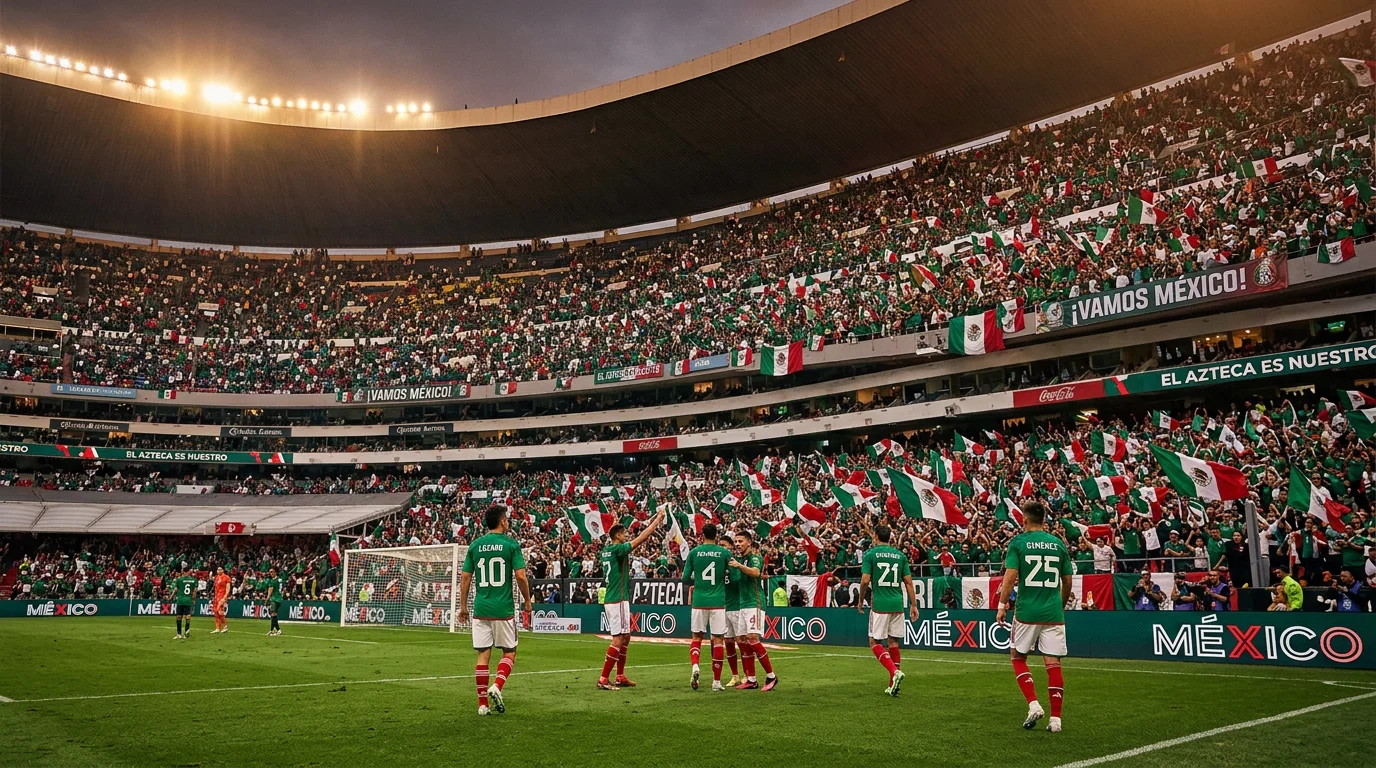
Seven consecutive World Cups. Seven consecutive Round of 16 exits. The pattern has become Mexican football’s defining narrative – consistent qualification followed by consistent elimination at precisely the same stage. El Quinto Partido – the fifth game, the one that takes Mexico beyond Round of 16 – has become national obsession bordering on trauma. World Cup 2026 offers Mexico the opportunity to break this curse on home soil, hosting the tournament for the third time and opening the competition at the iconic Estadio Azteca. The pressure of this moment exceeds anything Mexican football has faced.
From a betting perspective, Mexico presents a fascinating puzzle. Their floor is high – group stage exit for a co-host would represent catastrophic failure. Their ceiling remains genuinely unknown because they haven’t demonstrated knockout-round capability against elite opponents since 1986. The curse is real in the sense that consistent psychological patterns produce consistent results. Whether home advantage breaks this pattern determines Mexico’s value at current odds.
Opening Match and Host Duties
The Estadio Azteca will host the 2026 World Cup opening match – Mexico versus South Africa on June 11th. This assignment recognizes the venue’s unique place in football history: the only stadium to host two previous World Cup finals (1970 and 1986) will now host three World Cups total. The symbolism couldn’t be more significant for Mexican football.
Opening matches carry pressure that subsequent games don’t replicate. Every World Cup begins with scrutiny focused on a single fixture, global attention creating moments that resonate beyond the match itself. Mexico’s responsibility to deliver a spectacle while securing three points creates competing demands that affect team selection and approach.
South Africa provides a manageable opening opponent – tough enough to create genuine competition, not so strong that Mexican victory is uncertain. The Bafana Bafana qualified through CAF’s competitive process, demonstrating capability without threatening elite-level performance. For Mexico, the opening match objective involves comfortable victory with scorelines that build confidence for more challenging fixtures.
The host role extends beyond the opening match. Three Mexican venues – Estadio Azteca in Mexico City, Estadio BBVA in Monterrey, and Estadio Akron in Guadalajara – will host matches throughout the tournament. Mexican crowds at these venues create advantages for El Tri that away opponents won’t enjoy. The atmosphere at Azteca specifically generates pressure that affects opponents regardless of their preparation.
The opening match betting presents specific opportunities. Mexico -200 to defeat South Africa reflects heavy favoritism without offering value. More interesting positions involve match totals (over 2.5 at reasonable prices given opening-match attacking incentives), correct score markets, and first-half outcomes. Mexico leading at halftime prices around -130 capture their expected early pressure.
Breaking the Fifth Game Curse
Understanding El Quinto Partido requires acknowledging its psychological reality. Since 1994, Mexico has reached the Round of 16 in every World Cup and lost every Round of 16 match. The opponents have varied – Bulgaria, Germany, Argentina, Netherlands, Brazil, Argentina again – but the result hasn’t. This pattern transcends coincidence into territory where mental barriers become self-fulfilling.
The curse’s origins lie in the 1994 World Cup, when Mexico fell to Bulgaria on penalties in the Round of 16. Since then, the accumulating weight of history has created expectations of failure that affect player psychology. Each subsequent Round of 16 exit reinforces the narrative, making the next attempt harder rather than easier.
The 2026 tournament offers unique circumstances for breaking the pattern. Home advantage provides environmental comfort that away tournaments can’t replicate. The expanded format means more qualification paths – 32 teams advance from groups, creating different Round of 32 matchups that might provide more favorable opponents. The generational shift means younger players who haven’t personally experienced the curse, potentially free from its psychological weight.
Whether these factors actually overcome the curse remains unknown until tested. Mexico’s 2022 World Cup group-stage exit – their first since 1978 – might paradoxically help by breaking the consistent Round-of-16 pattern. The narrative changed, perhaps allowing different outcomes. Or the 2022 failure might have added embarrassment to the existing pressure, making 2026 more difficult.
For betting purposes, the curse affects how to approach Mexican progression markets. Betting on Mexico to advance from Round of 32 assumes the curse applies to Round of 16 specifically. If you believe home advantage breaks the pattern, progression bets through quarterfinals offer value. If you believe the psychological barriers persist regardless of venue, Mexican ceiling positions become less attractive despite favorable odds.
Mexico’s Current Squad
El Tri’s squad composition for 2026 reflects generational transition that hasn’t produced the star power that previous Mexican teams possessed. The established names have aged without clear successors emerging to replace them at equivalent levels.
The goalkeeping situation has evolved past Guillermo Ochoa’s decade of dominance. His performances through multiple World Cups provided stability that current options haven’t matched. The transition to younger alternatives creates uncertainty at a position where Mexican football has historically excelled.
The defensive structure relies on players whose club careers haven’t reached elite European levels. César Montes, Johan Vásquez, and their contemporaries perform adequately for Mexican standards but lack the pedigree of defenders from competing nations. This defensive quality gap concerns me more than any other position group – knockout football against quality opponents requires defensive reliability that El Tri might not possess.
Central midfield features Edson Álvarez as the established anchor, his West Ham career demonstrating capability that Mexico needs in crucial matches. Around Álvarez, the options involve players whose development trajectories haven’t reached the levels that Mexican media hoped for. The creative spark that previous generations possessed through players who could change matches hasn’t emerged consistently.
The attacking positions present similar concerns. Raúl Jiménez’s injury-affected career has limited his effectiveness compared to peak years. Santiago Giménez’s European development has been promising but inconsistent. Hirving Lozano’s pace and directness provide tactical options, but his finishing hasn’t reached levels that define star forwards. The collective quality is adequate, but the individual brilliance that decides knockout matches hasn’t emerged.
The bench depth reflects the overall squad composition – competent players without stars. Mexico can rotate throughout the tournament without dramatic quality drops, but the impact substitutions that change matches against tired opponents require quality they might lack. This depth limitation affects how to assess Mexican knockout probability.
The youth development pathway deserves attention for 2026 assessment. Mexican clubs have invested in academies that produce technically capable players, but the transition to European football hasn’t occurred at rates that Brazil, Argentina, or even USA now achieve. Most Mexican players develop in Liga MX, a competitive domestic league that nonetheless doesn’t provide the European exposure that tournament football demands. This developmental pathway limitation explains why Mexican talent discussions focus on potential rather than demonstrated elite-level performance.
The leadership structure within the squad has shifted with generational transition. Previous Mexican teams featured clear leaders whose experience guided younger players through tournament pressure. The current squad’s leadership dynamic remains less defined, creating questions about who provides composure when knockout pressure peaks. This intangible quality matters more than typical analysis acknowledges – someone must steady the team when curse pressure manifests.
Managerial Vision
Mexico’s managerial situation has historically involved cycles of foreign and domestic appointments, with varying results that haven’t solved the fundamental ceiling question. The manager overseeing 2026 faces pressure that few sporting contexts replicate – break the curse or become another name associated with failure.
The tactical approach will likely prioritize solidity over attacking adventure. Mexican tournament football has traditionally featured defensive organization designed to frustrate superior opponents before creating chances through counter-attacks or set pieces. This approach consistently produces group advancement and consistently fails in knockout rounds – whether the same approach serves 2026 depends on whether the problem lies in tactics or psychology.
The home advantage should influence tactical choices. Playing at Azteca against supportive crowds creates opportunities for more attacking football than away matches would allow. Whether Mexico’s manager exploits this environmental advantage or defaults to conservative approaches determines their attacking ceiling.
Squad management across a potentially seven-match tournament tests Mexican depth in new ways. The 48-team format creates scheduling demands that 32-team tournaments didn’t present. How rotation balances between preserving key players and maintaining match fitness affects Mexico’s condition for crucial knockout matches.
The managerial relationship with player psychology deserves attention given the curse’s reality. Some managers might acknowledge the pressure directly, attempting to defuse it through confrontation. Others might avoid the topic entirely, hoping distraction prevents psychological burden. Neither approach has succeeded previously – perhaps the combination of home advantage and generational transition requires an entirely different psychological strategy.
Group A Analysis
Mexico’s draw places them in Group A alongside South Korea, South Africa, and Czechia. This composition offers straightforward advancement with genuine competitive tests that reveal Mexican tournament form.
South Korea arrives as Asia’s most consistent World Cup performer, their 2002 semifinal run demonstrating ceiling capability that few Asian nations match. The European-based players provide quality that Mexican defenders must respect, while Korean pressing intensity creates challenges throughout ninety minutes. The Mexico-South Korea match represents the group’s defining fixture – the winner likely tops the group with favorable bracket positioning.
Czechia provides European organizational quality without elite individual talent. Their qualification through UEFA pathways demonstrated capability that Group A opponents should respect. Against Mexico, expect compact defending and direct attacking that tests Mexican defensive concentration. The technical quality gap favors Mexico, but Czechia’s structure could frustrate El Tri if attacking patterns don’t penetrate.
South Africa completes the group as African representatives whose qualification merit respect. Their quality level suggests Mexican dominance, but underestimating African opposition has historically produced upsets. The opening match significance adds pressure that subsequent fixtures against South Africa wouldn’t carry.
Group A betting: Mexico -180 to top the group reflects favoritism that South Korea’s quality partially challenges. The advancement price at -400 or shorter offers no value. Match-specific positions – Mexico margins against South Africa and Czechia, total goals in Mexico-South Korea – provide more interesting opportunities than group-level outcomes.
The venue assignments matter for Mexican group stage advantage. Playing at Azteca in Mexico City provides the most intense home atmosphere, while Monterrey and Guadalajara offer strong but slightly lesser support. How Mexican matches distribute across these venues affects the cumulative home advantage they enjoy. Group stage opponents traveling to Mexican altitude and conditions face challenges that don’t apply in US or Canadian venues.
Mexico World Cup Odds
The outright market prices Mexico between +3000 and +5000, reflecting both their consistent limitations and their home advantage. The implied probability of 2-3% captures a team that advances from groups consistently without demonstrating knockout capability against elite opponents.
I find these odds appropriate for outright purposes – Mexico’s talent simply doesn’t compare with elite-tier nations, and the psychological barriers are real rather than imaginary. Home advantage closes some gap, but winning a World Cup requires beating multiple top-tier opponents in knockout rounds, something Mexico hasn’t done since 1986.
The value in Mexican markets involves progression positioning. Mexico to reach quarterfinals at approximately +200 offers genuine consideration. Breaking the Round of 16 curse on home soil, with potentially favorable Round of 32 opponents, creates probability that +200 potentially undervalues. If you believe home advantage matters significantly, this progression bet captures Mexican ceiling without requiring them to beat multiple elite opponents.
Mexico to reach semifinals at +600 or longer becomes the higher-variance position. This requires not only breaking the curse but then winning another knockout match – a higher bar than quarterfinal appearance. The price reflects this difficulty appropriately without offering dramatic value.
Group stage bets offer steadier value. Mexico over 5.5 group points at reasonable odds captures expected dominance against manageable opponents. Mexico highest-scoring CONCACAF team at prices reflecting competition with USA creates interesting regional positioning.
Betting on El Tri
Mexican betting patterns require understanding their consistent strengths and limitations. The opportunities exist in positions that leverage home advantage while avoiding exposure to knockout limitations.
Group stage totals present consistent value. Mexican matches typically feature goals when they face opponents they should beat – their attacking approach against South Africa and Czechia should produce scoring. Over 2.5 in these fixtures at reasonable prices captures expected attacking output without requiring blowout margins.
Mexican crowd advantage creates first-half edges in home venues. The Azteca atmosphere specifically affects opponents in match openings before adjustment occurs. Mexico first-half leads at +130 to +150 in group stage matches capture this environmental advantage that diminishes against opponents experienced in hostile venues.
Avoid Mexican clean sheet bets even against weaker opponents. Their defensive structure allows chances that quality finishing converts. Against South Korea specifically, Korean attacking quality should produce at least one goal – Mexican defensive limitations surface against opponents who actually threaten.
The knockout round approach depends entirely on curse assessment. If you believe home advantage breaks the psychological barrier, Round of 32 advancement at heavy favorite prices becomes reasonable. If you believe the curse persists regardless of venue, avoiding knockout positions entirely makes sense. There’s no middle ground – either Mexico has genuine knockout capability in 2026, or they don’t.
Mexico World Cup Record
Mexican World Cup history features consistent qualification alongside consistent limitations. The record reflects a nation that belongs at football’s elite table without sitting at its head.
The 1970 World Cup on home soil produced Mexico’s best historical performance until then – quarterfinal appearance with a loss to Italy. That tournament established expectations that subsequent generations haven’t exceeded. The home advantage that 1970 demonstrated applies directly to 2026 analysis.
The 1986 World Cup, also on Mexican soil, reached quarterfinals before falling to West Germany on penalties. Hugo Sánchez and that generation represented Mexican football’s talent peak, performing at home with passionate crowds before falling short of ultimate stages. The pattern – home advantage extending capability without producing championship – could repeat in 2026.
The modern era since 1994 established the Round of 16 curse. Each tournament from 1994 through 2018 produced group advancement followed by knockout exit. The consistency became its own narrative, creating pressure that each generation inherited from predecessors.
The 2022 group stage exit broke the pattern in undesirable ways. Finishing behind Poland and Argentina on goal difference ended Mexico’s tournament at the earliest stage in modern history. Whether this failure makes 2026 harder (additional embarrassment) or easier (different psychological dynamic) remains debated.
The emotional investment of Mexican supporters creates unique tournament atmosphere. El Tri’s fanbase brings passion that affects both their team and opponents – the Azteca cauldron specifically generates pressure that neutral venues can’t replicate. This supporter culture has been consistent across tournament success and failure, suggesting the limitation lies in playing quality rather than environmental support. But 2026’s home tournament brings this passionate support to multiple venues, potentially creating advantages that away tournaments couldn’t provide.
Can Mexico Finally Break Through
The question facing Mexican football transcends ordinary tournament preparation. Can El Tri overcome psychological barriers that decades of consistency have established? The answer shapes every betting calculation about Mexican odds.
The optimistic case for Mexican breakthrough begins with circumstances. Home advantage in a co-hosted tournament provides support that away matches can’t replicate. The generational transition means younger players without personal curse experience. The expanded 48-team format creates more favorable potential matchups in knockout rounds. If any tournament offers Mexico opportunity to break the pattern, 2026 presents ideal conditions.
The pessimistic case acknowledges persistent limitations. Mexican talent development hasn’t produced world-class players in this generation – no modern equivalent to Hugo Sánchez or Cuauhtémoc Blanco. The defensive quality concerns that have limited previous generations remain unresolved. The psychological barriers might transfer regardless of individual player experience. Past performance predicts future results until demonstrated otherwise.
My projection for Mexico: Round of 32 appearance with approximately 95% probability, quarterfinal at 40%, semifinal at 15%, final at 5%, tournament victory at 2%. These numbers slightly exceed implied market probability for quarterfinal appearance, reflecting my belief that home advantage matters significantly for the Round of 32 match specifically. The value exists in quarterfinal progression at +200 ranges if you share this assessment.
The tournament represents a defining moment for Mexican football regardless of outcome. Breaking through to quarterfinals would validate decades of consistent qualification while demonstrating that the curse was circumstantial rather than inherent. Another Round of 16 exit – or worse, group stage elimination – would reinforce narratives about Mexican football’s limitations that another generation would inherit. The stakes extend beyond betting markets into national sporting identity.
The draw will determine Mexican value propositions. If Round of 32 provides beatable opponent, Mexican odds become more attractive. If they face elite opposition immediately after group stage, the curse likely continues regardless of venue. For understanding all World Cup teams in their context, Mexico represents the kind of consistent qualifier whose ceiling questions dominate their betting profile.
