
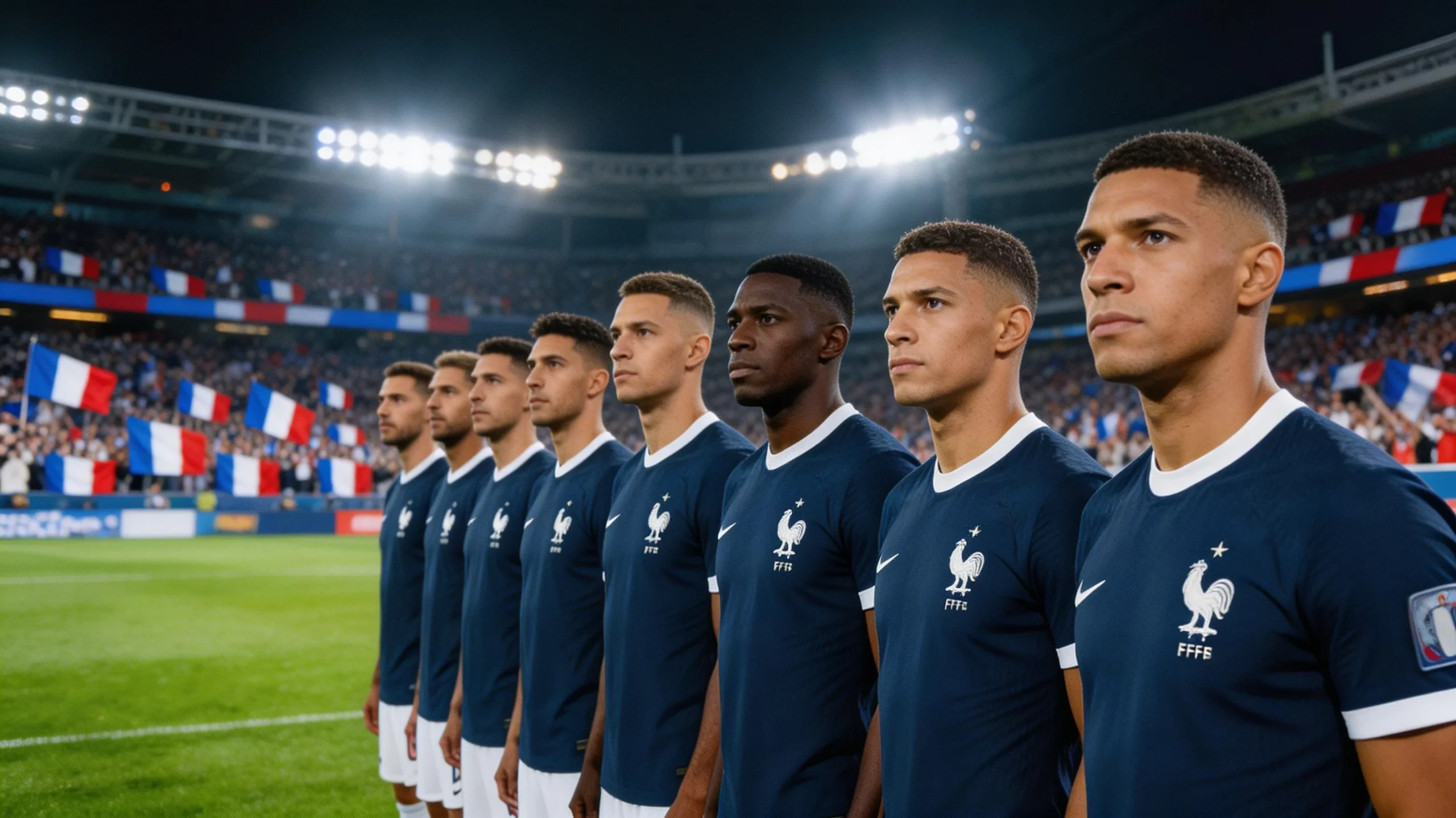
Kylian Mbappé stood at the penalty spot with France trailing 3-2 in extra time of the 2022 World Cup final, needing a goal to force penalties against Argentina. He scored. Sixteen minutes of chaos later, France lost the shootout, and the most talented French squad in two decades returned home without the trophy. That final – perhaps the greatest World Cup match ever played – established both Mbappé’s superstar credentials and France’s heartbreaking inability to close out the biggest moment.
Now Mbappé returns as France’s captain and primary star, leading Les Bleus into 2026 with finishing business unfinished. At 27 years old during the tournament, he enters his physical prime after establishing himself at Real Madrid as one of football’s two or three best players. France’s betting odds reflect this reality – they’re priced as co-favourites with Argentina at most books, and the Golden Boot market sees Mbappé as the clear individual favourite.
UEFA Qualification
French football experienced turbulence between Qatar and 2026 qualification. Didier Deschamps, the manager who delivered 2018’s World Cup and reached 2022’s final, continued overseeing a transition that featured moments of brilliance and stretches of mediocrity. The qualification campaign finished successfully but revealed questions about the team’s evolving identity.
The positive results came when France’s attacking talent overwhelmed opponents. Mbappé’s combination with other forwards produced match-winning moments against capable UEFA opposition. The home victories showcased what France can achieve when individual brilliance meets functional team structure – scorelines that reflected superiority rather than luck.
The concerning results showed defensive vulnerabilities that 2022’s final exposed but qualification confirmed. France conceded goals in situations where elite defences wouldn’t, and the organization behind Mbappé’s attacking runs sometimes left spaces that better opponents exploited. These patterns suggest France will score against anyone while potentially conceding against weaker teams too.
The managerial situation clarified as qualification concluded. Deschamps’ continuation means tactical continuity – the same system that reached two consecutive finals remains in place. Whether that represents strength (proven tournament approach) or weakness (predictability for opponents) depends on perspective. I lean toward viewing continuity positively for France’s tournament chances, as World Cup success requires the collective understanding that established management provides.
France’s qualification path also revealed depth that could prove decisive in the expanded tournament format. Injuries to key players forced experimentation, and several alternatives emerged as viable options. This depth matters when seven matches across four weeks tests squad fitness in ways shorter tournaments didn’t.
Kylian Mbappé – Golden Boot Favourite
The betting markets make Mbappé the shortest-priced Golden Boot option, typically between +400 and +600 depending on the book. This represents a significant investment given that Golden Boot winners rarely come from outright favourites – but Mbappé’s profile suggests the price might undervalue his probability.
His 2022 World Cup performance established the case. Eight goals, including a hat-trick in the final, showed ability to produce across an entire tournament rather than in isolated matches. The penalty conversion (six successful from six attempts) adds expected goals that other forwards can’t match. If France reaches the final – approximately a 35% probability based on current markets – Mbappé likely plays seven matches with penalties available in each.
The Real Madrid move elevated Mbappé’s game in ways that 2026 benefits from. Playing alongside Vinicius Jr. and Bellingham required adaptation to a collective structure rather than the PSG approach where everything flowed through Mbappé. This development should make France more difficult to defend because Mbappé no longer needs constant service – he creates in combination play rather than isolation.
The physical peak timing works perfectly for World Cup performance. At 27, Mbappé combines the explosive pace that made him famous with the decision-making that experience develops. The raw sprint speed remains but now combines with understanding of when to run and when to receive. This evolution makes him more dangerous in tournament football, where opponents prepare specifically for his tendencies.
I’m including Mbappé Golden Boot as a core position in my France-related betting. The price reflects his status appropriately, but the expected value calculation suggests slight value at +500 or longer given France’s tournament ceiling and his penalty responsibilities.
France’s Squad Depth
Beyond Mbappé, France possesses depth that rivals any tournament squad. The challenge lies not in finding quality players but in selecting which excellent options to include from an embarrassment of riches.
Central midfield showcases this wealth. Aurélien Tchouaméni has developed into a world-class anchor at Real Madrid – his defensive positioning and passing range provide exactly what elite teams need behind attacking talent. Eduardo Camavinga offers different qualities as a ball-carrier and progressive passer. N’Golo Kanté’s availability at 35 remains uncertain, but his tournament experience would add irreplaceable cover. Warren Zaïre-Emery represents the emerging generation, already performing at Champions League level for PSG before turning 20.
The forward options create selection dilemmas that most managers would welcome. Antoine Griezmann’s tournament experience (Golden Boot 2018, crucial goals in multiple World Cups) provides big-match reliability that pure talent doesn’t guarantee. Ousmane Dembélé’s dribbling and crossing ability offers different attacking angles. Randal Kolo Muani showed penalty-taking nerve in Qatar’s final moments. The striker options – Marcus Thuram, Olivier Giroud if available, emerging alternatives – provide tactical flexibility depending on opponent.
Defence presents both proven quality and emerging uncertainty. Dayot Upamecano and William Saliba have established themselves as elite centre-backs in their prime years. The fullback positions feature Theo Hernández’s attacking dynamism and Jules Koundé’s versatility. Mike Maignan’s goalkeeping excellence provides security that France’s attacking approach requires.
The depth advantage becomes most relevant in the tournament’s later stages. As matches accumulate and fatigue affects starters, France’s ability to introduce quality substitutes without significant drop-off distinguishes them from opponents with shallower squads. The semifinal and final are often decided by fresh legs and impact substitutions – France can introduce players who would start for most national teams. This quality depth extends to every position, creating tactical flexibility that Deschamps can deploy based on specific match circumstances.
Tactical Approach
Deschamps has built France’s identity around pragmatic adaptability rather than dogmatic system adherence. This flexibility – sometimes criticized as lacking identity – has produced results that pure possession teams can’t match in knockout football.
The base formation of 4-2-3-1 or 4-3-3 shifts depending on opponent and match situation. Against teams who press high, France sits deeper and uses Mbappé’s pace for direct counters. Against defensive blocks, they circulate possession patiently before accelerating when space appears. This dual identity makes France difficult to prepare for because their approach changes based on what opponents offer.
The transition game provides France’s greatest attacking threat. Winning possession in midfield triggers rapid forward passes into space behind defensive lines – Mbappé’s sprint speed makes these passes consistently dangerous. The 2022 final showed this pattern repeatedly, with France’s goals coming from quick transitions rather than prolonged build-up.
Defensively, France prioritizes compactness over high pressing. The midfield duo shields the defence, forcing opponents wide where crosses can be dealt with aerially. This approach concedes territory but rarely concedes clear chances – the shots France allow tend to come from distance or difficult angles rather than open play through the middle.
Set pieces have become increasingly important to France’s scoring profile. Griezmann’s delivery and Upamecano’s aerial presence combine for corner threat that opponents must respect. Free kicks around the box create shooting opportunities for multiple players. These moments often decide tight matches that pure possession approach can’t unlock.
The pressing structure reveals Deschamps’ pragmatic calculations. France doesn’t commit to high pressing that exposes space behind – instead, they set traps in the middle third where winning possession triggers immediate counter-attacks. Tchouaméni’s reading of passing lanes and Camavinga’s recovery speed make this mid-block pressing effective without requiring the energy expenditure that high pressing demands. Against tired opponents in knockout rounds, this energy conservation becomes advantageous.
Substitution patterns will matter more in 2026’s expanded format. Deschamps has shown willingness to make early changes when tactical adjustments are needed, but also patience when waiting for opponents to tire. The depth of France’s bench means substitutions genuinely change match dynamics rather than simply replacing tired legs with similar profiles. Bringing Dembélé’s dribbling against exhausted defenders or fresh midfield legs in the 60th minute creates advantages that shallower squads can’t match.
Group I Analysis
France’s draw places them in Group I alongside Norway, Senegal, and Iraq. The combination presents manageable challenges with one genuine test that could clarify France’s tournament form.
Norway represents the primary group stage threat. Erling Haaland’s presence alone makes Norway dangerous – his goal-scoring ability at Manchester City translates directly to international football when service arrives. Norway’s qualification showed ability to beat capable European opponents, and their system functions effectively around Haaland’s finishing. The France-Norway match could produce a genuine contest rather than French dominance.
Senegal arrives as Africa Cup of Nations contenders with established quality throughout their squad. Sadio Mané’s availability at 34 remains uncertain, but Senegal’s depth extends beyond any individual. Their 2022 World Cup performance – reaching the Round of 16 – showed tournament capability that Group I opponents should respect. Against France, expect Senegal to defend compactly and threaten through counter-attacks.
Iraq returns to World Cup football representing Asian qualification’s competitive expansion. Their path to 2026 required overcoming established AFC powers, suggesting quality that their FIFA ranking might not capture. Against France, Iraq will pack the defensive third and hope for set-piece opportunities. The scoreline will reflect French dominance, but Iraq’s organized defence could limit goal-scoring below expectations.
Group I betting: France -250 to win the group feels appropriately priced given Norway’s Haaland-led threat. The margin between France and Norway is smaller than many expect – Norway’s ceiling in the direct matchup approaches upset territory. For value, consider Norway group points total over 4.5 at approximately even money, capturing their capability against Senegal and Iraq while not requiring victory against France.
The scheduling sequence matters for France’s group stage rhythm. Opening against weaker opposition allows squad rotation earlier than most elite teams attempt, preserving key players for the knockout rounds. If France secures qualification with a match remaining, expect significant rotation that affects scorelines and betting markets for their final group fixture. Managers who advance comfortably use group finales for squad management rather than statement victories.
The potential Round of 32 opponents from Group I’s draw deserve consideration. Second place in Group I likely faces Group F or Group D winners – potentially Netherlands or USA. First place avoids these matchups for an easier progression path. This difference creates incentive for France to prioritize group victory rather than simply advancement, affecting their approach in the France-Norway decisive match.
France World Cup Odds
The outright market prices France between +350 and +500, making them co-favourite with Argentina depending on the book and timing. The implied probability of 17-22% reflects their 2022 final appearance, squad quality, and the Mbappé factor that distinguishes them from other contenders.
I find the price appropriate rather than value-rich. France’s ceiling – World Cup victory – aligns with the 18% or so probability the odds suggest. Their floor – quarterfinal exit if tactical approach fails against prepared opponents – also exists within reasonable probability. The price captures both scenarios without dramatic mispricing in either direction.
Where I find value involves France’s specific path projections. To reach the final at approximately -150 offers slight value given their group draw and likely bracket position. Group I presents manageable challenges, and the knockout path avoids Argentina or Brazil until later rounds in most scenarios. This price implies approximately 60% probability for final appearance, which my models suggest undersells France’s actual advancement chances.
France top Group I at -250 presents no edge – the price accurately reflects reality. More interesting opportunities arise in match-specific markets. France over 2.5 goals versus Iraq at approximately -200 captures their attacking superiority without requiring the 4-0 or 5-0 margins that expensive -300 lines demand.
The Mbappé markets mentioned earlier deserve repetition as France’s strongest betting angles. Golden Boot at +500 or longer, tournament top scorer for France at short odds, anytime goalscorer in specific matches – these positions leverage Mbappé’s unique situation as both France’s primary threat and their designated penalty taker.
Betting on France
France’s betting profile suits certain market types better than others. Understanding these patterns helps identify where edges exist versus where prices accurately reflect probability.
Match totals present consistent opportunities. France’s games tend toward higher scoring than their defensive reputation suggests – they attack aggressively while accepting defensive risks that produce goals at both ends. The 2022 final epitomized this: 3-3 after extra time, with France conceding as much as they scored despite being favourites. Group stage overs against Iraq and Senegal fit this pattern at prices that don’t fully account for France’s attacking volume.
First scorer markets favour France against weaker opponents. Their pressing creates early chances that Mbappé and others convert at rates exceeding typical tournament rates. Against Iraq particularly, expect France to score within the opening twenty minutes – first goal timing bets could offer value depending on specific line construction.
Avoid France clean sheet bets throughout the tournament. Their defensive approach concedes chances that quality forwards finish, and the expanded tournament format means they’ll eventually face opponents capable of scoring. One or two clean sheets across seven potential matches seems realistic – pricing that reflects three or four clean sheets misunderstands France’s defensive risk profile.
The knockout round approach depends on bracket draw. If France faces weaker opposition through quarterfinals, their advancement prices offer value. If the bracket places them against Germany or England early, the calculation becomes more complex. Wait for bracket crystallization before committing to knockout progression bets.
France World Cup Record
Two World Cup titles – 1998 and 2018 – establish France among football’s elite nations. Both triumphs came on home soil or with the tournament’s host advantage (1998 literally, 2018 with Russian crowds largely neutral toward European teams), raising questions about France’s ability to win away from advantageous circumstances.
The 1998 tournament remains France’s defining football moment. Zinedine Zidane’s two headers in the final against Brazil, the collective energy of a diverse squad representing modern France, and the home crowd’s emotional investment combined for national celebration that transcended sport. That team established expectations every subsequent generation has carried.
The 2006 final loss to Italy on penalties showed French capability to reach ultimate stages without home advantage – but also the heartbreak that characterizes their near-misses. Zidane’s headbutt against Materazzi dominated narratives, but France had played well enough to deserve victory before that moment of chaos. The pattern of reaching finals without winning repeated in 2022.
The 2018 triumph proved French football’s return to elite status after years of underperformance. Mbappé announced himself globally with goals that evoked Pelé comparisons. The defensive structure – less heralded but equally important – conceded only six goals across seven matches. That tournament validated Deschamps’ pragmatic approach and established the system that remains largely intact for 2026.
2022’s final loss cuts deepest because victory seemed achievable until the final whistle. The hat-trick against Argentina, the comeback from 2-0 down, the penalty shootout that went against France – these moments suggested the tournament should have been theirs. That lingering sense of unfinished business drives the 2026 campaign in ways that pure competition can’t replicate.
The pattern across these tournaments reveals something important for betting purposes. France performs best when approaching as slight underdogs or co-favourites – 1998 and 2018 both saw them priced behind Brazil going into finals. When France carries heavy favourite status, their results become more variable. This psychological dynamic suggests 2026’s shared favouritism with Argentina might actually suit France better than clear frontrunner status would.
Les Bleus’ Path to a Third Star
France enters 2026 seeking their third World Cup title – a success that would place them alongside only Brazil, Germany, and Italy in football history. The path requires navigating challenges that their previous triumphs didn’t face.
The expanded 48-team format creates new demands. Seven matches instead of seven, longer tournament duration, more squad management required. France’s depth becomes an asset in this structure – they can rotate more freely than shallow opponents while maintaining quality. But the accumulated fatigue also affects their stars differently than shorter tournaments did.
The North American venues create unfamiliar environments. France’s players come primarily from European clubs with European travel patterns. The Atlantic crossing, time zone adjustment, and summer heat in US stadiums all represent adaptation challenges that previous European tournaments didn’t require. How France manages these logistics – training locations, recovery protocols, travel schedules – affects tournament performance in ways tactical preparation can’t fully address.
The pressure of near-miss accumulation weighs on this generation. The 2006 and 2022 final losses, the Euro 2016 final loss at home – French players know what it feels like to reach ultimate stages and fail. This experience could produce composure born from lessons learned, or it could create tension in crucial moments that success-hardened opponents don’t face.
My projection for France: semifinal appearance with approximately 60% probability, final appearance at 35%, tournament victory at 18%. These numbers align with betting market implied probabilities, suggesting the price accurately reflects France’s tournament profile. The value lies in Mbappé-related individual markets rather than France team progression bets. For Canadian bettors exploring all World Cup 2026 contenders, France represents the kind of elite favourite whose outright price offers limited edge – but whose individual markets present genuine opportunities.
