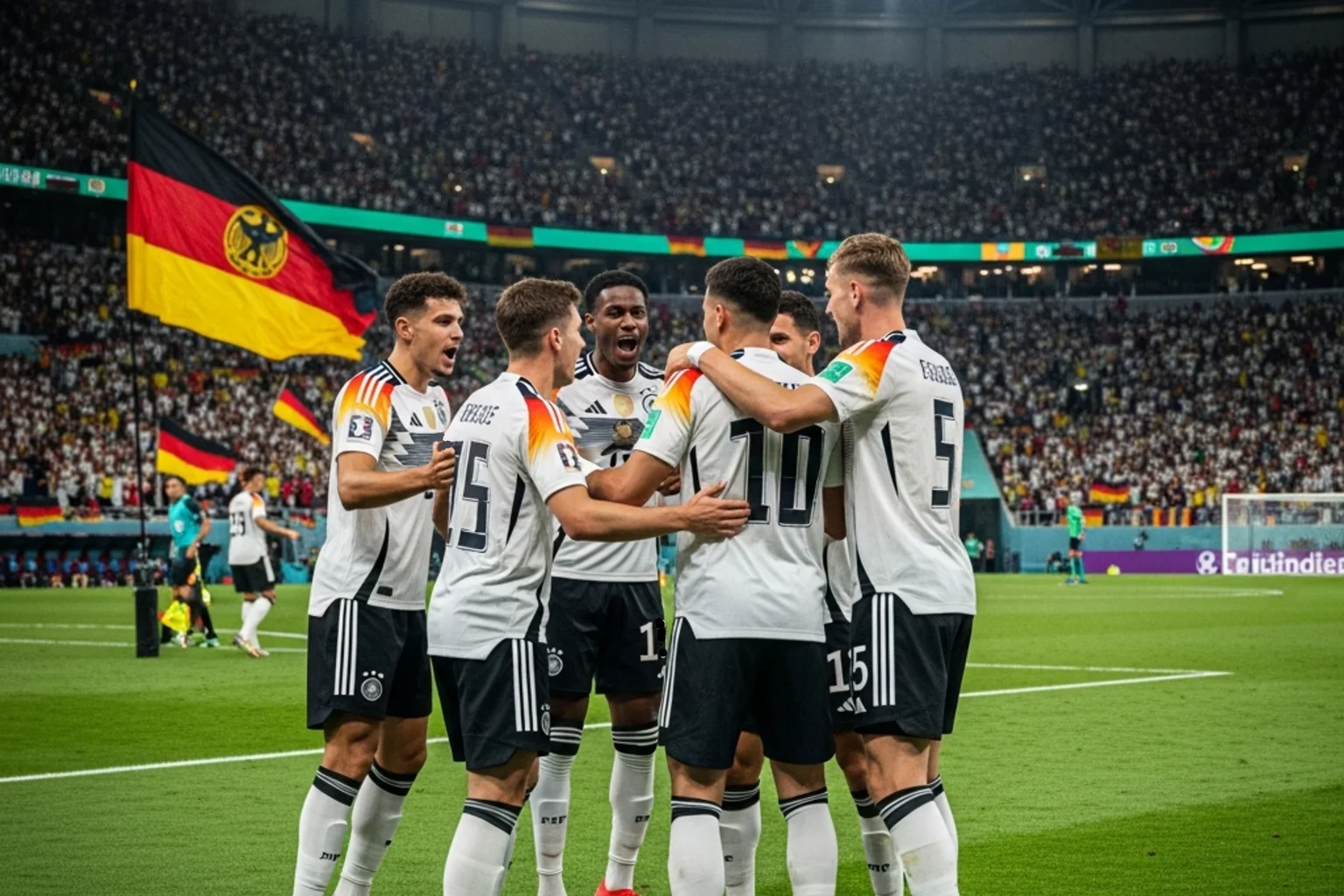
German football spent the years between 2018 and 2024 in unfamiliar territory – questioning its identity, producing group stage exits, and watching as Spain and France claimed the European supremacy that Germany once held. Then came Euro 2024 on home soil, and everything shifted. Florian Wirtz and Jamal Musiala announced themselves as generational talents, the team played with attacking verve that recalled Germany’s best eras, and only a controversial late penalty against Spain prevented what felt like an inevitable home championship. That tournament didn’t deliver a trophy, but it delivered something equally valuable for 2026: belief that Germany has rebuilt into genuine contenders.
The timing matters enormously for World Cup betting purposes. Germany’s young core enters 2026 at the perfect age – Wirtz at 23, Musiala at 23, both having added two years of elite club experience since their Euro 2024 breakthrough. The question of whether that home tournament represented a temporary peak or the beginning of sustained excellence determines Germany’s probability in North America. I lean toward the latter interpretation, and the betting markets haven’t fully adjusted to this reality.
Post-Euro 2024 Rebuild
Julian Nagelsmann’s appointment before Euro 2024 represented German football’s recognition that tactical evolution was necessary. The conservative approaches that followed Joachim Löw’s post-2014 decline had produced diminishing returns – group stage exits in 2018 and 2022 demanded something different. Nagelsmann brought attacking principles from his club career, and the results transformed German football’s self-perception within months.
The Euro 2024 campaign showcased what this transformation looked like in practice. Germany’s opening match against Scotland ended 5-1 – a statement of intent that the tournament validated repeatedly. The attacking patterns centered on Wirtz and Musiala’s creative freedom, with both players receiving license to drift between positions and create overloads that opponents couldn’t track. This approach generated goals, excitement, and the best German tournament performance since 2016.
The Spain semifinal loss revealed both Germany’s ceiling and their margins. Trailing to a late Dani Olmo goal, Germany equalized through Wirtz in the 89th minute – a moment that encapsulated the team’s never-die mentality. The extra-time winner came from a Mikel Merino header that required VAR review and ended Germany’s home dreams. But the performance level – competing evenly with eventual champions Spain – established Germany’s returned competitiveness at the highest level.
The post-tournament period focused on consolidation rather than revolution. Nagelsmann retained the core principles while integrating additional options for the expanded 2026 format. The qualification campaign proceeded routinely, with Germany’s talent overwhelming European opponents who couldn’t match their attacking quality. These matches provided limited information about tournament readiness but confirmed the system’s stability.
The critical development involves how Wirtz and Musiala have grown since Euro 2024. Both players have added physical maturity to their technical gifts, becoming more complete midfielders capable of defensive contribution alongside their creative brilliance. This evolution addresses criticisms that Germany’s approach left them vulnerable – now the creative players also press and recover, creating a more balanced system.
Squad Overview
Germany’s squad combines the emerging generation that captured Euro 2024 imagination with experienced performers who provide tournament nous. This blend creates a team capable of both youthful energy and composed decision-making in pressure moments.
The goalkeeping position settled on Marc-André ter Stegen following Manuel Neuer’s retirement from international football. Ter Stegen’s Barcelona career established him among the world’s elite shot-stoppers, and his distribution suits Germany’s possession-based approach. The absence of Neuer’s sweeper-keeper heroics creates slight concern about defending high lines, but ter Stegen’s shot-stopping excellence compensates adequately.
The defensive structure relies on Antonio Rüdiger’s leadership and aggressive defending. His Real Madrid experience adds trophy-winning pedigree that Germany’s younger players benefit from. Jonathan Tah provides partnership solidity, while the fullback positions feature Joshua Kimmich’s versatility and David Raum’s attacking overlaps. This defensive unit concedes goals that pure defensive teams wouldn’t, but the tradeoff enables Germany’s attacking approach.
Central midfield showcases Germany’s depth advantages. Robert Andrich’s defensive presence allows Wirtz and Musiala to roam freely. Kimmich can drop into midfield when additional control is needed. The system flexibility – 4-2-3-1 becoming 4-3-3 or even 3-4-3 depending on match situations – reflects Nagelsmann’s tactical adaptability and the players’ intelligence in executing adjustments.
The forward positions present selection dilemmas that reflect Germany’s attacking wealth. Kai Havertz’s false nine role performed well at Euro 2024, but Niclas Füllkrug’s traditional centre-forward presence offers different options. Leroy Sané’s pace and dribbling create width that stretches defences. Serge Gnabry’s experience adds reliability in tournament contexts. These options allow Germany to change attacking profiles based on opponent weaknesses.
The bench quality exceeds what Germany has possessed in recent tournaments. Players who would start for most national teams – Chris Führich, Maximilian Beier, Robin Koch – provide genuine impact substitution options. This depth matters enormously across seven potential matches, allowing rotation without significant quality drop-off and providing tactical alternatives when starting approaches struggle.
The leadership structure has evolved with the generational transition. Rüdiger and Kimmich provide vocal presence that the younger players benefit from, while Wirtz and Musiala lead through performance rather than shouting. This balance between experienced voices and youthful energy creates squad harmony that previous German tournaments lacked. The absence of ego conflicts that plagued the 2018 squad reflects intentional squad-building that prioritizes collective success.
Wirtz and Musiala – Rising Stars
The Wirtz-Musiala partnership defines Germany’s 2026 identity more than any tactical diagram could capture. Both players entered Euro 2024 as exciting prospects and emerged as established world-class talents. Their combination creates problems that no opponent has consistently solved.
Florian Wirtz’s development at Bayer Leverkusen produced one of European football’s most remarkable seasons in 2023-24. The unbeaten Bundesliga title, the goal contributions that exceeded expectations, the big-match performances that demonstrated mental strength – Wirtz proved that his technical gifts translate into decisive impact. His left-footed creativity from the right side mirrors patterns that have defined elite playmakers, but his execution surpasses predecessors at the same age.
Jamal Musiala’s Bayern Munich career has already produced Champions League performances that established his European reputation. His dribbling in tight spaces, his ability to receive under pressure and create advantages, and his improving goalscoring make him uniquely difficult to defend. Where Wirtz creates from deeper positions, Musiala operates as a carrier who advances through defensive lines – the combination of both creators overwhelms conventional marking schemes.
Their positional fluidity creates specific defensive nightmares. Traditional man-marking fails because both players drift across the attacking third rather than holding fixed positions. Zonal marking struggles because their movement creates numerical advantages in whichever zone they occupy together. Double-marking one leaves the other in space. Opponents at Euro 2024 tried various approaches, and none consistently succeeded.
For betting purposes, the individual markets around Wirtz and Musiala deserve attention. Neither carries Golden Boot odds reflecting their goal involvement – the market focuses on traditional strikers. But their combined goal and assist totals could exceed what individual strikers achieve, making “Germany top tournament scorer” or “most assists” markets potentially valuable at current prices.
The question of whether this partnership peaks in 2026 or continues developing affects long-term projections. At 23, both players have reached technical maturity while still gaining physical development and experience. This suggests 2026 represents their first World Cup peak rather than their only opportunity – but the current moment offers Germany their best chance since 2014’s triumph. The combination of youthful energy with tournament experience gained at Euro 2024 creates optimal conditions for breakthrough performance.
Group E Analysis
Germany’s draw places them in Group E alongside Ivory Coast, Ecuador, and Curaçao. This composition offers comfortable advancement probability with one genuine test that could reveal Germany’s tournament form.
Ivory Coast represents African football’s current strength, their 2024 Africa Cup of Nations title demonstrating capability that European opponents shouldn’t underestimate. Sébastien Haller, Franck Kessié, and other European-based players provide quality that Germany must respect. The match represents potential banana-skin territory – Germany should win, but Ivory Coast’s physicality and counter-attacking could produce an uncomfortable contest.
Ecuador arrives from CONMEBOL qualification, their consistent South American competitiveness translating into solid World Cup performances. Their 2022 World Cup showing – defeating Qatar and competing with Netherlands and Senegal – established them as capable tournament participants. Against Germany, expect compact defending and direct counter-attacks that test Germany’s defensive organization.
Curaçao represents CONCACAF’s expanded presence in the 48-team format. Their qualification achievement deserves recognition, but the quality gap against Germany is substantial. This match offers rotation opportunity and scoreline possibilities that could boost goal difference – Germany covering -3 handicap at reasonable prices captures the expected outcome.
Group E betting angles: Germany -300 to top the group appropriately reflects their superiority but offers limited value. More interesting positions involve match-specific totals. Germany vs Curaçao over 3.5 goals at approximately -110 captures likely German dominance. Germany vs Ivory Coast under 3.5 at similar prices reflects the competitive nature of that fixture. Ecuador vs Ivory Coast as the group’s decider for second place could provide value depending on earlier results.
The scheduling sequence advantages Germany. Opening against Curaçao allows attacking confidence-building before facing sterner tests. The Ivory Coast match likely determines group positioning, with Ecuador representing a manageable challenge regardless of standings. This sequence lets Germany build rhythm rather than facing immediate pressure.
The venue assignments within Group E affect preparation. Germany’s matches spread across different US cities, requiring travel management that European-based tournaments don’t demand. How Nagelsmann handles this logistical challenge – rest days, training intensity, travel timing – influences player freshness for crucial group matches. The teams that manage these details best gain advantages that pure tactical preparation can’t replicate.
Germany World Cup Odds
The outright market prices Germany between +700 and +1000, positioning them as fourth or fifth favourites depending on book and timing. This range implies 9-12% championship probability – a price that I believe undervalues their current trajectory.
The market appears to weight recent World Cup failures (2018, 2022 group exits) more heavily than the Euro 2024 transformation. This historical discounting makes sense for teams whose issues remain unresolved, but Germany has genuinely changed. The personnel differs, the tactical approach differs, the team psychology differs – these aren’t the same circumstances that produced embarrassing exits.
The value I identify in Germany markets centers on their ceiling probability. At +800, Germany offers better expected value than France at +400 or England at +700 if you believe – as I do – that their championship probability approaches 15% rather than the implied 11%. The Wirtz-Musiala combination creates ceiling outcomes that other contenders can’t match for pure attacking quality.
Germany to reach the final at approximately +300 offers clearer value than outright bets. Their group draw and likely bracket positioning provide paths that avoid Argentina or France until later rounds in most scenarios. Reaching the final requires beating opponents Germany should defeat if playing to their Euro 2024 level – a more defensible proposition than predicting final victory.
Tournament progression bets build value systematically. Germany to advance from Group E at -500 presents no edge. Quarterfinal advancement at approximately -150 offers slight value given their likely Round of 32 and Round of 16 opponents. Semifinal appearance at +130 to +150 captures Germany’s realistic ceiling without requiring championship victory.
The individual markets present compelling opportunities. Wirtz and Musiala for team tournament top scorer at prices between +300 and +400 offer value given their central roles. Germany highest-scoring European team at approximately +350 captures their attacking quality while avoiding direct outright competition. These positions leverage Germany’s strengths without requiring them to overcome every tournament obstacle.
Betting on Germany
Germany’s betting profile suits bettors who believe the Euro 2024 transformation represents genuine improvement rather than home-tournament anomaly. Understanding this profile helps identify where edges exist.
Match totals skew toward overs more than Germany’s historical profile suggests. Nagelsmann’s attacking approach produces goals at both ends – Germany scores frequently but also concedes more than defensive German teams of the past. Over 2.5 goals in Germany matches at reasonable prices captures this tendency, particularly against opponents who attack rather than park defensive buses.
First-half scoring reflects Germany’s aggressive starts. Their Euro 2024 campaign featured early goals that set match tempo and forced opponents to chase. First-half Germany goals at prices between -150 and -200 in group stage matches offer steady value that compounds across multiple fixtures.
Germany margin of victory markets present opportunities against weaker opponents. Against Curaçao specifically, Germany -3 handicap at approximately +120 captures their attacking ceiling without requiring unlikely blowout margins. The pricing often underestimates how completely Germany can dominate outmatched opposition when their attack functions.
Avoid Germany clean sheet bets throughout the tournament. Their attacking approach accepts defensive risk that produces goals against at rates exceeding what pure defensive metrics suggest. One or two clean sheets across seven potential matches represents realistic expectation – pricing that implies more frequent shutouts misunderstands Germany’s tactical tradeoffs.
The knockout round approach should wait for bracket clarity. If Germany’s path avoids early confrontation with Argentina, France, or Spain, their advancement prices become more attractive. The Round of 32 and Round of 16 matchups determine whether Germany faces beatable opponents or tournament-defining challenges before quarterfinals.
Four-Time Champions Legacy
Germany’s four World Cup titles establish them among football’s historical elite – only Brazil with five surpasses their trophy count. This legacy creates expectations but also provides template for tournament success that current players can reference.
The 1954 “Miracle of Bern” established German football’s identity. Defeating heavily favoured Hungary in the final demonstrated that tactical preparation and team cohesion could overcome individual talent gaps. This template – collective over individual – defined German football for generations.
The 1974 home triumph showcased the peak of German efficiency. Franz Beckenbauer’s sweeper innovation, Gerd Müller’s goal-scoring, and the collective understanding that crushed opponents represented German football at its most dominant. That tournament established expectations that home nations should win – pressure that the 2024 Euro near-miss recalled.
The 1990 World Cup victory came through clinical tournament execution. Fewer memorable moments than other German triumphs, but systematic advancement through knockout rounds demonstrated the German capability for winning ugly when necessary. This tournament model – pragmatic knockout football rather than consistent brilliance – offers a template for 2026.
The 2014 Brazil triumph represents the most relevant historical comparison for 2026. That tournament featured attacking football, young players emerging alongside experienced campaigners, and a tactical approach that overwhelmed opponents. The 7-1 semifinal against Brazil remains football’s most shocking scoreline – a moment of collective excellence that the current generation aspires to replicate. Nagelsmann’s approach consciously echoes that 2014 team’s attacking verve, suggesting the template applies directly to current Germany.
The subsequent decline – 2018 group exit, 2022 group exit – represents what Germany must avoid repeating. Those tournaments featured aging squads, tactical confusion, and the complacency that sometimes follows success. The current rebuild specifically addresses each issue: young talent, clear tactical identity, and the hunger that near-miss in Euro 2024 generated.
The pattern of German World Cup success offers instructive data for betting purposes. Germany wins tournaments when attacking talent combines with defensive organization – the 2014 blend of Müller’s goals with Neuer’s sweeping and Hummels’ defending exemplified this balance. The current squad approaches similar balance, with Wirtz and Musiala providing attacking quality while Rüdiger and the defensive structure provide foundation. This historical template suggests Germany’s approach in 2026 aligns with their successful tournament models.
Germany’s Redemption Arc
The 2026 World Cup offers Germany opportunity to restore their status among football’s elite after years of decline and rebuilding. The pieces exist for championship contention – whether they combine for ultimate success determines Germany’s historical trajectory.
The confidence factor separates 2026 from 2018 and 2022. Those tournaments featured German teams uncertain of their identity and approach. The Euro 2024 experience provided clarity – Germany knows how they want to play, believes in that approach, and has evidence that it works against elite opposition. This psychological foundation matters enormously for tournament football.
The bracket draw will determine Germany’s specific path. Avoiding Argentina, France, or Spain until semifinals or final preserves Germany’s advancement probability. The expanded format creates more potential Round of 32 opponents, increasing variance in early knockout draws. How Germany navigates these matchups – the specific opponents they face and when – affects their championship probability as much as pure quality assessments.
The North American venues present adaptation challenges. German players predominantly come from Bundesliga or other European leagues, with limited experience in American summer conditions. The heat, humidity, and travel demands of a three-nation tournament test squad management in ways that European tournaments don’t. Germany’s depth becomes crucial for rotation patterns that preserve key players for knockout rounds.
My projection for Germany: quarterfinal appearance with approximately 70% probability, semifinal at 50%, final at 30%, tournament victory at 15%. These numbers exceed what current betting markets imply, reflecting my belief that Euro 2024’s transformation represents genuine improvement rather than home-tournament anomaly. The value exists throughout Germany’s odds structure, particularly in progression bets that capture their ceiling without requiring championship victory. For Canadian bettors exploring World Cup teams, Germany represents the kind of undervalued contender whose prices offer genuine expected value.
