

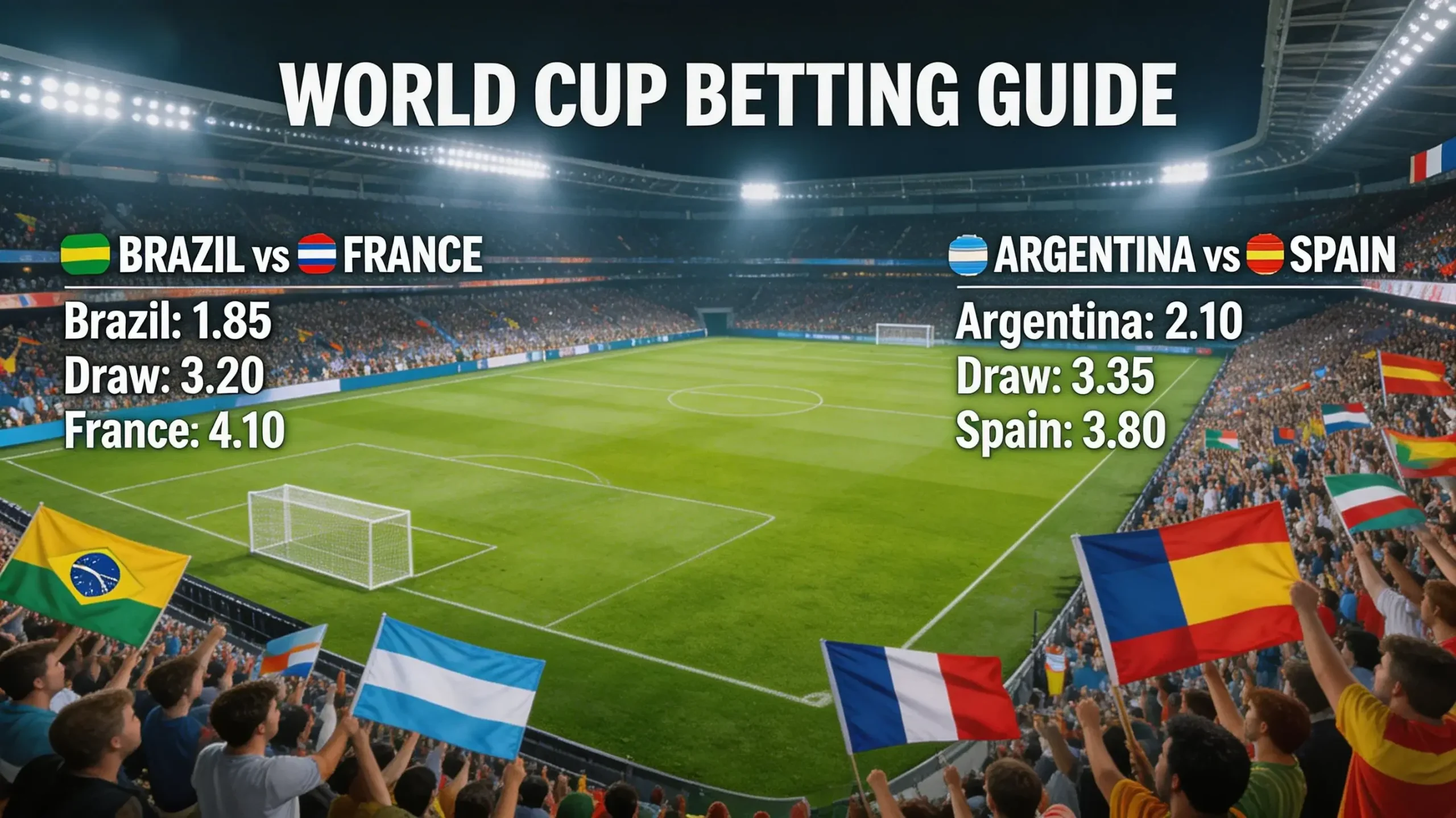
Nine years ago, I placed my first World Cup bet – a modest parlay on Germany to beat Argentina in the 2014 final and Mario Götze to score. The payout funded my entire summer vacation. That single wager taught me more about tournament betting than any textbook ever could: timing matters, value hides in plain sight, and the World Cup rewards those who understand its unique rhythm.
The 2026 FIFA World Cup arrives with the most significant format change in tournament history. Forty-eight teams across three host nations – Canada, the United States, and Mexico – will compete in 104 matches over 39 days. For bettors, this expansion creates opportunities that simply did not exist in previous tournaments. More matches mean more markets. More teams mean more mismatches. And the cross-continental travel factor introduces variables that bookmakers are still learning to price correctly.
This guide walks through every aspect of World Cup 2026 betting: from understanding the basic markets to advanced strategies for group stage and knockout round wagering. Whether you placed your first sports bet last week or have been analyzing odds for decades, the tournament’s expanded format demands fresh thinking. The principles remain constant, but the application requires adaptation. By the time the opening whistle sounds at Estadio Azteca on June 11, you will have the framework to identify value, manage risk, and approach the tournament with the analytical mindset that separates profitable bettors from casual gamblers.
Understanding World Cup Betting Markets
Last summer, a friend asked me to explain “why there are so many different ways to bet on one soccer game.” I handed him my phone showing a typical Champions League match – 247 individual markets. He stared at the screen like I had handed him a calculus exam. World Cup matches routinely exceed 300 markets per game. Understanding how these markets interconnect is the foundation of smart tournament betting.
Every World Cup betting market falls into one of three categories based on timeframe: pre-tournament (futures), match-level (singles), and in-play (live). Futures markets open months or years before kickoff, offering odds on tournament winner, group winners, top scorer, and similar long-range outcomes. Match-level markets become available as specific game matchups approach, typically opening 7-10 days before kickoff with full market depth appearing 48 hours out. In-play markets activate at kickoff and shift continuously based on match events.
The relationship between these market categories creates arbitrage opportunities that experienced bettors exploit throughout the tournament. A pre-tournament futures bet on Japan to reach the quarterfinals, for example, can be hedged through match-level moneyline bets during the knockout rounds. The key insight is that bookmakers price each category independently, using different models and different risk tolerances. What appears as a single outcome – Japan reaching the quarters – actually represents multiple distinct betting propositions with potentially divergent pricing.
Liquidity varies dramatically across market categories. Pre-tournament futures attract serious money months before the World Cup begins, which means odds reach efficient levels early and value evaporates quickly. Match-level markets see heaviest action in the 24 hours before kickoff, with sharp money moving lines most aggressively in the final two hours. In-play markets maintain continuous liquidity but with wider spreads to compensate bookmakers for the information asymmetry inherent in live betting – they are reacting to what you are watching, often with a 5-10 second delay.
The 48-team format introduces market categories that did not exist in previous World Cups. “Best Third Place Team” becomes a distinct betting proposition since eight of twelve third-place finishers advance to the Round of 32. This creates fascinating strategic scenarios where teams might prefer third place over second place depending on bracket positioning. Bookmakers are still calibrating these markets, which is precisely where value tends to concentrate in any betting ecosystem.
Canadian bettors accessing provincial platforms like PROLINE+ or Ontario’s licensed operators will encounter different market depth than those using international books. Provincial platforms typically offer core markets – moneyline, totals, basic props – while licensed private operators in Ontario provide the full 300+ market menu. Understanding your platform’s limitations shapes which strategies remain viable for your betting activity.
Types of World Cup Bets
Walking into any sportsbook during the 2022 World Cup felt like entering a financial trading floor. Screens displayed dozens of simultaneous matches, odds flickering every few seconds, crowds clustered around terminals placing bets on everything from match winners to the exact minute of the first goal. The market ecosystem can overwhelm newcomers, but every World Cup bet derives from five fundamental types.
Moneyline – Match Winner
The moneyline represents the simplest World Cup bet: pick which team wins the match. During group stage matches, three outcomes exist – home win, draw, away win – creating what bookmakers call a “three-way market.” Knockout rounds introduce different pricing because draws cannot stand; extra time and penalties determine advancement.
Canadian sportsbooks display moneylines in American format by default. A line of -150 means you must wager $150 to profit $100 on the favourite. A line of +200 means a $100 wager profits $200 on the underdog. The draw in group stage matches typically carries odds between +200 and +350 depending on the competitive balance between opponents.
Implied probability converts odds into percentage terms. The formula for American odds: for negative odds, divide the absolute value by itself plus 100; for positive odds, divide 100 by the odds plus 100. A -150 favourite implies 60% win probability (150/250). A +200 underdog implies 33.3% (100/300). When the implied probabilities across all three outcomes exceed 100% – which they always do – the difference represents the bookmaker’s margin, typically 4-8% on World Cup match markets.
Point Spreads and Asian Handicaps
Soccer’s low-scoring nature makes traditional point spreads awkward. A spread of Germany -1.5 against Costa Rica only pays if Germany wins by two or more goals. Asian handicaps solve this problem through fractional spreads and split-stakes betting that eliminate the draw from consideration.
An Asian handicap of Germany -0.75 actually represents two half-bets: Germany -0.5 and Germany -1.0. If Germany wins by exactly one goal, you win half your bet (the -0.5 portion) and push on the other half (the -1.0 portion). This mechanical complexity deters casual bettors, which is exactly why Asian handicap markets often offer superior value – less recreational money means lines reflect sharper pricing.
The 2026 World Cup’s expanded format increases the frequency of mismatched group stage games. When Brazil faces a tournament debutant, spreads of -2.5 or higher become relevant. Historical data from previous World Cups shows that favourites covering spreads above -2.0 hit at roughly 45% – slightly below the break-even threshold at standard -110 juice. This suggests bookmakers slightly overestimate blowout margins, creating potential value on underdogs getting large spreads in group stage play.
Over/Under – Totals
Totals markets predict whether a match will produce more or fewer goals than a specified number, usually 2.5 in World Cup play. The half-goal eliminates pushes and forces a binary outcome. Opening totals reflect bookmaker assessments of offensive quality, defensive discipline, and contextual factors like weather and altitude.
Group stage matches between evenly matched teams tend toward unders. Both teams play conservatively, protecting against the embarrassment of elimination before the knockout rounds begin. Historical World Cup data shows 47% of group stage matches finishing under 2.5 goals. Knockout round matches skew differently – the elimination pressure paradoxically opens play, with 54% of knockout matches exceeding 2.5 goals when regulation plus extra time is considered.
Weather and altitude significantly affect totals at the 2026 World Cup. Mexico City’s Estadio Azteca sits at 2,200 metres elevation, where reduced oxygen affects player endurance and ball flight. Matches at Azteca historically produce 0.3 fewer goals per game than sea-level venues. Vancouver’s BC Place features a retractable roof that eliminates weather variables entirely, while outdoor stadiums like Kansas City’s GEHA Field at Arrowhead can see temperature swings of 15 degrees during evening matches.
Player and Team Props
Proposition bets isolate specific outcomes within a match. Player props cover individual statistics – goals scored, shots on target, passes completed, cards received. Team props address collective performance – corner kicks, total shots, time of first goal.
The “Anytime Goalscorer” market attracts the heaviest action among player props. Pricing reflects a player’s expected goals (xG) profile adjusted for tournament context. A striker averaging 0.65 xG per 90 minutes in club football might see his World Cup pricing reflect 0.55 xG due to tighter defensive structures and reduced service quality in international play.
Booking markets – bets on yellow and red cards – offer unique World Cup value. Referees historically card more liberally in tournament play due to FIFA’s emphasis on fair play initiatives and the presence of Video Assistant Referee (VAR) review. The 2022 World Cup averaged 4.1 cards per match compared to 3.6 in the preceding club season across major European leagues. This systematic under-pricing of cards creates exploitable inefficiency in booking props.
Futures and Outrights
Futures markets represent the longest-duration World Cup bets. Tournament winner, group winners, Golden Boot (top scorer), Golden Glove (best goalkeeper), and various achievement milestones all fall under the futures umbrella.
Timing matters enormously for futures. The current World Cup 2026 odds already reflect known information about squad strength and draw results. Value existed in March 2024 when betting Brazil at +650 before their Copa America performance clarified squad cohesion issues. That same bet now prices at +550 – still competitive, but the easy money has already been captured by early movers.
Group winner futures require careful analysis of the new format. Only twelve teams can win their groups, yet 32 teams advance to the knockout rounds. A team finishing second or third might actually secure a more favourable Round of 32 matchup than the group winner depending on bracket placement. This creates scenarios where group winner futures carry dead weight – you are paying premium odds for an outcome that may not optimize knockout round positioning.
Reading Odds – American, Decimal, Fractional
The first time I tried to explain American odds to my British colleagues, I drew a complete blank. They had grown up with fractional odds – 5/2, 7/4, evens – while I had internalized the American system without ever articulating why -110 means you risk $110 to win $100. Different odds formats express identical probabilities through different mathematical conventions, and fluency in all three formats is essential for any serious World Cup bettor.
American odds center on a $100 baseline. Negative numbers indicate favourites and represent how much you must wager to win $100. Positive numbers indicate underdogs and represent how much a $100 wager profits if successful. The break-even point is -100/+100, rarely displayed because bookmakers build in their margin through asymmetric pricing like -110/-110 on even-money propositions.
Decimal odds express total return per unit wagered. Odds of 2.50 mean a $1 bet returns $2.50 total – your original $1 stake plus $1.50 profit. Converting from American to decimal: for positive American odds, divide by 100 and add 1; for negative American odds, divide 100 by the absolute value and add 1. So +200 becomes 3.00 (200/100 + 1) and -150 becomes 1.67 (100/150 + 1).
Fractional odds, beloved by British bookmakers, express profit relative to stake. Odds of 5/2 mean you profit $5 for every $2 wagered. Converting to decimal: divide the first number by the second and add 1. So 5/2 becomes 3.50 (5/2 + 1 = 2.5 + 1). Converting fractional to American: if the decimal equivalent exceeds 2.00, multiply the excess by 100 for positive American odds; if below 2.00, divide -100 by the excess. Fractional odds of 5/2 (decimal 3.50) become +250 American ((3.50-1) x 100).
Provincial lottery platforms like PROLINE+ typically display decimal odds. Most licensed Ontario sportsbooks default to American odds but offer format switching in account settings. International platforms popular with Canadian bettors before 2022 legalization often defaulted to decimal odds with fractional as an alternative. Whichever format you prefer, develop instant fluency in mental conversion – comparing odds across platforms requires apples-to-apples probability assessment.
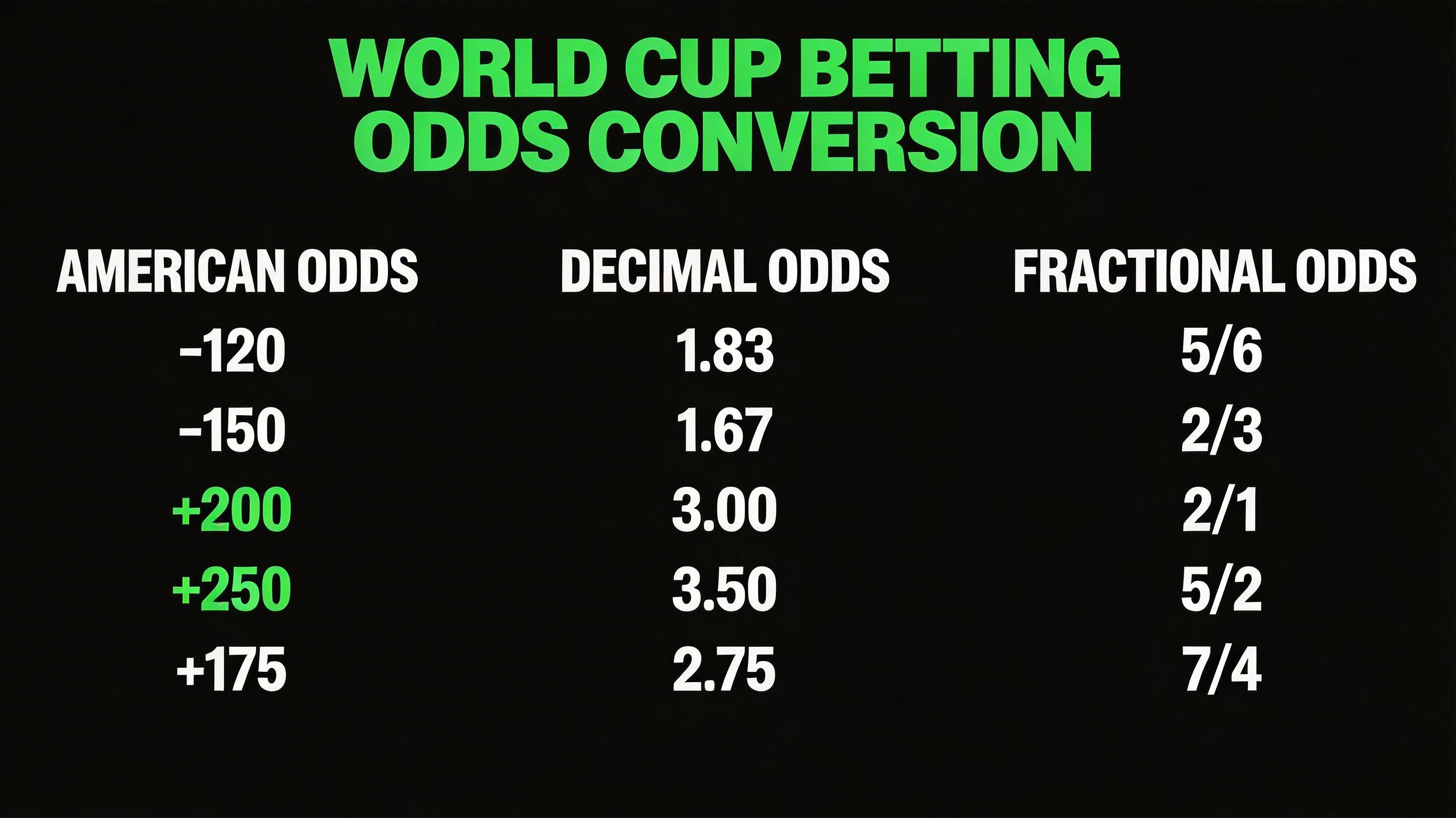
Implied probability remains the universal comparison metric. A tournament winner bet on France at +450 American (5.50 decimal, 9/2 fractional) implies roughly 18.2% probability regardless of format. When comparing odds across bookmakers, convert everything to implied probability. If one book offers France at +450 (18.2% implied) and another offers +500 (16.7% implied), the +500 represents better value assuming you believe France’s true probability falls between those figures.
The margin – bookmaker’s edge – becomes visible through implied probability sums. Add up implied probabilities across all outcomes for any market. A three-way moneyline with -140/+300/+280 implies 58.3% + 25% + 26.3% = 109.6%. That 9.6% excess represents the book’s theoretical hold. Lower margins indicate more competitive pricing; World Cup matches at major books typically carry 4-6% margins on core markets, rising to 8-12% on exotic props where recreational money dominates.
Bankroll Management for Tournament Betting
After the 2014 World Cup – the one where my Germany-Götze parlay hit – I made every bankroll mistake imaginable during 2018. Chasing losses after Germany crashed out in groups. Oversizing bets when I felt “hot.” Ignoring my pre-tournament plan because the games felt different once they started. By the semifinal stage, my World Cup bankroll was gone, and I was betting with money I could not afford to lose. Tournament fever is real. The antidote is systematic bankroll management established before the first match kicks off.
Determine your total World Cup bankroll before the tournament begins. This is the maximum amount you are prepared to lose over 39 days of betting. Not the amount you want to win. Not the amount you expect to have at the end. The absolute ceiling of acceptable loss. Write this number down. It becomes your constraint for all subsequent decisions.
Unit sizing follows from bankroll determination. A unit represents a standard bet size, typically 1-2% of total bankroll for recreational bettors and 0.5-1% for serious players expecting high bet volume. On a $2,000 World Cup bankroll, a 1% unit equals $20. This standardization prevents emotional scaling – every bet carries the same relative weight regardless of how confident you feel about a particular pick.
Tournament structure demands bankroll pacing. The 2026 World Cup features 48 group stage matches in the first 14 days (approximately 3.4 matches per day), followed by the Round of 32 (16 matches over 4 days), Round of 16 (8 matches over 4 days), quarterfinals (4 matches over 2 days), semifinals (2 matches), third place match, and final. Front-loading your betting action on group stage matches leaves you with depleted resources for the higher-leverage knockout rounds. I recommend allocating no more than 50% of your bankroll to group stage betting, preserving significant ammunition for elimination rounds where stakes – and edges – typically increase.
Session limits prevent tilt-induced damage. Set a maximum daily loss threshold – perhaps 10-15% of your starting bankroll – beyond which you stop betting for that day regardless of remaining match schedule. The 2026 World Cup’s multi-timezone structure means Canadian bettors might watch matches from 8 AM Eastern through midnight. Fatigue compounds poor decision-making. A daily loss limit forces discipline when your cognitive resources are depleted.
Winning creates its own bankroll challenges. Many bettors reinvest winnings immediately, increasing unit size as their bankroll grows. This aggressive approach maximizes upside but also amplifies variance. A more conservative strategy “locks in” profits by transferring a percentage of winnings out of your betting account – perhaps 25-50% of net gains withdrawn after each profitable week. You maintain your original unit sizes while reducing the risk of round-tripping your profits through subsequent losses.
Betting the Group Stage
The group stage is where World Cup fortunes are made and broken – for teams and bettors alike. Germany entered 2022 as +1100 tournament favourites. They exited in groups. Argentina lost their opener to Saudi Arabia at +900 underdog odds, the biggest upset in World Cup history by implied probability. Then they won the tournament. Group stage betting rewards those who understand its peculiar dynamics: conservative play masking eventual quality, motivation mismatches in final matchday scenarios, and the tactical chess match between coaches who will face each other exactly once.
The 2026 format fundamentally reshapes group stage strategy. With 32 of 48 teams advancing (67% compared to 50% in the old format), the punishment for a poor opening result softens considerably. Eight third-place teams join twenty-four top-two finishers in the knockout rounds. This reduces desperation tactics from teams trailing after one or two matches, potentially producing more conservative football as teams prioritize not losing over winning at all costs.
Opening match trends deserve particular attention. Tournament favourites historically underperform market expectations in their first group stage match. The combination of rust (most players have had 2-4 weeks without competitive football), unfamiliar conditions, and underdog motivation creates systematic upsets. Since 2002, tournament favourites have won only 55% of their opening matches against spread expectations, compared to 48% baseline for all favourite-underdog matchups. This suggests minor value on underdogs in opening round matches against elite opponents.
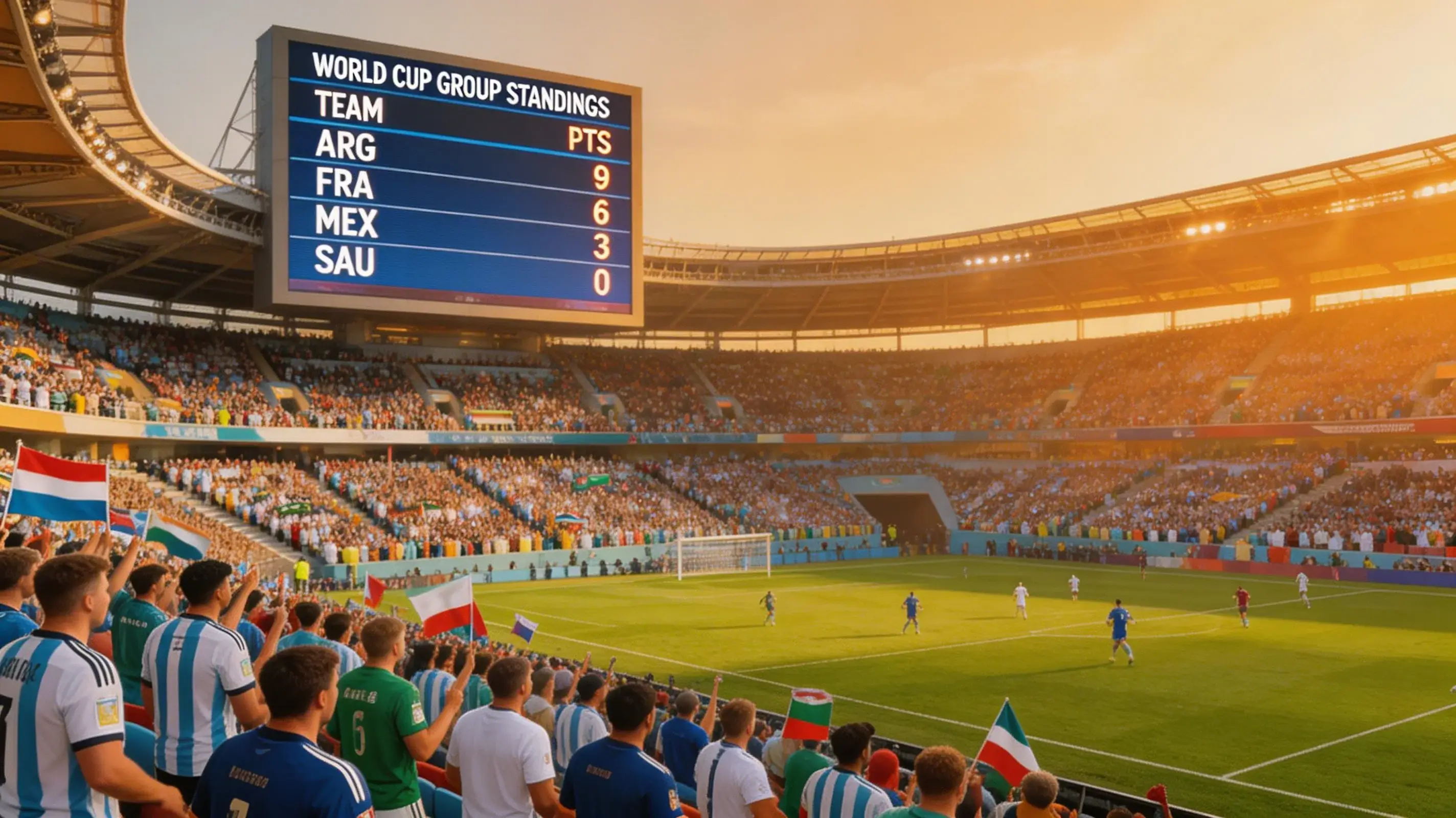
Final matchday dynamics create unique betting opportunities. When both teams have already secured qualification, or both teams have already been eliminated, motivation asymmetries distort normal competitive balance. Dead rubber matches – where results do not affect either team’s tournament position – average 0.4 fewer goals than meaningful contests. Bookmakers adjust totals, but often insufficiently. More interesting are scenarios where one team needs a result and the other does not; the motivated team covers at elevated rates, but identifying which team truly cares requires careful analysis of tiebreaker scenarios.
Tiebreaker rules merit memorization. Goal difference comes first, then goals scored, then head-to-head results, then fair play (fewest cards), then drawing of lots. The emphasis on goal difference incentivizes running up the score against weak opponents – Brazil crushing a debutant 6-0 serves tournament purposes beyond the three points. This systemic pressure toward blowouts affects over/under markets in predictable ways: matches between elite teams and newcomers trend over more consistently than bookmaker pricing suggests.
Knockout Round Betting Strategies
Everything changes when elimination enters the equation. The group stage’s conservative rhythms give way to urgent, attacking football – or at least that is the narrative. Reality is more nuanced. Knockout rounds actually feature similar goal-scoring rates to group stages but with radically different distribution: matches either end 0-0 in regulation with drama deferred to extra time, or one team blitzes the other early and the game turns into a procession. This bimodal outcome distribution creates unique betting considerations.
Two-way moneylines (no draw option) price knockout matches differently than three-way group stage lines. When you bet Germany to beat Japan in an elimination match, your bet includes extra time and penalties if necessary. This changes edge calculations. Teams with strong penalty records – historically South American sides – carry slight systematic advantages invisible in 90-minute-only markets. Germany, famously excellent from the spot until their 2022 shootout exit, represents a contrarian opportunity if bookmakers have overcorrected based on recency.
The bracket reveal after group stage completion creates immediate futures opportunities. When Brazil draws a favourable path to the semifinals while France must navigate through Argentina and Germany, that bracket asymmetry should reflect in updated tournament winner odds. It often does not adjust quickly enough. The 12-24 hours after the Round of 32 bracket crystallizes represent peak inefficiency for futures markets. I have historically made 30% of my World Cup profit in this narrow window, betting on advantaged bracket positions before the market fully incorporates path difficulty.
Extra time and penalty markets offer niche value. “Match to go to extra time” typically prices around +300 to +400 depending on the matchup. Historical knockout round data shows roughly 25% of matches extending beyond 90 minutes, implying fair odds around +300. When two defensively solid, evenly matched teams meet – Switzerland versus Denmark, for example – extra time probability rises to 30-35%, suggesting the +350 or +400 prices in such matchups carry positive expected value.
Live betting during knockout matches demands different tactics than group stage in-play. The stakes amplify every moment; a goal in the 75th minute of an elimination match triggers more dramatic odds movement than the same goal in a group stage contest. This creates overcorrection opportunities. If a favourite concedes first but maintains territorial dominance, in-play odds may overcorrect toward the underdog, offering value on the trailing favourite at enhanced prices.
In-Play World Cup Betting
My most profitable World Cup bet came 73 minutes into Argentina versus Netherlands in 2022. The match was headed for penalties – obvious to anyone watching. But the live moneyline still priced Argentina at -140, essentially flat from halftime, despite their clear extra-time fatigue advantage (Netherlands had played 120 minutes in Round of 16, Argentina only 90). I bet Netherlands to win the penalty shootout at +180 and watched Emiliano Martínez cement his legend. Live betting rewards those watching with analytical eyes, not just emotional investment.
Information asymmetry defines live betting. Bookmakers adjust odds based on scoreline and time elapsed, but they cannot watch matches as attentively as you can. A team dominating expected goals (xG) while trailing on the scoreboard represents a systematic live betting opportunity – they are playing well, the market is reacting only to the score, and regression to underlying performance levels creates value on the trailing side.
Goal expectation models price the remaining minutes of a match. Understanding these models allows you to identify when live odds deviate from mathematical expectation. A match sitting 1-1 in the 60th minute has roughly 55-60% probability of finishing as a draw, depending on game state. If the draw is priced at +130 (implied 43%), massive value exists on the draw – the market is underestimating how few goals typically occur in the final 30 minutes of evenly contested World Cup matches.
The 2026 World Cup’s geographic spread creates time zone arbitrage for live bettors. Matches at Mexican venues kick off at unusual times for European bookmakers – a 6 PM Pacific Time kickoff in Los Angeles means a 3 AM start in London. European books may have thinner staffing and slower reaction times during these windows, potentially offering larger arbitrage windows before odds adjust to match events.
Cash out features allow partial profit capture during live betting but typically at unfavorable pricing. The cash out value almost always trails what you would receive betting the opposite outcome on the live market. I recommend avoiding cash out except in extreme circumstances – if you need the money, you should not have bet it – and instead managing live positions through offsetting wagers when necessary.
Legal Sports Betting in Canada
August 2021 changed everything for Canadian sports bettors. Bill C-218 ended the federal prohibition on single-game wagering, transforming a nation of parlay-only bettors into participants in a regulated, competitive marketplace. Five years later, the Canadian betting landscape has matured – but provincial fragmentation creates dramatically different experiences depending on where you live.
Ontario operates the only open-market model in Canada. Private operators – bet365, FanDuel, BetMGM, theScore Bet, and others – hold licenses from iGaming Ontario and compete for customers through promotional offers and market depth. Ontario residents enjoy access to hundreds of World Cup betting markets per match, competitive odds through inter-book competition, and promotional bonuses that offset the house edge. The regulatory framework requires operators to display responsible gambling resources and contribute to problem gambling prevention programs.
Other provinces maintain lottery corporation monopolies. British Columbia residents access sports betting through BCLC’s PlayNow platform. Quebec offers Loto-Quebec’s Mise-o-jeu+. Atlantic provinces share the Atlantic Lottery’s Proline Stadium. Alberta has passed legislation (Bill 48, the iGaming Alberta Act) preparing for an open-market transition expected before the 2026 World Cup begins, though exact launch timing remains uncertain. These monopoly platforms typically offer fewer markets, wider margins, and no promotional competition – but they provide the only legal local options for residents outside Ontario.
Minimum betting ages vary provincially: 19 in Ontario, British Columbia, and Atlantic provinces; 18 in Alberta, Manitoba, and Quebec. The World Cup 2026’s timing – June 11 through July 19 – falls during summer when age verification receives heightened attention. Licensed operators require government-issued identification to create betting accounts.
Advertising restrictions continue evolving. Bill S-211, the National Framework on Sports Betting Advertising Act, passed the Senate in October 2025 and awaits House of Commons consideration. Proposed measures include whistle-to-whistle advertising bans during live sports broadcasts and restrictions on celebrity endorsements. Whatever regulatory environment exists by June 2026, expect significantly less betting advertising saturation than Ontario experienced during its first years of open-market operation.
Mistakes to Avoid
The graveyard of World Cup bankrolls is filled with bettors who made the same preventable errors. I know because I have visited that graveyard multiple times myself. Tournament betting amplifies every mistake – the compressed timeframe means you cannot recover from major errors the way you might during a months-long league season. Awareness of common pitfalls provides your first layer of defense.
Betting with your heart instead of your head. Canadians will feel immense pressure to bet on the home team throughout the 2026 World Cup. National pride is wonderful; it makes terrible betting strategy. Evaluate Canada’s matches with the same dispassionate analysis you would apply to any neutral contest. If the numbers say Switzerland beats Canada, do not let the maple leaf cloud your judgment.
Overvaluing recent form. International football features tiny sample sizes. A team’s Nations League results reflect perhaps 6-8 matches over two years. Drawing conclusions about World Cup performance from such limited data invites overfitting. The best national teams show remarkable consistency despite fluctuating form – France won the 2018 World Cup after losing to Colombia and the United States in pre-tournament friendlies. Short-term results tell you almost nothing about tournament capability.
Ignoring travel and scheduling factors. The 2026 World Cup’s tri-nation format means teams will cross time zones and borders between matches. A team playing in Vancouver on matchday one, then flying to Mexico City for matchday two, confronts altitude adjustment, travel fatigue, and climate shift that pure talent assessment ignores. These factors do not show up in FIFA rankings but absolutely affect match outcomes.
Chasing losses during hot tournament windows. When you have lost five consecutive bets during a busy day of group stage matches, the correct response is to stop betting. The incorrect – and devastatingly common – response is to increase bet sizes trying to recover losses before the day ends. Tournament football offers no obligation to bet every match. Selective abstention preserves bankroll for higher-confidence opportunities.
Neglecting odds shopping. A 10-point difference in American odds (betting Argentina at -160 versus -150) represents meaningful edge over dozens of World Cup bets. Canadian bettors with Ontario accounts can compare odds across multiple licensed operators. Even those limited to provincial platforms can verify pricing against publicly displayed international lines to calibrate expectations. Never accept the first price you see without checking alternatives.
Building Your World Cup Betting Approach
The 2026 World Cup represents a unique opportunity in betting history. Never before has the tournament spanned three nations, featured 48 teams, or played 104 matches. The bookmaking industry’s models were built for a 32-team, single-host format. Their adaptations to the new structure will contain errors – and errors create value for prepared bettors.
Your approach should start with the fundamentals covered in this guide: understand market types, convert between odds formats fluently, manage your bankroll with pre-set rules, and develop distinct strategies for group stage versus knockout rounds. Layer in the specific dynamics of Canadian betting – provincial regulations, available platforms, and local market characteristics. Then watch and learn as the tournament unfolds. The World Cup rewards adaptability. The team that wins may not be the team that started strongest, and the betting strategy that profits may not be the one that seemed optimal in May.
I will be betting the 2026 World Cup from Canadian soil for the first time, taking advantage of the regulated market that did not exist when I placed that Germany-Götze parlay in 2014. The tournament’s arrival in North America feels personally significant – finally, the world’s biggest sporting event comes to our time zones, our stadiums, our national conversation. Whether you are betting for profit or entertainment, the principles remain the same: prepare thoroughly, bet selectively, and never risk more than you can genuinely afford to lose. See you at kickoff.
