

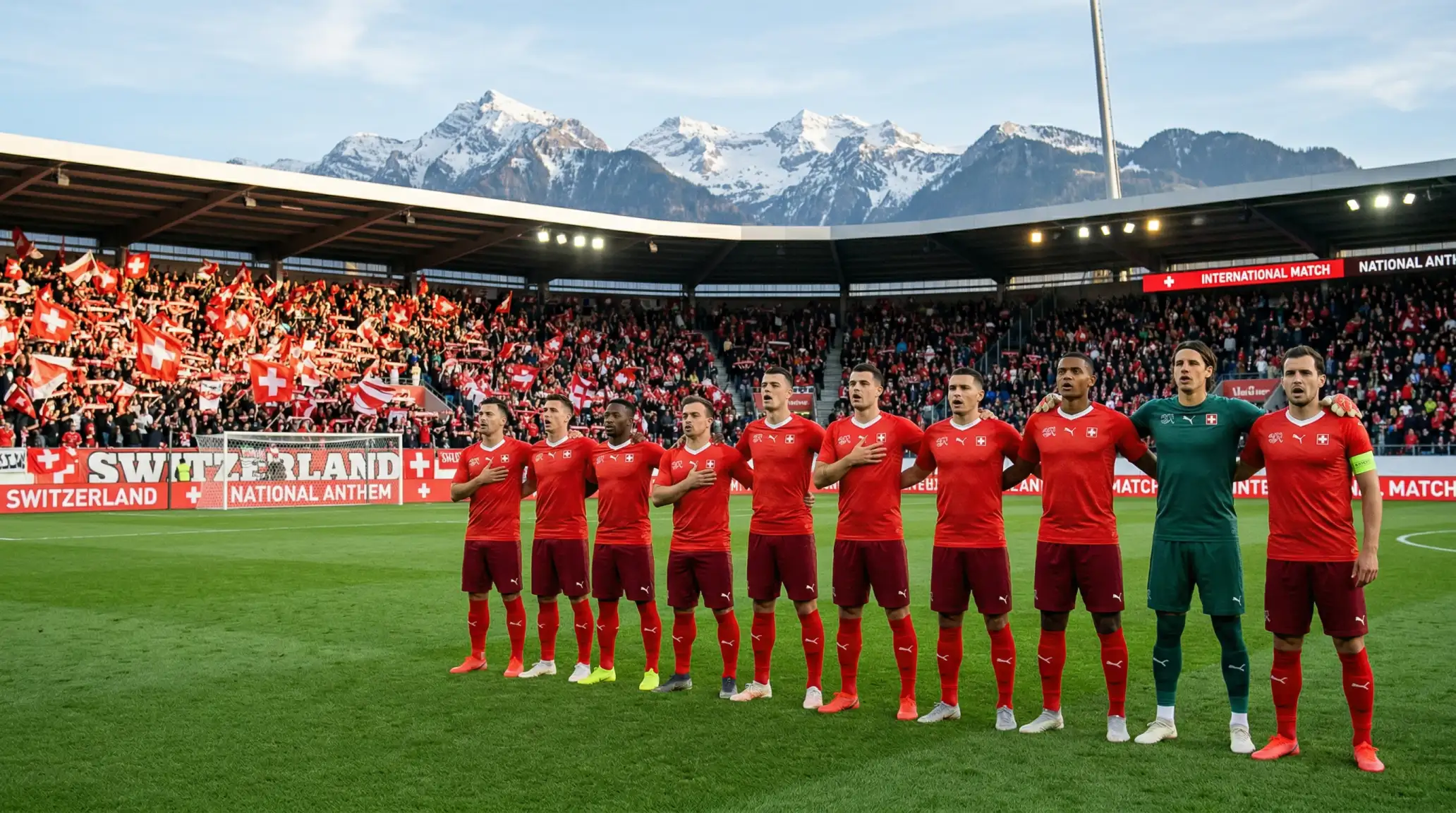
Switzerland has quietly established itself as one of European football’s most consistent tournament performers. Five consecutive World Cup appearances, regular progression beyond group stages, and the occasional signature victory – eliminating France at Euro 2020 remains their landmark achievement. The Nati don’t generate headlines like traditional powers, but their organizational excellence and tactical discipline produce results that exceed expectations more often than they disappoint.
For World Cup 2026, Switzerland’s draw into Group B places them alongside host nation Canada, former hosts Qatar, and Bosnia and Herzegovina – the team that upset Italy in qualification playoffs. The group composition makes Switzerland clear favorites on paper, their European quality and tournament experience creating expectations of comfortable advancement. For Canadian bettors, Switzerland represents the primary obstacle between Canada and group stage success.
UEFA Qualification
The Swiss path to 2026 qualification proceeded with characteristic efficiency. Top of their qualifying group, sufficient points secured with matches remaining, and the kind of consistent performances that have defined this federation’s approach. No dramatic moments, just reliable execution that produced expected outcomes.
The comfortable victories came against opponents Switzerland should defeat – scorelines reflecting quality gaps rather than exceptional Swiss performance. These matches confirmed squad composition without revealing much about ceiling capability against stronger opposition.
More informative were fixtures against competitive European opponents where Swiss organization faced genuine testing. These matches demonstrated both their defensive resilience and occasional attacking limitations. Switzerland defends well enough to compete with anyone but sometimes struggles to create against teams who respect their threat and defend compactly themselves.
The managerial situation under Murat Yakin has brought tactical clarity after previous transitional uncertainty. His approach emphasizes the defensive structure that Swiss football does naturally while providing attacking framework that creates enough chances to win matches. The system suits the personnel available rather than demanding players perform outside their capabilities.
The qualification campaign established what 2026 requires: Switzerland will compete adequately without threatening elite-level performance. Their ceiling involves quarterfinal appearance if draws favor them. Their floor involves group stage advancement given the Group B composition. This predictable range affects betting calculations throughout their odds structure.
Squad Analysis
Swiss squad composition reflects European-based quality without elite-tier individual talent. The players function within systems that maximize collective capability rather than relying on individual brilliance to produce moments of magic.
The goalkeeping position features Yann Sommer, whose Bayern Munich tenure established him among Europe’s elite shot-stoppers. His reading of the game, distribution quality, and penalty-saving capability add value that traditional goalkeeping metrics don’t fully capture. At 37 during the tournament, durability questions exist, but his experience across multiple World Cups provides composure that younger alternatives lack.
The defensive structure relies on organization rather than individual dominance. Manuel Akanji’s Manchester City development has elevated him to elite centre-back status – his passing ability and defensive positioning suit modern football’s demands. The partnership options around Akanji provide adequate quality without matching his level. The fullback positions feature reliable performers whose European club careers demonstrate consistent capability.
Central midfield showcases the depth that Swiss football development produces. Granit Xhaka’s leadership and experience anchor the midfield, his career longevity demonstrating sustained quality even as physical attributes change. The supporting cast includes players whose technical profiles suit possession football while providing defensive coverage that Swiss systems require.
The attacking positions present the most significant questions. The goal-scoring burden distributes across multiple players rather than concentrating on a single striker. This approach provides flexibility while lacking the clinical finisher that decides tight knockout matches. Whether collective attacking produces enough goals against organized defenses determines Swiss ceiling in the tournament’s later stages.
The bench quality reflects Swiss football’s developmental infrastructure. Substitution options exist that maintain system integrity without dramatically changing match dynamics. This depth matters across seven potential matches but lacks the impact alternatives that elite nations introduce to change games.
The age profile creates transition concerns that affect 2026 assessment. Xhaka at 33, Sommer at 37, Shaqiri’s reduced role – the experienced core that delivered Euro 2020’s France upset has aged without clear succession planning. Younger talents have emerged through Swiss academies and European pathways, but their international experience remains limited compared to the veterans they’re gradually replacing. This transition timing could affect Swiss performance unpredictably.
The dual-nationality pipeline that has benefited Swiss football continues producing options. Players with Swiss and other national backgrounds have chosen Nati, adding technical qualities that pure Swiss development might not produce. This recruitment advantage helps maintain squad quality despite Switzerland’s small population compared to football powers.
Group B Analysis – Canada, Qatar, Bosnia
The Group B composition creates clear Swiss favoritism balanced against opponents who each possess the capability to produce competitive matches. Understanding each opponent helps assess Swiss probability calculations.
Canada arrives as co-hosts with momentum from their home tournament status. Alphonso Davies’ return from injury adds dynamism that Swiss defenders must respect. Jonathan David’s goal-scoring creates threat that Swiss organization must contain. The Canada-Switzerland match likely determines group positioning – Switzerland should be slight favorites, but Canadian home advantage and quality create genuine contest dynamics.
Qatar returns to World Cup football after hosting in 2022. Their Asian Cup 2023 triumph demonstrated continued quality even after home tournament pressures ended. Against Switzerland, Qatar’s defensive organization and counter-attacking will attempt to frustrate before creating chances. The technical gap favors Switzerland, but Qatar’s tournament experience means they won’t be overwhelmed psychologically.
Bosnia and Herzegovina arrive after producing 2026 qualification’s greatest upset – defeating Italy in the European playoffs. That result demonstrated capability that seeding underestimated. Against Switzerland, Bosnia’s physical approach and counter-attacking threat creates different challenges than Qatar presents. The match could prove more competitive than pre-tournament odds suggest.
Group B betting: Switzerland -110 to top the group reflects favoritism that Canada’s home advantage challenges. The advancement price at -350 appropriately captures near-certain qualification given the group composition. Match-specific positions involving Switzerland-Canada total goals and margins present more interesting opportunities than group outcome markets.
The scheduling sequence matters for Swiss preparation. The specific order of opponents determines whether they can build confidence before facing Canada or must handle the toughest fixture first. Home venue advantage for Canadian matches creates obstacles that neutral-site tournaments wouldn’t present.
Switzerland World Cup Odds
The outright market prices Switzerland between +5000 and +8000, positioning them as dark horse contenders rather than genuine favorites. The implied probability of 1-2% reflects their consistent tournament performance without breakthrough to ultimate stages.
I find Swiss outright odds appropriately priced for championship purposes. Their ceiling doesn’t realistically extend to World Cup victory – the individual quality gap against elite nations is too substantial. But the price captures this reality reasonably without dramatic mispricing.
The value in Swiss markets involves progression positioning. Switzerland to reach quarterfinals at approximately +200 offers genuine consideration. Their group draw provides advancement opportunity, and the Round of 32 matchup could provide beatable opposition. At +200 implied probability of roughly 33%, the quarterfinal position potentially undervalues Swiss advancement capability through favorable draws.
Switzerland to top Group B at -110 presents the clearest betting opportunity. Their European quality should exceed what Canada, Qatar, and Bosnia offer – even with Canadian home advantage. This price implies roughly 52% probability, which may undervalue Swiss tournament experience and tactical maturity relative to their group opponents.
Avoid Swiss outright or semifinal positions where their ceiling limitations become problematic. The value exists in group stage and early knockout markets where Swiss organization produces predictable results against manageable opposition.
Betting on the Nati
Swiss betting patterns reflect their organizational style. The opportunities exist in positions that leverage defensive reliability while acknowledging attacking limitations.
Under totals suit Swiss matches against competitive opponents. Their defensive structure limits opposition chances while their attacking patterns don’t produce high-scoring affairs. Under 2.5 goals in Switzerland vs Canada at reasonable prices captures the likely tactical, competitive nature of that fixture.
Swiss clean sheet probability exceeds what casual assessment suggests. Sommer’s excellence and Akanji’s defensive quality create shutout capability that their FIFA ranking undersells. Against Qatar and Bosnia, Swiss clean sheets at approximately +110 offer value that reflects their actual defensive ceiling.
First goal timing in Swiss matches follows predictable patterns. Their patient approach doesn’t produce early scoring bursts – goals arrive after periods of control and defensive probing. Avoid Swiss first goal before 15 minutes in most matches; the system doesn’t prioritize immediate attacking returns.
The Switzerland-Canada match deserves specific attention given its Group B importance. Both teams to score at approximately -110 captures mutual attacking capability. Under 2.5 goals at similar prices reflects tactical approaches that prioritize organization over attacking adventure. These positions suit the match’s actual likely dynamics.
Swiss World Cup Record
Switzerland’s World Cup history features consistent participation without breakthrough moments. They’ve qualified for twelve tournaments total but never advanced beyond quarterfinals – a ceiling that seems to reflect genuine limitations rather than bad fortune.
The 2006 World Cup provided their modern benchmark – group stage advancement before penalty shootout loss to Ukraine in Round of 16. That tournament established Swiss capability to compete at World Cup level without suggesting championship potential.
Recent tournaments have maintained this pattern. The 2014 Round of 16 exit to Argentina, the 2018 Round of 16 exit to Sweden, the 2022 Round of 16 exit to Portugal – consistent progression followed by consistent elimination. The pattern suggests Swiss quality gets them through groups but doesn’t extend further against elite opposition.
The Euro 2020 victory over France represents Swiss football’s greatest recent achievement. That penalty shootout triumph – defeating tournament favorites after trailing 3-1 – demonstrated ceiling capability that World Cup performances haven’t matched. Whether that result was anomaly or evidence of actual Swiss potential against elite opposition remains debated.
The psychological profile from that France victory matters for 2026 assessment. Swiss players proved they can compete with and defeat elite opposition when circumstances align. That experience provides confidence that previous Swiss generations lacked – knowledge that the gap between them and favorites isn’t insurmountable. Whether this psychological advantage translates to World Cup performance depends on draw and specific matchup circumstances.
The North American venue factor affects Swiss preparation differently than European tournaments. The travel demands, time zone adjustments, and summer conditions create challenges that Switzerland’s European-based players haven’t experienced in tournament contexts. How Swiss management handles these logistical factors influences their performance across what could be seven matches in four weeks.
My projection for Switzerland: Round of 32 appearance with approximately 85% probability, quarterfinal at 35%, semifinal at 8%, tournament victory at 1%. These numbers reflect Swiss limitations against elite opposition while acknowledging their capability to advance through manageable draws. The value exists in group stage and Round of 32 markets where Swiss organization produces predictable results. For Canada’s World Cup prospects, Switzerland represents the most significant Group B obstacle requiring strategic betting consideration.
