
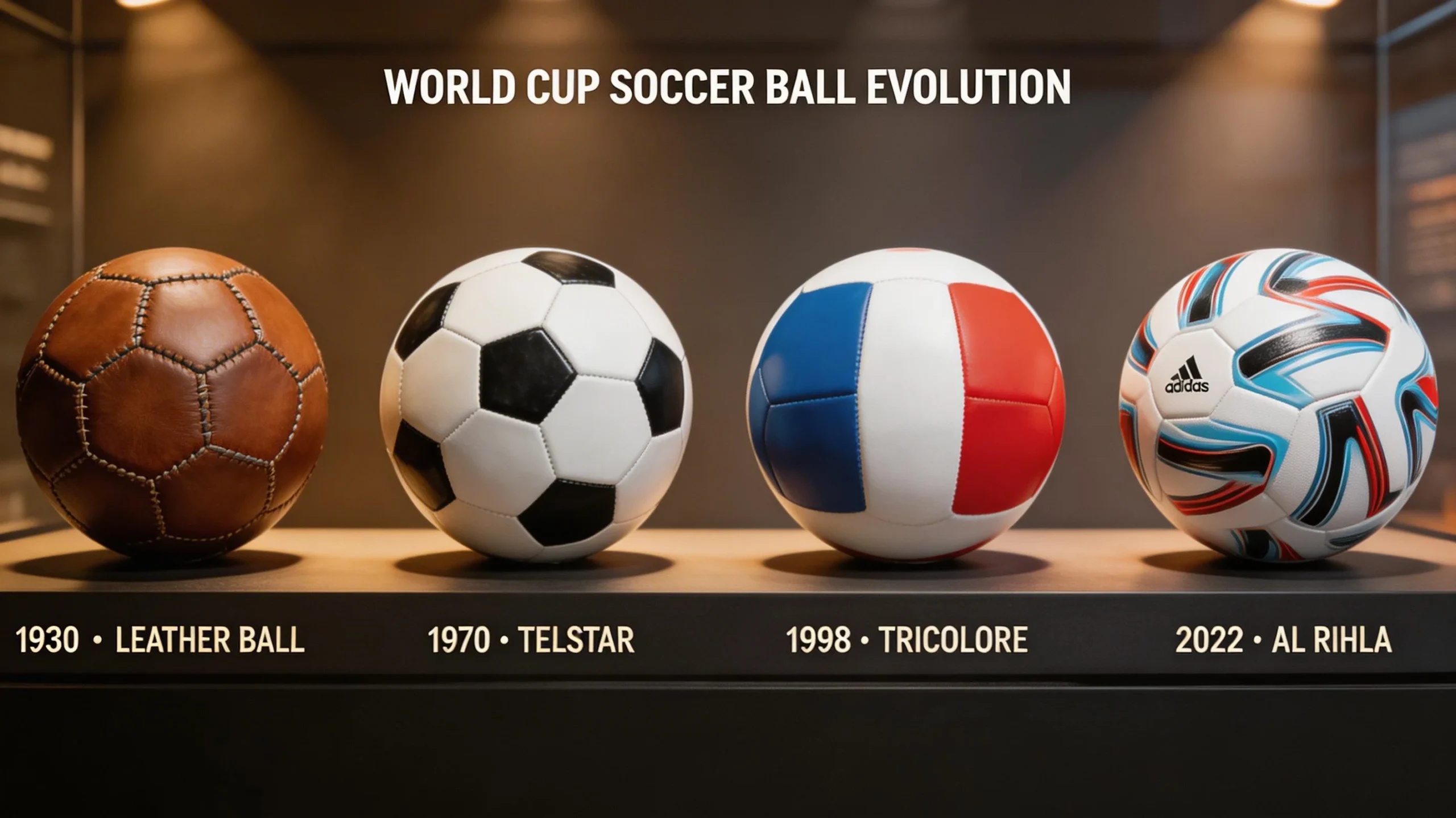
The first World Cup trophy weighed 3.8 kilograms and featured Nike, the Greek goddess of victory. Thirteen teams gathered in Uruguay in 1930, playing a tournament that would grow into humanity’s largest single-sport event. Ninety-six years later, 48 nations will compete for a trophy that travels the globe every four years, carrying the weight of dreams from Tokyo to Toronto.
Understanding World Cup history isn’t nostalgia – it’s betting intelligence. Patterns from 22 previous tournaments inform how we assess 2026: which nations overperform their talent, how hosts fare against expectations, what statistical ranges produce tournament winners. I’ve spent years studying these patterns, and the data tells stories that casual fans miss. Here’s the history that shapes smart World Cup betting. For current tournament coverage, visit our World Cup 2026 betting hub.
World Cup Winners – The Complete Record
The trophy has lived in just eight different countries since 1930. That exclusivity tells you something fundamental: World Cups don’t reward surprises at the ultimate stage. For all the group-stage upsets and Cinderella quarterfinal runs, the final four typically features familiar faces, and the winner almost always comes from an established elite.
Brazil leads all nations with five World Cup titles (1958, 1962, 1970, 1994, 2002), the only country to qualify for every single tournament and the benchmark against which South American football measures itself. Their 70-year span from first to most recent title remains unique – no other nation has won across such different eras of the sport.
Germany and Italy share second place with four titles each, though their paths diverge dramatically. Germany (including West Germany) won in 1954, 1974, 1990, and 2014, spanning the tactical evolution from route-one to tiki-taka derivatives. Italy captured 1934, 1938, 1982, and 2006, with their recent failure to qualify for 2022 and 2026 marking an unprecedented decline for a traditional power.
Argentina joins the four-title club after their 2022 triumph, adding to victories in 1978 and 1986. Lionel Messi’s presence potentially for one final tournament creates narrative intrigue for 2026 – can the defending champions repeat in North America?
France has claimed two titles (1998 and 2018), Uruguay two (1930 and 1950), England one (1966), and Spain one (2010). That’s it. Twenty-two tournaments, eight winners, with the Big Four (Brazil, Germany, Italy, Argentina) accounting for 15 titles. For 2026 betting, this concentration suggests fading longshots in outright winner markets – historical evidence says nations outside this circle rarely break through.
The betting angle: Since 1950, every World Cup winner ranked in the tournament’s top 5 betting favourites. Dark horses can reach semifinals; they almost never lift the trophy. Allocate your outright positions accordingly.
All-Time Top Scorers
Miroslav Klose’s 16 World Cup goals seemed like a record that might stand for decades when he retired after 2014. Kylian Mbappé, at 25, already has 12 goals across two tournaments. If he matches his 8-goal pace from 2018/2022 across the next two World Cups, the record falls. The top scorer race matters for betting because it connects individual excellence to team advancement – historically, Golden Boot winners play deep into tournaments.
Behind Klose: Ronaldo (Brazil) holds second with 15 goals across four tournaments, followed by Gerd Müller (14), Just Fontaine (13), Pelé (12), and Mbappé tied with several legends at 12. Fontaine’s record deserves special mention – he scored all 13 goals in a single tournament (1958), a concentration of finishing that has never been replicated.
The evolution of scoring patterns reveals tactical shifts. In early World Cups, individual strikers could dominate with hat tricks and four-goal games. Modern football distributes scoring more broadly – Didier Drogba, one of his generation’s best strikers, scored just 3 World Cup goals across three tournaments. The game has become harder for lone wolves.
For 2026 Golden Boot betting, the Klose path matters: he accumulated goals across four tournaments (5 in 2002, 5 in 2006, 4 in 2010, 2 in 2014) rather than exploding in one. Tournament scoring leaders typically reach semifinals or better – of the last ten Golden Boot winners, eight played at least five matches. This means Golden Boot favourites need teams capable of deep runs, not just individual brilliance on poor squads.
Mbappé enters 2026 as the favourite around +600, with Harry Kane and Erling Haaland typically next in betting markets. Jonathan David, Canada’s primary goal threat, sits around +4000 – a longshot that requires both individual hot streak and Canada reaching later rounds. The historical pattern favours elite strikers on elite teams, which keeps Mbappé and similar profiles as the value-adjusted leaders.
Tournament Records
Numbers anchor expectations. When someone claims 2026 will produce “record-breaking” scoring, the question becomes: what records actually exist, and how breakable are they?
Most goals in a tournament: France 1998 and Brazil 2014 share the record at 171 goals across 64 matches (2.67 per game). The 2026 expansion to 104 matches means raw goal totals will shatter easily – even a lower per-game average produces higher absolute numbers. The meaningful benchmark becomes goals-per-match, and the modern era (since 1998) averages approximately 2.5 goals per match.
Highest-scoring match: Austria 7-5 Switzerland in 1954 produced 12 goals, a record that feels unbreakable given modern defensive organisation. The highest-scoring match since 1998? Portugal 7-0 North Korea in 2010, which was less a competitive match than a mismatch that exposed qualification format flaws.
Largest margin of victory: Hungary’s 10-1 demolition of El Salvador in 1982 remains the record. For context, the largest margin since 2000 is Germany 7-1 Brazil in 2014’s semifinal, a result so shocking it transcended statistics into cultural trauma.
Most clean sheets in a tournament: Four different goalkeepers have recorded five shutouts – Fabien Barthez (1998), Pascal Zuberbühler (2006), Iker Casillas (2010), and Manuel Neuer (2014). This record could fall in 2026 given the expanded match count, making goalkeepers from likely finalists worth considering for Golden Glove betting.
Fastest goal: Hakan Şükür’s 11-second strike for Turkey against South Korea in 2002’s third-place match remains untouched. For prop betting purposes, “goal in first five minutes” typically hits around 15% of matches, useful for live betting setups.
Most cards in a tournament: Germany 2006 produced 28 red cards and 345 yellow cards across 64 matches, reflecting that era’s zero-tolerance approach. Card markets for 2026 should account for VAR’s continued presence – video review has reduced red cards while maintaining yellow card frequency.
Host Nations Through History
Canada, Mexico, and the United States share hosting duties in 2026, the first tri-nation World Cup. Historical host performance matters because home advantage consistently influences World Cup outcomes beyond what neutral analysis suggests.
Host nations have won six of 22 World Cups (27%), despite representing just 4.5% of participating teams historically. This disproportionate success rate validates home advantage as a genuine factor rather than narrative construction. Uruguay (1930), Italy (1934), England (1966), Germany (1974), Argentina (1978), and France (1998) all lifted trophies on home soil.
More broadly, host nations reach at least the quarterfinals in approximately 70% of tournaments. They fail to escape the group stage in only 15% of cases – and those failures typically involve co-host situations where the weaker host stumbles. Japan and South Korea both reached semifinals in 2002, but that required bracket separation. Qatar in 2022 became the first solo host to lose all group matches, an outlier that reflected their tournament football inexperience.
For 2026, the tri-host structure creates interesting dynamics. The United States carries most hosting expectations with 11 venues compared to Mexico’s 3 and Canada’s 2. American pressure to perform intensifies, while Canada and Mexico might benefit from somewhat reduced spotlight given the shared responsibility.
The betting implication: host nations consistently outperform their pre-tournament betting odds. USA at current prices around +2500 to +3000 offers value if you believe home advantage translates. Canada’s +15000 is longshot territory, but their path through Group B on entirely home soil makes advancement probable, and tournament magic could take over from there.
Tournament Format Evolution
The format you’ll bet on in 2026 would be unrecognisable to someone who watched Jules Rimet hand over the original trophy. Understanding how World Cups have changed reveals why certain betting patterns emerged and whether they’ll persist.
The inaugural 1930 tournament featured 13 teams in a format closer to a knockout cup than modern group play. Teams played preliminary rounds before semifinalists emerged, with no seeding or bracket protection. Uruguay won all four of their matches to claim the title.
By 1950, the World Cup introduced group play, though the final stage remained a round-robin rather than single-elimination. This format produced the infamous “Maracanaço” – Uruguay defeating Brazil in a match that wasn’t technically a final but functioned as one given the standings.
The modern 24-team format arrived in 1982, introducing second-round groups before semifinals. This expanded to 32 teams in 1998, establishing the group-plus-knockout structure that defined seven consecutive tournaments. That format produced consistent betting patterns: group favourites won at expected rates, knockout rounds introduced variance, and semifinals/finals saw elite nations assert superiority.
The 2026 expansion to 48 teams is the most significant format change since 1998. Twelve groups of four teams replace eight groups of four, with the top two from each group plus eight best third-place finishers advancing. The Round of 32 replaces the Round of 16 as the first knockout stage.
What this means for betting: more matches creates more betting opportunities, but the expanded field dilutes average match quality. Group stages will feature more mismatches (powerhouse versus debutant), which affects totals and handicap betting. The third-place advancement mechanism rewards defensive-minded approaches – some teams might play for the draw knowing 4 points likely advances. Historical patterns from 32-team tournaments may not translate directly; bettors should treat 2026 as partially uncharted territory.
Memorable World Cup Moments
Data informs betting; narrative drives engagement. The moments that define World Cup history aren’t always the finals or the goals – sometimes they’re the improbable sequences that remind us why we watch.
The Hand of God (1986) illustrates how individual brilliance – and controversy – shapes knockout rounds. Diego Maradona’s two goals against England in the quarterfinal encapsulated the tournament’s capacity for injustice and genius within minutes. For bettors, the lesson: knockout rounds produce singular moments that overturn expected outcomes. Hedging matters when elimination stakes rise.
Greece’s Euro 2004 miracle finds its World Cup parallel in Cameroon 1990, when Roger Milla at 38 years old led an African nation to the quarterfinals, beating defending champions Argentina along the way. These runs happen once or twice per tournament, usually dying in quarterfinals against deeper squads. Betting on them requires accepting poor expected value in exchange for dream payout potential.
Germany 7-1 Brazil (2014) exposed what happens when home pressure overwhelms rather than inspires. Brazil entered as hosts and favourites; they exited humiliated in the most lopsided semifinal ever. The betting angle: host nations in high-stakes knockout matches can crack. Laying hosts at short prices in semifinals or finals ignores this historical precedent.
Leicester City’s 5000-1 Premier League title has a World Cup equivalent in Denmark 1992 (Euros, technically) and Greece 2004 – teams who entered as afterthoughts and left as champions. The 48-team 2026 World Cup creates slightly more room for such stories, though again, the final historically rewards pedigree. Your longshot allocation should target later knockout rounds rather than outright winners.
Zinedine Zidane’s headbutt in the 2006 final reminds us that individual decisions determine tournaments. France was minutes from their second World Cup title when Zidane’s dismissal shifted momentum Italy’s way. The penalty shootout that followed saw France miss a crucial kick, handing Italy the trophy. For live bettors, the lesson is clear: even the greatest players can derail their own teams, and no lead is safe until the final whistle.
South Korea’s 2002 run to the semifinals remains controversial – refereeing decisions against Spain and Italy fuelled conspiracy theories that persist today. But the results stand: a host nation reached the final four for the first time in Asia. The betting lesson: home advantage compounds through knockout rounds. Referee psychology, crowd pressure, and fatigue from travel all favour hosts. In 2026’s tri-nation format, these advantages distribute more broadly, but they don’t disappear.
Morocco’s 2022 semifinal appearance broke barriers for African and Arab football simultaneously. Their defensive organisation and collective spirit demonstrated that smaller nations can compete against historical giants when preparation and mentality align. They eliminated Spain and Portugal before falling narrowly to France. For 2026, nations like Morocco, Japan, and Senegal carry that proof-of-concept momentum – quarterfinal runs from non-traditional powers should be expected rather than treated as anomalies.
Historical Patterns for Betting
Nine World Cups of betting data have revealed patterns I rely on when structuring 2026 positions. Not every pattern persists – markets adapt – but understanding historical tendencies provides foundation for tournament strategy.
Group stage favourites cover spread expectations approximately 65% of the time. When Germany faces a debutant nation, the margin typically matches or exceeds the -1.5 or -2 handicap lines bookmakers set. This efficiency means group-stage handicap betting requires selecting spots carefully rather than blindly backing favourites.
Knockout rounds produce approximately 30% of matches decided by extra time or penalties. This affects moneyline betting significantly – laying -180 on a semifinal favourite ignores the substantial probability of a draw at regulation. Draw no bet or Asian handicap alternatives often provide better structures for knockout betting.
Golden Boot winners come from semifinalist nations in 80% of tournaments. The additional 1-2 matches make a difference – Just Fontaine’s 13-goal tournament required 6 matches, while group-stage exits typically max out at 3-4 goals even for prolific strikers. Structure top scorer betting around teams you expect to reach at least semifinals.
Defending champions face increased elimination risk in group stages. Brazil (1966), France (2002), Italy (2010), Spain (2014), and Germany (2018) all exited in groups while defending their titles. Argentina should have heightened group-stage concerns despite being favourites; this historical pattern exists.
First-time World Cup nations win approximately 25% of their matches. For debutants like Canada in 1986 or Saudi Arabia in 1994, the learning curve is steep. The 48-team format introduces several new nations in 2026; betting against them in group openers follows historical logic.
Home advantage is worth approximately 0.3 goals per match in World Cup 2026 betting terms. Host nations score slightly more and concede slightly less than their talent suggests. For USA and Canada in 2026, this adjustment should factor into your match-by-match assessments – they’ll slightly exceed neutral expectations.
