
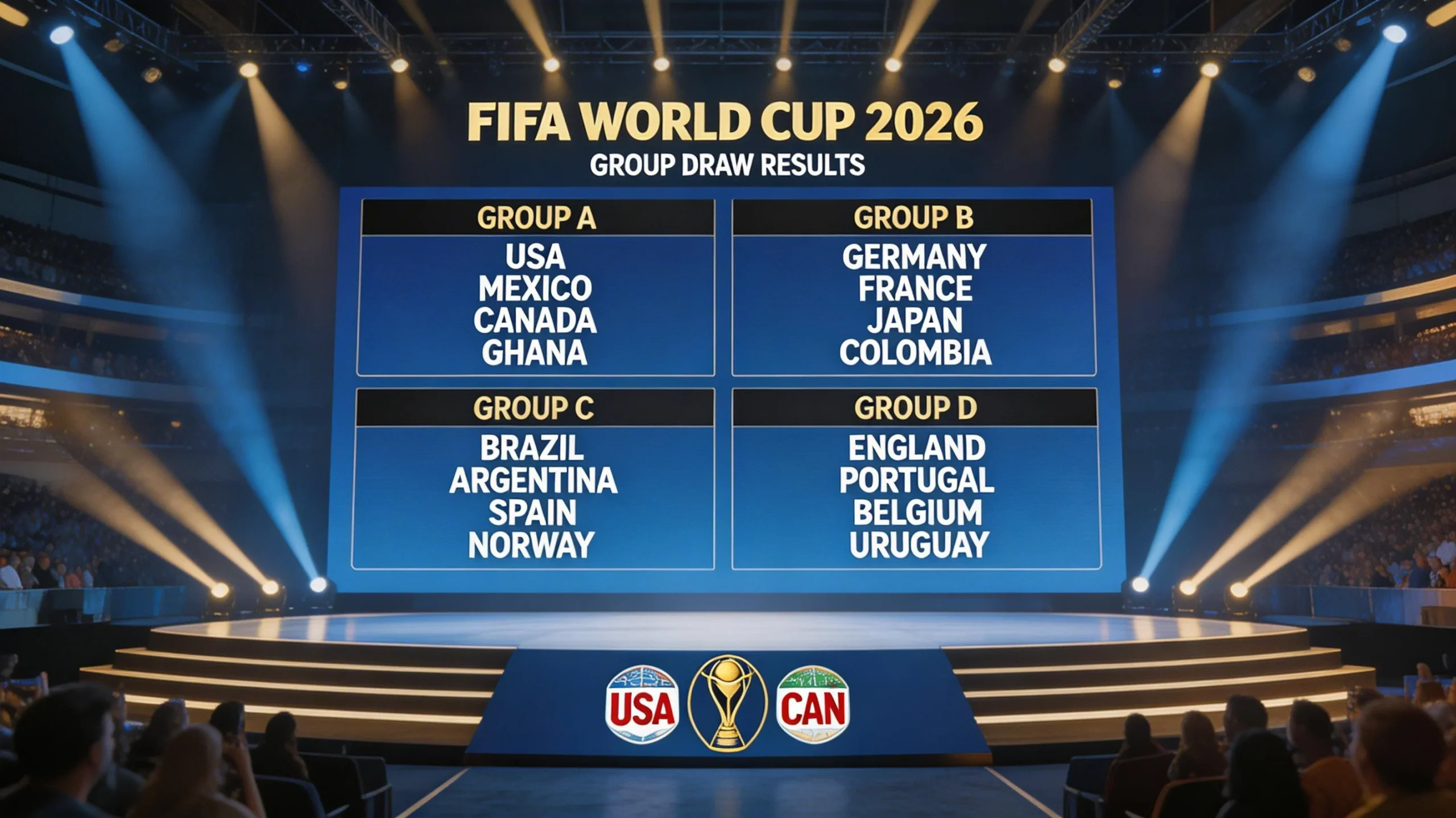
The moment FIFA secretary general Fatma Samoura reached into that glass bowl in Zurich, I felt my betting instincts firing before the first team name was announced. After nine World Cups analyzing draws, I have learned that group stage composition tells you more about tournament outcomes than any pre-tournament favourite ranking. The 2026 World Cup groups deliver exactly what an expanded 48-team format promised: complexity, opportunity, and betting angles that did not exist when 32 teams divided into neat eight-group packages.
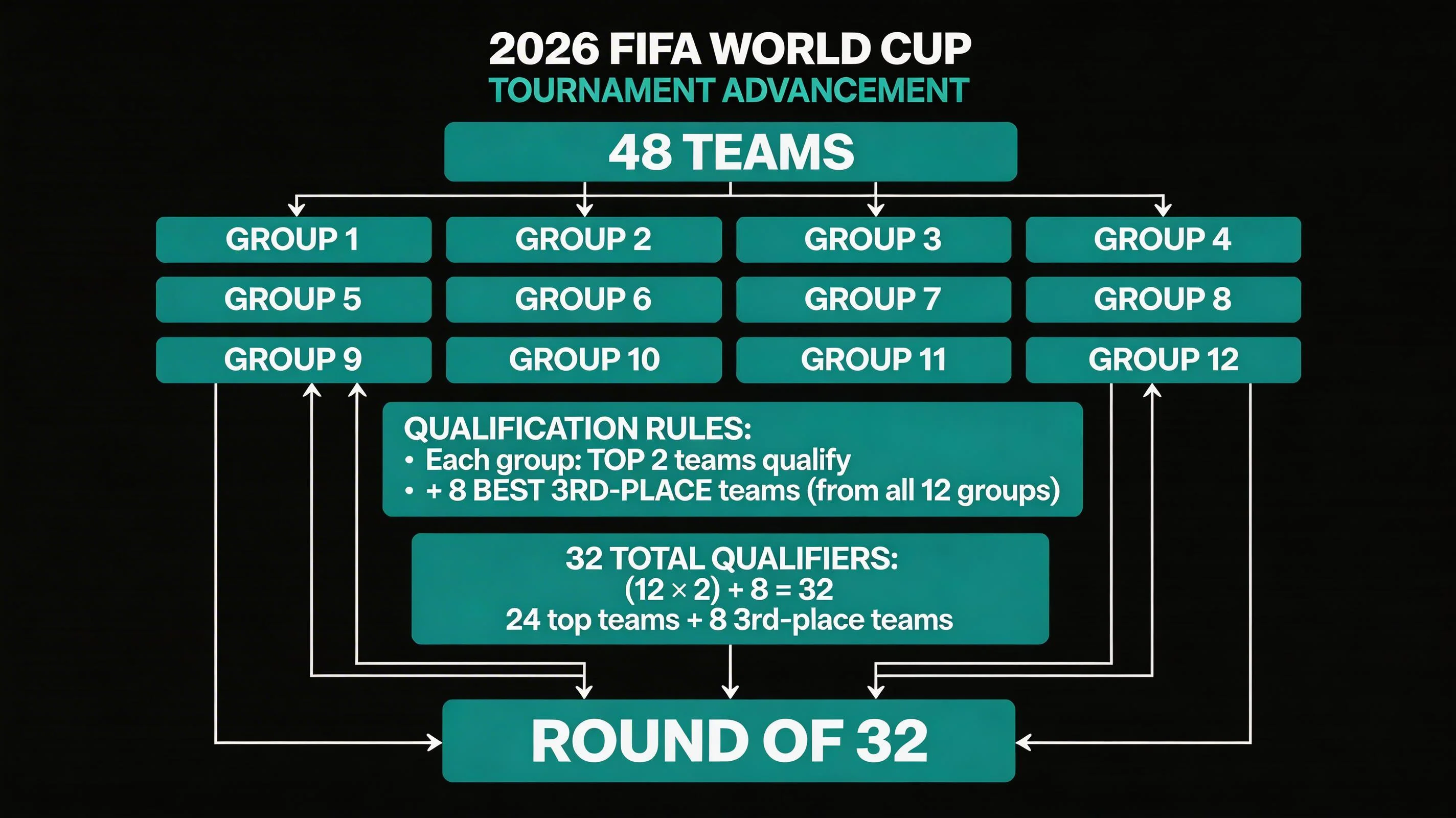
Twelve groups of four teams each means 24 automatic qualifiers from top-two finishes, plus eight best third-place finishers advancing to a Round of 32. That mathematical reality fundamentally changes group stage strategy. Teams that previously needed to win their group now have multiple pathways to knockout rounds. Conservative managers who park buses in pursuit of draws suddenly have viable tournament strategies. For bettors, this creates markets where traditional “group winner” assumptions collide with new qualifying dynamics.
The draw scattered historical giants across manageable groups while clustering potential chaos in others. Brazil and Morocco sharing Group C recreates 2022 knockout tension at the group stage. The USA drew Paraguay, Australia, and Turkey in Group D – three nations with recent tournament experience and genuine upset potential. Meanwhile, Canada’s Group B assignment alongside Switzerland, Qatar, and Bosnia and Herzegovina represents the home nation’s most favourable possible draw given Switzerland’s status as the only genuine European threat.
What follows breaks down each World Cup 2026 group through a betting lens. I am less interested in poetic narratives about football tradition than in identifying where oddsmakers have mispriced advancement probabilities, which groups will produce the chaos that creates in-play opportunities, and where the smart money should flow before opening whistles. For comprehensive profiles of each nation, see our complete 48-team guide. Twelve groups, 48 teams, and 104 matches create unprecedented wagering complexity – but also unprecedented opportunity for those who understand what these group compositions actually mean.
Group Stage Format – How Teams Qualify
I spent the week after FIFA announced the expanded format recalculating every advancement scenario I had memorized over two decades of World Cup betting. The 48-team tournament does not simply add more teams – it fundamentally restructures how qualification probability distributes across group positions. Understanding this structure is not optional for serious wagering; it is foundational.
Each of the twelve groups contains four teams playing a round-robin format: three matches per team, six matches per group. Standard World Cup rules apply – three points for a win, one for a draw, zero for a loss. Tiebreakers follow FIFA’s established hierarchy: goal difference, goals scored, head-to-head results, fair play points (yellow and red card accumulation), and finally FIFA ranking. The familiar part ends there.
The top two teams from each group advance automatically – that produces 24 qualifiers. The remaining eight Round of 32 spots go to the best third-place finishers across all twelve groups. This means eight of twelve third-place teams advance, or 66.7% of them. Compare that to Euro 2016’s 24-team format where four of six third-place teams advanced (also 66.7%) and you see FIFA applying tested mathematics to the expanded structure.
For betting purposes, this third-place dynamic changes everything. A team with four points from three matches – one win, one draw, one loss – almost certainly advances. Even three points might suffice depending on goal difference across other groups. The days when a single defeat effectively eliminated teams from World Cup contention are over. Managers know this, and their tactical conservatism will reflect it.
Group stage betting markets have not fully adjusted to these new realities. I still see “Group Winner” markets priced as though winning the group matters significantly more than finishing second. It does not. Both positions guarantee Round of 32 qualification, and bracket placement differences are minimal given the 32-team knockout structure. The real action sits in markets comparing second-place versus third-place finishes, where the qualification probability gap actually exists.
The Round of 32 bracket seeds groups A through L against each other in predetermined matchups. First-place finishers face third-place teams from other groups; second-place finishers face other second-place teams. This creates strategic incentives for finishing first when avoiding difficult second-place opponents matters more than the third-place matchup – but such nuances emerge only in group stage scenarios where teams control their own destiny entering final matchdays.
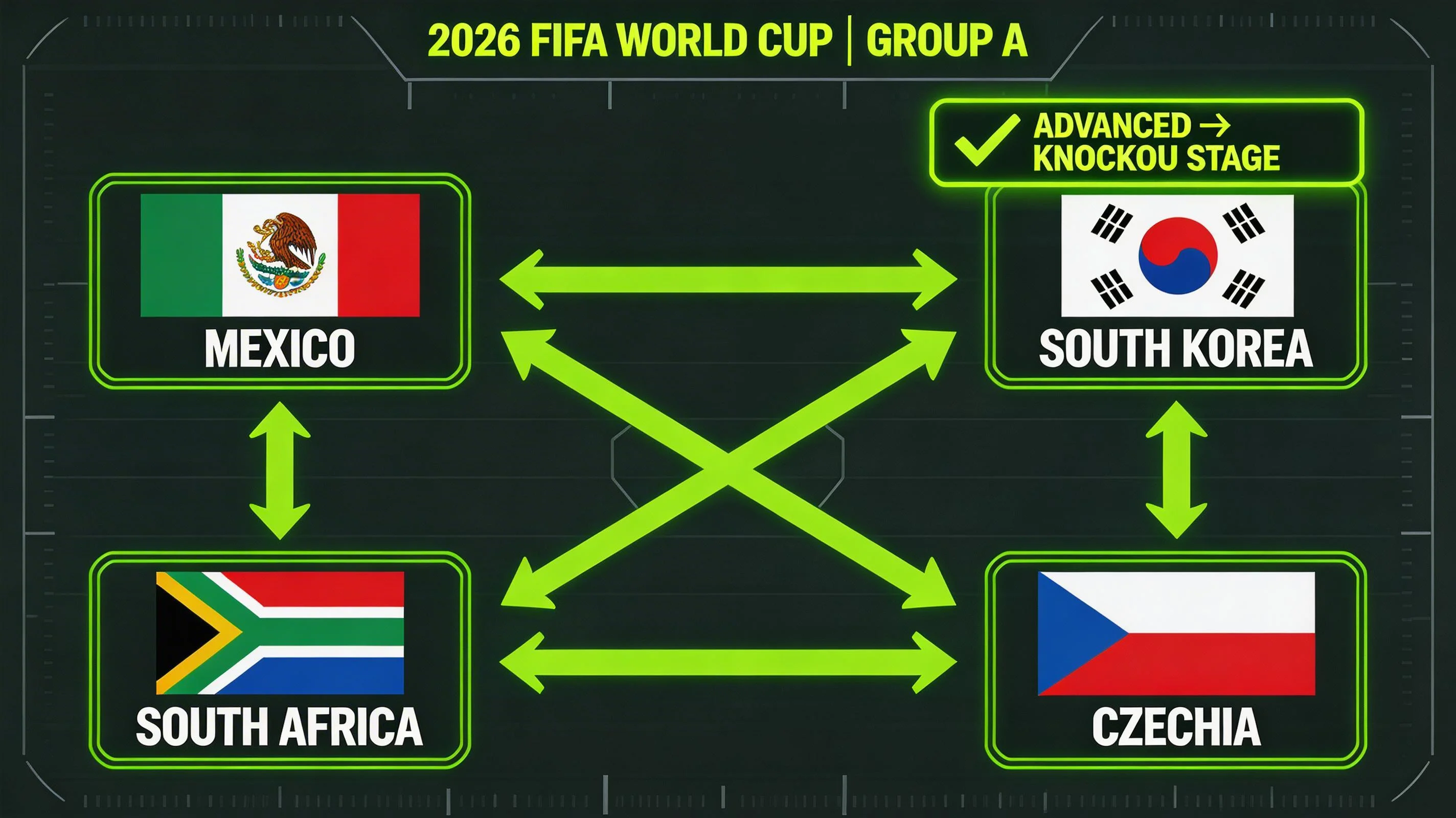
Group A – Mexico, South Korea, South Africa, Czechia
Estadio Azteca hosting the tournament’s opening match on June 11 puts Group A under immediate global scrutiny. Mexico versus South Africa kicks off the entire World Cup – and if you remember South Africa’s 1-1 draw against Mexico in the 2010 opener, you know opening matches produce results that bookmakers consistently underprice. The psychological pressure on hosts facing 87,000 screaming fans while a billion people watch globally creates volatility that numbers on a spreadsheet cannot capture.
Mexico enters as prohibitive group favourites, and the numbers support it. El Tri’s home record in competitive matches stretches back decades without meaningful defeats at Azteca. Their CONCACAF dominance, while occasionally challenged by the USA and Canada, remains the foundation of consistent World Cup qualification since 1994. The squad combines experienced MLS contributors with European-based talent like Edson Alvarez and Santiago Gimenez, providing the tactical flexibility to navigate group stage variations.
South Korea represents the genuine threat to Mexican dominance. The 2002 semifinalists have not replicated that home-tournament magic, but their consistent Asian Cup performances and European-based core (Son Heung-min remains the star, supported by rising Bundesliga talent) make them legitimate second-place contenders. The Korea-Mexico head-to-head historically favours Mexico, but single-match World Cup dynamics differ from aggregate historical records.
South Africa’s qualification signals African football’s continued global emergence, but their squad depth cannot match the established programs sharing their group. Bafana Bafana’s best-case scenario involves stealing points from either Mexico or South Korea through organized defensive football and counterattacking efficiency. For betting purposes, South Africa represents value in specific match markets – particularly against Czechia – rather than outright advancement positions.
Czechia rounds out the group as UEFA’s most anonymous qualifier. Their golden generation that reached Euro 2004 semifinals has long retired, and the current squad lacks equivalent star power. Patrik Schick remains the attacking focal point, but Czech football operates well below the resource levels of the group’s other European-adjacent programs. Finishing last in Group A seems the likeliest Czech outcome, though their defensive discipline could produce the kind of 0-0 draws that create betting opportunities for those backing unders in their matches.
My Group A projection puts Mexico first, South Korea second, South Africa third with a fighting chance at best third-place qualification, and Czechia eliminated. The betting value lies in South Korea’s second-place advancement price, which underrates their consistency, and South Africa match totals, which overestimate their scoring potential in a group where defensive survival matters more than attacking ambition.
Group B – Canada, Switzerland, Qatar, Bosnia
Every Canadian football supporter I have spoken with since the draw agrees: this could have been much worse. Switzerland represents serious European pedigree – three consecutive Round of 16 appearances – but they are not France, Germany, or Spain. Qatar peaked as 2022 hosts and have since shown regression to Asian mean. Bosnia and Herzegovina shocked Italy in qualification playoffs, announcing themselves as dark horses, but remain limited by depth issues. For a host nation desperate to advance beyond the group stage, Group B offers genuine opportunity.
Canada’s home advantage cannot be overstated. Both BMO Field in Toronto and BC Place in Vancouver will function as fortress environments for the Reds. The atmosphere advantage extends beyond crowd noise – Canada plays all three group matches on home soil, eliminating the travel fatigue that typically affects teams crossing multiple time zones. Alphonso Davies recovering from his ACL injury adds uncertainty to lineup projections, but Jonathan David’s Juventus form positions him as Canada’s most dangerous attacking weapon regardless of Davies’ fitness.
Switzerland enters as slight group favourites in most markets, and their pedigree justifies it. Granit Xhaka’s midfield orchestration, combined with emerging talent like Dan Ndoye and Zeki Amdouni, provides the tactical sophistication that consistently reaches knockout rounds. Swiss football operates efficiently rather than spectacularly – they rarely dominate opponents but equally rarely collapse. Their 2026 campaign likely produces three competitive matches with margins decided by individual moments rather than systemic superiority.
Qatar’s presence generates the most debate among my betting contacts. The 2022 host nation won the 2023 Asian Cup, demonstrating they have not simply dissolved post-World Cup. However, that home tournament featured three group stage losses and zero goals scored – the worst host performance in World Cup history. Akram Afif remains Qatar’s creative heartbeat, but the squad’s ceiling depends on matching 2023 Asian Cup intensity rather than 2022 World Cup passivity. I lean toward Qatar finishing fourth in Group B, but their Asian Cup title demands respect.
Bosnia and Herzegovina arrive with massive momentum from eliminating Italy. That playoff victory – decided at Sarajevo’s Olympic Stadium – represents the greatest result in Bosnian football history. Edin Dzeko’s international career finally includes a World Cup appearance, and younger talents like Ermedin Demirovic provide attacking support the 2014 squad lacked. Bosnia’s ceiling is second-place; their floor is third with legitimate best-third-place advancement chances. The Italy scalp proves they can perform under pressure.
For Canadian bettors, tracking Canada’s World Cup odds through group stage progression provides the clearest value pathway. An opening match win against Bosnia at BMO Field on June 12 would create advancement probability cascades that current futures markets significantly underprice. My read: Canada and Switzerland advance, with group winner determined by their direct meeting on June 24 in Vancouver.
Group C – Brazil, Morocco, Haiti, Scotland
The draw gods delivered a rematch nobody expected and everybody wanted. Brazil versus Morocco reproduces one of 2022’s defining moments – Morocco’s Round of 16 elimination of Spain followed by their quarterfinal defeat of Portugal – except now Brazil faces the Atlas Lions in group stage conditions where anything can happen over 90 minutes. This single match on the Group C schedule overshadows everything else, and the betting markets reflect its significance.
Brazil’s five World Cup titles create expectations no other nation carries. The Selecao’s 2022 quarterfinal penalty shootout loss to Croatia ended their latest campaign in heartbreak, and the subsequent managerial transition (whether ongoing or resolved by June 2026) shapes tactical identity. Vinicius Jr. leads the attacking vanguard, supported by Rodrygo, Raphinha, and whoever emerges from Brazil’s endless forward production line. Brazilian group stage dominance is historical norm – their last group stage loss came against Norway in 1998.
Morocco’s 2022 semifinal run changed African football’s global perception overnight. The Atlas Lions demonstrated that tactical discipline, physical conditioning, and moments of individual brilliance could overcome supposedly superior European opponents. Achraf Hakimi remains the attacking fullback archetype, while Yassine Bounou’s goalkeeping provides the platform for Morocco’s stingy defensive approach. Their ceiling extends to quarterfinals or beyond; their floor involves second-place Group C finish behind Brazil.
Haiti’s qualification represents CONCACAF’s expanded representation – and also the group’s most significant competitive mismatch. Haitian football history includes a single World Cup appearance in 1974, and the current squad cannot realistically compete for advancement against Brazil or Morocco. Their group stage function involves potentially stealing points from Scotland while providing more comfortable fixtures for the favourites. For betting purposes, Haiti matches offer one-sided lines with limited value.
Scotland’s return to consecutive World Cups after missing 1998 through 2018 reflects genuine football infrastructure improvement. The Scottish Premier League’s European coefficient improvements translate to better player development pathways, and John McGinn, Scott McTominay, and Andrew Robertson provide Premier League-quality spine. Scotland’s challenge involves navigating Brazil and Morocco while securing enough points against Haiti to claim third place with sufficient goal difference for Round of 32 qualification.
Group C betting concentrates on the Brazil-Morocco match, where line movement will be extreme as the fixture approaches. Brazil’s historical dominance suggests favouritism, but Morocco’s 2022 demonstrated that historical patterns break when tactical matchups favour the underdogs. I anticipate this match produces the group’s most-bet single game across global markets.
Group D – USA, Paraguay, Australia, Turkey
American sports bettors know their national team better than any wagering population in the tournament. The USA enters as co-hosts with automatic qualification and the pressure that accompanies hosting expectations. Christian Pulisic captains a golden generation that includes Weston McKennie, Tyler Adams, Gio Reyna, and emerging talents still developing as 2026 approaches. The USMNT’s ceiling involves home-tournament semifinal runs; their floor involves the kind of early exit that would devastate American soccer development for a generation.
Paraguay’s CONMEBOL qualification demonstrates South American football’s depth beyond Argentina and Brazil. The Guaranies combine MLS-based talent with South American league veterans, creating a squad that can compete physically with anyone in Group D. Their defensive organization – South American football’s default setting – makes them difficult to break down, while counterattacking efficiency creates upset potential in every match. Paraguay finishing above Australia or Turkey would not surprise seasoned tournament observers.
Australia’s 2022 Round of 16 appearance represented their best World Cup result since 2006, and the Socceroos return with similar squad composition and realistic advancement expectations. Their Asian qualification route provides competitive preparation, while their English-speaking core (many players developed in European leagues) navigates the North American tournament environment comfortably. Australia’s betting value emerges in advancement markets where bookmakers still underrate their consistency.
Turkey’s volatile national team identity creates the widest projection range in Group D. When Turkish football clicks – as it did during Euro 2008’s semifinal run – they can defeat anyone through passionate, technically skilled attacking play. When Turkish football misfires, defeats against lesser opponents become embarrassingly routine. Arda Guler’s emergence at Real Madrid suggests Turkish attack has world-class potential; whether that potential translates to World Cup consistency remains the betting question.
Group D produces the tournament’s most competitive four-way race. I see all four teams with legitimate advancement chances, which means third-place betting markets offer significant value. The USA’s home advantage tilts probability toward their first-place finish, but this group generates more upset potential than any other in the tournament. Paraguay’s disciplined approach, Australia’s tournament experience, and Turkey’s upside create a competitive environment where no outcome should surprise.
Group E – Germany, Ivory Coast, Ecuador, Curaçao
Germany’s 2024 European Championship hosting provided the template for what awaits in 2026. Die Mannschaft’s home tournament run to the quarterfinals demonstrated that German football has rebuilt after the 2018 and 2022 disasters. Florian Wirtz and Jamal Musiala represent generational talent that Germany’s infrastructure consistently produces, while the older guard provides leadership through tournament pressure. German group stage elimination has not occurred since 1938; that streak likely continues.
Ivory Coast’s 2024 Africa Cup of Nations victory as hosts established them as African football’s current standard-bearer. The Elephants’ squad combines Premier League experience (Nicolas Pepe, Wilfried Zaha in earlier iterations, now emerging talents) with domestic African league contributors who understand continental tournament intensity. Ivorian football’s physical presence makes them difficult opponents in any single match, though their consistency across three group games determines advancement probability.
Ecuador’s CONMEBOL qualification reflects South American football’s relentless competition. The Tri’s combination of altitude-trained physicality and technical development makes them tournament-tested opponents. Moises Caicedo’s emergence as a world-class midfielder (Brighton to Chelsea trajectory) provides the kind of individual quality that can decide tight matches. Ecuador realistically competes for second place behind Germany, with Ivory Coast as the primary competitor.
Curaçao represents CONCACAF’s expanding footprint and also the group’s significant quality gap. The Caribbean island nation of 150,000 people qualifying for the World Cup demonstrates football’s global reach, but their competitive ceiling involves avoiding embarrassing scorelines rather than advancing. Germany, Ivory Coast, and Ecuador will treat Curaçao matches as goal difference opportunities – and for betting purposes, totals in these fixtures should be significantly higher than other Group E matches.
Germany’s tactical rebuilding under Julian Nagelsmann (or whoever manages by 2026) positions them as tournament dark horses despite their traditional powerhouse status. The 2022 group stage exit and 2018 historical failure have adjusted betting markets to undervalue German advancement probability. Group E provides the softest imaginable path to knockout rounds – finishing below first place would represent major underperformance given the competition.
Group F – Netherlands, Japan, Sweden, Tunisia
Four genuinely competitive nations in one group creates the tournament’s most balanced draw. The Netherlands, Japan, Sweden, and Tunisia could produce any advancement combination – and that uncertainty generates the most interesting group stage betting landscape. No clear favourite exists because all four teams operate at similar competitive levels with different tactical approaches creating matchup-dependent advantages.
The Netherlands’ eternal World Cup frustration continues – three finals without a title, including 2010’s loss to Spain. Dutch football’s stylistic identity (attacking, technically sophisticated, occasionally defensively naive) creates entertainment value regardless of results. Virgil van Dijk anchors the defense, while Dutch forward production continues through the Eredivisie’s development pathways. Oranje’s ceiling includes semifinals; their floor involves exactly the kind of tight group that has historically produced Dutch disappointment.
Japan’s 2022 victories over Germany and Spain rewrote global perception of Asian football. The Samurai Blue demonstrated that Japanese tactical sophistication and technical quality now match European standards. Their Bundesliga-heavy squad (multiple starters play German first division football) understands European opposition tendencies, while Japanese discipline and fitness maintain high performance through three-match group stage demands. Japan represents genuine tournament dark horse value.
Sweden’s Scandinavian solidity provides the group’s most predictable element. Swedish football operates through organized defending, set piece efficiency, and physical presence that frustrates technically superior opponents. Their 2018 quarterfinal appearance demonstrates tournament capability, though the Zlatan Ibrahimovic era’s conclusion removes their historical star power. Sweden’s ceiling involves second-place advancement; their approach makes first-place unlikely against Netherlands’ attacking quality.
Tunisia enters as Africa’s most consistent World Cup participant outside Nigeria and Cameroon. The Tunisian national team’s tactical discipline and defensive organization create the kind of opponent that makes group stage progression difficult for everyone. Their 2022 draw against Denmark and near-miss against France demonstrated competitive capability, though converting opportunities into actual wins remains Tunisia’s persistent challenge.
Group F betting requires accepting uncertainty as the primary feature. Any ordering of these four teams is plausible, which means pre-tournament futures offer limited value. The real opportunity emerges as results develop – whoever secures early points gains substantial advancement probability increases that live markets will reflect. I recommend patience in Group F markets, positioning for in-tournament value rather than pre-draw speculation.
Groups G through L – Overview
The tournament’s second half contains the remaining six groups, each with distinct competitive dynamics that shape betting approaches. Groups J, K, and L remain partially unseeded pending playoff completions, but enough structure exists to identify clear favourites and potential chaos zones across these brackets.
Group G pairs Belgium with Iran, New Zealand, and Egypt. Belgian football’s 2018 peak – third place – represented the golden generation’s ceiling, and that generation has aged without equivalent replacement. Kevin De Bruyne likely plays his final World Cup, and Belgium’s competitive window closes rapidly. Iran represents Asia’s most physically imposing team, while Egypt’s Mohamed Salah gives them individual match-winning capability that could upset Belgian decline trajectory.
Group H features Spain as overwhelming favourites following their Euro 2024 title. The Spanish development pathway that produced Lamine Yamal, Pedri, and Gavi continues generating world-class talent at absurd rates. Spain draws Saudi Arabia, Cape Verde, and Uruguay – the latter creating the group’s intriguing subplot. Uruguay’s historical World Cup pedigree (two titles, though both pre-1960) meets current squad limitations that make second-place realistic but not guaranteed against Saudi or Cape Verde ambition.
Group I contains France, Norway, Senegal, and Iraq. French depth means they could field two distinct tournament-quality squads, and Kylian Mbappe’s peak years align with 2026 competition. Norway’s Erling Haaland arrives as the world’s most prolific striker, creating individual matchup nightmares for any defence. Senegal’s 2022 Round of 16 appearance established them as African contenders, while Iraq represents Asian qualification expansion with limited competitive ceiling. France and Norway advancing seems most likely, but Senegal’s quality makes any prediction uncertain.
Group J features Argentina as defending champions alongside Algeria, Austria, and a playoff qualifier. Lionel Messi’s potential final World Cup (or possible retirement before 2026) dominates Argentine narrative, though their squad depth transcends any individual contributor. Austria’s tactical evolution under Ralf Rangnick creates genuine upset potential, while Algeria’s African Cup contention makes them dangerous opponents. Argentina’s title defence begins with manageable group stage opposition.
Groups K and L await final qualification resolution, with Colombia, Uzbekistan, England, and Ghana confirmed. England’s eternal tournament underperformance haunts every prediction – their squad quality suggests deep runs that results consistently fail to deliver. Colombia’s James Rodriguez-era dominance has evolved into younger squad construction with inconsistent results. The remaining playoff qualifiers determine whether these groups favour clear advancement hierarchies or competitive chaos.
Across Groups G through L, the betting approach involves identifying mispriced second-place odds. Belgium, Spain, France, Argentina, and England all receive heavy favourite loading, which means second-place markets often overprice underdogs who actually have significant advancement probability. Uruguay, Norway, and Austria represent specific value positions where market sentiment has not caught up with on-field reality.
Groups of Death – Toughest Draws
Every World Cup produces “Group of Death” narratives, and 2026’s expanded format creates multiple candidates. My criteria for death group classification involves simple math: if all four teams have legitimate knockout round quality, the group qualifies. By this standard, two groups stand above the rest in competitive density.
Group F – Netherlands, Japan, Sweden, Tunisia – meets every death group criterion. All four teams have recent major tournament knockout round experience. All four play systematically organized football rather than relying on individual brilliance. All four can defeat any of the others on given days. The Netherlands’ historical reputation as group stage dominators meets Japan’s proven giant-killing capability, Sweden’s physical resilience, and Tunisia’s tactical discipline. Every match in Group F will be competitive; every result will affect multiple advancement scenarios.
Group D – USA, Paraguay, Australia, Turkey – represents the co-hosts’ nightmare scenario. American home advantage provides meaningful edges, but Paraguay, Australia, and Turkey all possess tournament experience and squad quality that makes advancement genuinely uncertain. The USA could finish anywhere from first to fourth depending on how matchups unfold – that volatility defines death group status. No comfortable paths exist.
Group C approaches death group classification through different dynamics. Brazil eliminates one advancement spot from competitive contention, but Morocco, Haiti, and Scotland fight for the remaining position with Scotland and Morocco both possessing genuine quality. The Brazil-Morocco headline match adds psychological pressure that can affect other results. Scotland’s determination to prove themselves against African opposition creates competitive density even with Brazil’s dominance assumed.
For betting purposes, death groups offer specific value propositions. Underdog advancement prices are higher than probability suggests because bookmakers weight historical reputation over current form. Japan’s second-place Group F price, for instance, underrates their genuine quality relative to Netherlands’ aging squad. Australia’s advancement odds in Group D similarly undervalue their consistency. Death groups produce the tournament’s best futures value precisely because uncertainty is underpriced.
Favourable Draws – Path to Knockout
The inverse analysis identifies groups where favourites have clearest advancement paths – information equally valuable for betting purposes. When Germany draws Curaçao or Brazil draws Haiti, advancement probability concentrates heavily among pre-tournament favourites, and markets reflect this by offering minimal value on expected outcomes.
Group E provides Germany the softest possible draw. Ivory Coast and Ecuador represent genuine competition for second place, but neither threatens German first-place positioning. Curaçao’s presence guarantees at least one comfortable fixture. German advancement probability approaches 95% in most models – so high that betting their qualification offers minimal return while betting against requires accepting extreme risk. The value in Group E involves second-place markets where Ivory Coast and Ecuador compete.
Group B gives Canada surprisingly favourable conditions. Switzerland is the only clear superior opponent, and their consistency means predictable matchups rather than chaotic variability. Qatar and Bosnia present winnable fixtures for a home nation with crowd support. Canada’s advancement probability – around 75-80% in most models – seems appropriately priced, but futures positions on deeper runs (quarterfinals, semifinals) offer value given the favourable group stage setup.
Group A benefits Mexico similarly. South Korea represents the only serious threat to Mexican domination, while South Africa and Czechia operate below Mexico’s competitive tier. Opening match pressure creates uncertainty, but Mexico navigating to knockout rounds from this group composition should be expected rather than hopeful. The betting angle involves backing Mexico futures at current prices before group stage confirmation inflates their lines.
Spain’s Group H and Argentina’s Group J also qualify as favourable draws, though their Round of 32 opponents emerge from harder groups. Favourable group stage draws can produce knockout round bracket positions that actually complicate advancement – a consideration for futures markets extending beyond Round of 32 qualification.
Group Stage Betting Opportunities
Nine years of tournament betting has taught me that group stage offers the World Cup’s most reliable edges. Match outcomes, point totals, goal markets, and advancement positions all generate value that knockout round randomness cannot replicate. The 48-team format expands these opportunities while creating new market structures worth understanding. Track current World Cup 2026 odds to identify where value concentrates as the tournament approaches.
The third-place advancement dynamic creates entirely new betting angles. In previous 32-team formats, third-place meant elimination in most groups. Now, 66.7% of third-place teams advance, which changes how teams play once elimination is mathematically prevented. Managers who would previously push for wins to avoid third-place now calculate points needed for best third-place qualification. This tactical shift manifests in more conservative late-game strategies when teams have secured sufficient points.
Match totals in mismatched fixtures offer consistent value. When Brazil plays Haiti or Germany plays Curaçao, bookmakers must set lines high enough to attract action on both sides. However, tournament dynamics – substitution timing, tactical experimentation, meaningless late goals – often push these totals below expected ranges. Backing unders in 3+ goal favourite lines has historically outperformed overs, contrary to intuitive assumptions about dominance translating to scoring.
Opening match volatility affects entire group betting structures. Mexico-South Africa kicks off June 11 at Azteca; whatever happens there sends signals that affect every subsequent Group A price. Teams that watch opening match results before their own fixtures adjust tactically, creating information asymmetries for bettors who tracked opening match dynamics. The June 11-13 period represents the tournament’s most valuable betting window as opening results clarify group trajectories.
Advancement futures present the clearest structural edge. Markets price advancement probability based on pre-tournament analysis, but group stage results create compound probability shifts that live markets struggle to accurately price. A team that secures six points from two matches might see their advancement probability jump from 75% to 98%, but markets often move from -250 to -350 rather than -250 to -2000. These gaps create arbitrage opportunities for bettors tracking live advancement scenarios.
For Canadian bettors specifically, Group B dynamics warrant concentrated attention. Canada’s opening match against Bosnia on June 12 sets the entire group narrative. A Canadian victory – which current moneylines undervalue given home advantage – cascades into advancement probability increases that make subsequent futures positions profitable. I recommend backing Canada in match one, then immediately positioning on advancement futures before markets adjust.
What These Groups Tell Us About July
The draw’s implications extend beyond group stage outcomes. How these 48 teams are distributed shapes the entire tournament bracket – and that bracket understanding informs betting strategy through to the July 19 final at MetLife Stadium.
Certain group outcomes funnel specific matchups into knockout rounds. If Brazil and Morocco both advance from Group C as expected, they avoid rematching until potential finals given bracket structure. Germany emerging from Group E faces potential Round of 32 African opposition, matchups they have historically dominated. The USA’s Group D complexity means their Round of 32 opponent remains genuinely unpredictable – any of Paraguay, Australia, Turkey, or a third-place team from Groups A, B, or C could await.
The bracket’s top half versus bottom half distribution creates structural predictions. Groups A through F populate one bracket half; Groups G through L populate the other. This means France, Argentina, Spain, and England cannot meet Brazil, Germany, Netherlands, or the USA until the final – assuming all advance as expected. For bettors making deep tournament predictions, understanding which half produces the eventual champion starts with group composition analysis.
My overall group stage read: expect more conservative football than previous World Cups as teams recognize that third-place advancement changes risk-reward calculations. The expanded format reduces elimination pressure in ways that will manifest as fewer attacking risks, more organized defending, and lower scoring outputs than 32-team tournaments. Backing unders across group stage fixtures represents a systematic approach aligned with these structural incentives.
The 2026 World Cup groups deliver exactly what betting analysts hoped from format expansion: complexity that creates opportunity. Twelve groups mean twelve distinct competitive environments, each with specific market characteristics that reward careful study. What I have outlined here provides the framework; the value emerges from applying these principles to live markets as results develop between June 11 and June 24. The group stage is not merely preamble to knockout drama – it is where tournament betting is won or lost.
