

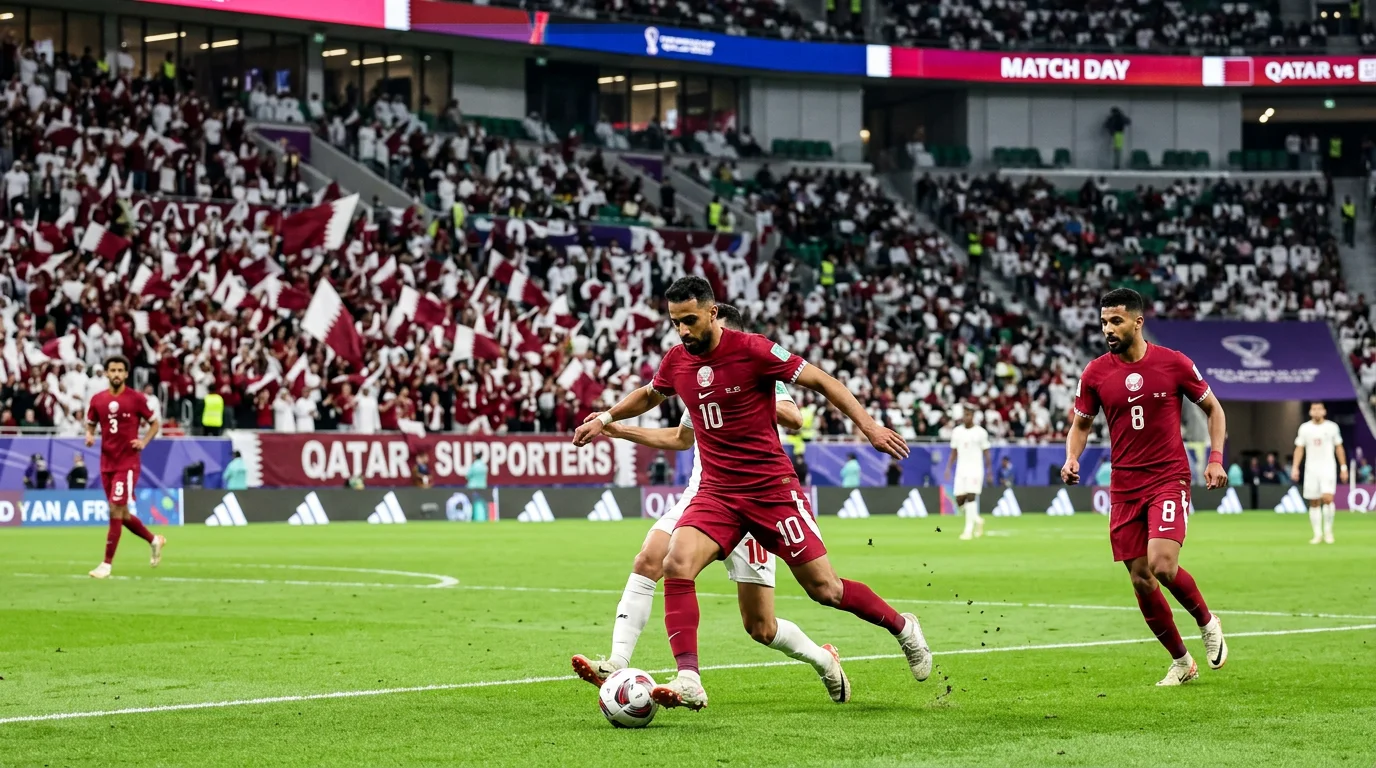
The transition from World Cup host to World Cup participant creates unique psychological dynamics that Qatar navigates for 2026. In 2022, they played before home crowds in purpose-built stadiums, the entire nation’s focus on their every match. The results disappointed – three losses, zero goals, group-stage elimination as the worst-performing host in tournament history. Now Qatar returns as a road team, traveling to North America without the advantages that home tournaments provide, carrying both the burden of 2022’s failure and the motivation to prove that result was circumstance rather than reflection of actual quality.
The Asian Cup 2023 triumph complicates any simple narrative about Qatari football. Just months after World Cup humiliation, Qatar won their continental championship on home soil, defeating quality Asian opposition and demonstrating that their development program produces results when pressure decreases. The question for 2026 involves whether that Asian excellence translates to World Cup competition against European and CONCACAF opponents in Group B.
Life After Hosting 2022
The 2022 World Cup investment – stadium construction, infrastructure development, the Aspire Academy system – was always intended to produce long-term football development rather than single-tournament success. That the tournament itself produced embarrassing results doesn’t negate the developmental foundation Qatar established. The players who will represent Qatar in 2026 trained through systems designed to produce international-quality footballers.
The home tournament pressure affected Qatari performance in ways that away matches won’t replicate. Every match carried national expectations that exceeded realistic assessment of Qatari quality against European and South American opponents. The opening-match loss to Ecuador set a negative trajectory that mounting pressure made impossible to reverse. Without that home-host burden, Qatar can approach 2026 as underdogs whose expectations involve competitive performance rather than advancement.
The post-2022 period focused on addressing limitations that the World Cup exposed. The defensive organization that leaked goals against Ecuador, Senegal, and Netherlands required attention. The attacking patterns that failed to produce a single goal needed reconfiguration. Whether these adjustments succeeded determines how Qatar performs against Group B opponents who present different challenges than 2022’s opponents did.
The psychological reset between 2022 disaster and 2026 opportunity benefits Qatar significantly. Players who carry World Cup trauma – the memory of failure before home crowds – might struggle to perform in subsequent tournaments. But the Asian Cup 2023 success provided redemption that healed those wounds. Qatar enters 2026 as Asian champions, their confidence restored through continental triumph rather than lingering in World Cup disappointment.
Asian Cup 2023 Champions
The timing of Qatar’s Asian Cup 2023 title matters for 2026 assessment. Winning the continental championship just months after World Cup failure demonstrated resilience and quality that the World Cup results obscured. That title wasn’t gifted through easy draws – Qatar defeated capable Asian opponents to claim continental supremacy.
The tactical adjustments between World Cup and Asian Cup deserve attention. Qatar played with more defensive solidity, accepting that their attacking limitations required different approach than World Cup ambition had demanded. This pragmatic adaptation produced results that suggested Qatari football leadership learned from failure rather than repeating mistakes.
The psychological confidence from Asian Cup success translates directly to 2026 preparation. Players know they can win knockout matches under tournament pressure when facing appropriate opposition. The question involves whether Group B’s European and CONCACAF opponents represent appropriate opposition or levels above what Asian Cup success demonstrated capability against.
The squad continuity between Asian Cup 2023 and World Cup 2026 provides foundation that national teams often lack. Many of the same players who won continental championship will represent Qatar in North America. This collective understanding – tactical patterns, mental resilience, winning experience together – advantages Qatar over opponents whose squads feature more recent integration of new players.
The development pipeline that Qatar’s Aspire Academy established continues producing players who understand the national team’s system from youth levels. This infrastructure investment – begun years before World Cup hosting was awarded – creates squad depth that smaller nations typically lack. The players may not reach European elite levels individually, but their collective understanding of Qatari football’s tactical demands produces team performance that exceeds the sum of individual parts.
Group B Challenges
Qatar’s Group B placement alongside Canada, Switzerland, and Bosnia creates a path where advancement requires exceeding realistic expectations. Understanding each opponent helps assess Qatari probability calculations.
Canada as co-hosts possess advantages that create significant obstacles for Qatar. The crowd support, environmental familiarity, and quality players like Alphonso Davies and Jonathan David suggest Canadian victory probability exceeds what neutral-site assessment would indicate. Qatar’s most realistic approach involves organized defense designed to limit Canadian scoring while creating occasional counter-attacking opportunities.
Switzerland represents European quality that Qatar has historically struggled against. The Swiss organization and tactical maturity that tournament experience provides creates challenges that Asian opponents don’t replicate. Qatar’s 2022 World Cup defeats came against European teams (Netherlands) and African teams (Senegal) that possessed qualities Swiss football shares.
Bosnia and Herzegovina provides the matchup where Qatari advancement hopes concentrate. Both teams enter as group outsiders whose quality exceeds their seeding – Bosnia through the Italy upset, Qatar through Asian Cup triumph. The Qatar-Bosnia match likely determines which underdog advances if either does, making that fixture Qatar’s most critical group assignment.
Group B betting involving Qatar: Qatar to advance at approximately +600 reflects underdog status that their World Cup 2022 failure partially justifies. The Asian Cup success suggests capability that advancement pricing may undervalue, but Group B’s European quality creates obstacles that Asian competition didn’t present.
Qatar World Cup Odds
The outright market prices Qatar between +20000 and +50000, reflecting their status as tournament outsiders whose ceiling involves group-stage competition rather than advancement. The implied probability below 0.5% captures realistic Qatari limitations against the tournament’s quality spread.
The value in Qatari markets involves specific match outcomes. Qatar to beat Bosnia at approximately +180 presents interesting consideration – two underdogs facing each other, with Asian Cup champions possessing quality that Bosnia’s rankings undersell. This position doesn’t require Qatari advancement, just single-match performance in the group’s most competitive underdog fixture.
Qatar over 1.5 group goals at approximately +120 offers value given their Asian Cup scoring demonstrated attacking capability that 2022’s scoreless World Cup obscured. Scoring at least twice across three group matches seems achievable against Bosnia and in moments against Switzerland or Canada.
Avoid Qatari advancement positions that require sustained performance against European quality their development hasn’t proven capable of matching. The value exists in match-specific outcomes where Qatari quality can manifest without requiring tournament-long consistency.
Betting Outlook
Qatari betting requires understanding their specific profile – Asian Cup champions whose World Cup 2022 failure revealed European-quality limitations that continental success couldn’t address.
Under totals suit Qatar’s likely tactical approach. Their defensive organization against superior opponents produces lower-scoring matches than attacking teams generate. Under 2.5 goals in Qatar’s matches against Canada and Switzerland at reasonable prices reflects their realistic game patterns against these opponents.
Qatar clean sheets seem unlikely against Group B’s attacking quality. Their 2022 World Cup defense leaked goals against every opponent – patterns that European and CONCACAF opponents will test similarly. Avoid Qatar clean sheet positions even against Bosnia.
The Qatar-Bosnia match deserves specific attention as Group B’s most uncertain fixture. Both teams to score at approximately -110 captures mutual capability. Draw at approximately +240 reflects the possibility that two evenly-matched underdogs produce stalemate. These positions capture the match’s actual competitive dynamics.
My projection for Qatar: group stage exit with approximately 85% probability, Round of 32 at 15%, quarterfinal at 2%. These numbers reflect realistic Qatari limitations against European quality while acknowledging Asian Cup success demonstrates capability that World Cup 2022 obscured. The value exists in match-specific positions, particularly Qatar-Bosnia outcomes, where their quality can manifest without requiring sustained excellence. For Canada’s Group B analysis, Qatar represents the opponent where Canadian victory should be most straightforward, though Asian Cup quality demands respect.
