

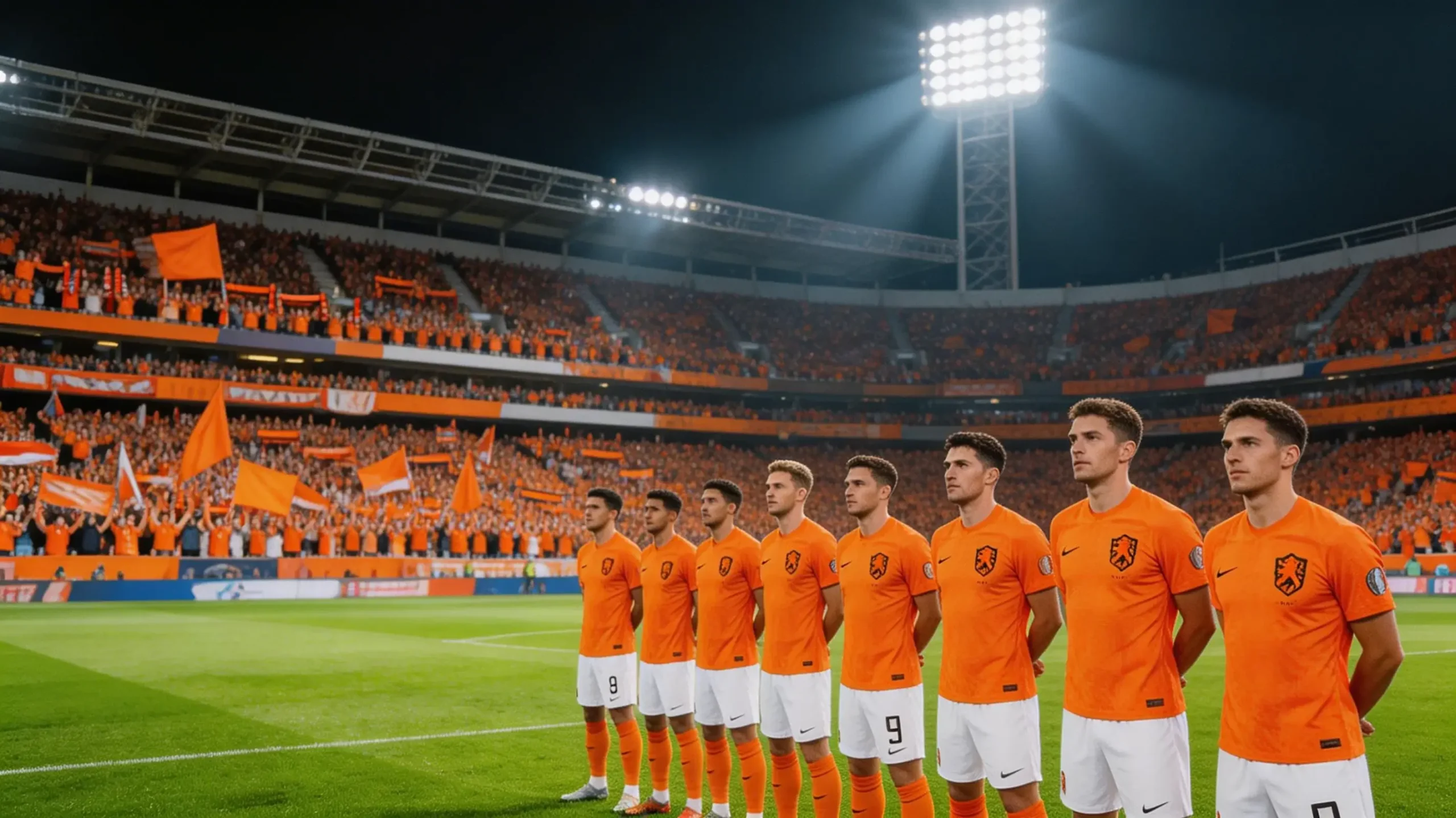
Three World Cup finals. Zero World Cup titles. The Netherlands occupies a unique position in football history – perhaps the most talented nation never to win the ultimate prize. Total Football in 1974, brilliant attacking play in 1978, dominant performances in 2010 – each era produced moments of brilliance followed by final-match heartbreak. The 2026 World Cup arrives with Dutch football in transition, questions about their tournament ceiling more pressing than usual given the generational shift currently underway.
The betting markets reflect this uncertainty. Oranje’s odds fluctuate more than established powers because their talent level depends heavily on which version of the Netherlands shows up. At their best, they compete with anyone. At their inconsistent worst, early exits become possible. This variability creates both risk and opportunity for bettors who can accurately assess Dutch form as the tournament approaches.
UEFA Qualification
The Dutch path to 2026 qualification demonstrated both capability and concern. Victories against expected opponents confirmed that basic quality remains, while occasional struggles revealed the transition challenges that affect tournament projections.
The comfortable wins came against opposition the Netherlands should defeat – the scorelines reflected talent gaps rather than exceptional Dutch performance. These matches provided limited insight into tournament readiness because the competitive level didn’t test Dutch capabilities meaningfully.
More revealing were fixtures against France and other capable European opponents. These matches showed Dutch ability to compete with elite nations while also exposing vulnerabilities that tournament opponents will target. The defensive organization that previous Dutch generations lacked remains an issue, while the attacking brilliance that defined Dutch football hasn’t consistently materialized in this generation.
The managerial situation stabilized after previous uncertainty. Ronald Koeman’s second tenure has brought tactical clarity that eluded interim appointments. His approach balances traditional Dutch attacking principles with pragmatic defensive considerations – a compromise that reflects modern tournament football requirements without abandoning national identity.
The qualification campaign confirmed squad composition without resolving questions about tournament ceiling. The Netherlands will reach the World Cup as expected. Whether they can exceed quarterfinal expectations requires evidence that qualification matches couldn’t provide.
The tactical evolution under Koeman deserves attention for betting purposes. Previous Dutch managers struggled to balance attacking instincts with defensive discipline. Koeman’s approach provides clearer structure – a defined system that players understand rather than improvisational brilliance. This clarity might sacrifice some creative ceiling while raising the floor of consistent performance. Tournament football rewards reliability over occasional brilliance, suggesting this evolution suits World Cup demands.
Squad Analysis
Dutch squad composition for 2026 reflects generational transition that hasn’t produced replacements for departed legends. The established quality exists at most positions, but the world-class individual talent that defined previous Dutch generations has become scarcer.
The defensive structure relies on Virgil van Dijk’s continued excellence. At 35 during the tournament, van Dijk remains one of football’s premier centre-backs, his Liverpool career demonstrating sustained quality that age hasn’t diminished. The question involves partnership – finding adequate alternatives alongside van Dijk has proven challenging. Matthijs de Ligt’s development at Bayern Munich provides options, while Nathan Aké’s versatility adds depth that previous squads lacked.
Central midfield features Frenkie de Jong as the creative hub when healthy. His Barcelona struggles haven’t diminished international performance, where his progressive passing and ball-carrying drive Dutch attacking patterns. The concern involves injury history that has interrupted recent seasons – de Jong’s availability throughout a seven-match tournament can’t be assumed. Around de Jong, options like Ryan Gravenberch and Tijjani Reijnders provide quality that functions differently but adequately.
The attacking positions present the most significant questions. Cody Gakpo’s Liverpool emergence has produced the star forward that Dutch football needed, his combination of pace, power, and finishing creating problems that opponents struggle to contain. Memphis Depay’s availability and form remain uncertain given his career trajectory. The supporting cast – Donyell Malen, Steven Bergwijn, alternatives – provides options without clear hierarchy.
The goalkeeping situation settled on Bart Verbruggen after years of searching for successor to previous generations. His Brighton career has established him at Premier League level without confirming elite international quality. The position represents solid rather than exceptional – adequate for tournament progression but potentially exposed against elite finishing.
The fullback positions reflect modern tactical demands. Denzel Dumfries provides attacking energy from right-back that suits Dutch wing play, his Inter Milan career demonstrating quality that tournament football rewards. Jeremie Frimpong’s emergence adds alternative qualities – pace and directness that stretches opponents differently. The left side features Aké’s versatility when defensive solidity is needed, with more attacking options available depending on match situations.
The bench quality has improved from recent tournaments without reaching France or England levels. Substitution options exist that change match dynamics rather than simply replacing tired legs. This depth matters across seven potential matches, but the drop-off from starting quality remains more significant than elite contenders experience.
Group F Preview
The draw places Netherlands in Group F alongside Japan, Sweden, and Tunisia. This composition presents a legitimate test that shouldn’t assume Dutch dominance – Japan particularly creates challenges that Group F betting must acknowledge.
Japan arrives as Asia’s most technically accomplished side, their 2022 World Cup victories over Germany and Spain demonstrating capability that European opponents underestimate at their peril. The pressing intensity and technical quality that Japanese players bring exceeds what their FIFA ranking suggests. The Netherlands-Japan match could genuinely go either way – this represents the group’s most competitive fixture.
Sweden provides Scandinavian organization without the individual brilliance of past generations. Their qualification through European pathways demonstrated capability that Group F opponents should respect. Against Netherlands, expect Swedish defensive structure designed to frustrate Dutch attacking patterns. The technical gap favors Oranje, but Swedish resilience could produce a closer match than betting lines suggest.
Tunisia represents African qualification’s competitive quality. Their 2022 World Cup performance – defeating France despite group-stage elimination – showed ability to challenge European powers in individual matches. Against Netherlands, Tunisian counter-attacking and set-piece threat requires respect. The expected Dutch victory shouldn’t be priced as certainty.
Group F betting: Netherlands -150 to top the group reflects reasonable favoritism that Japan’s quality challenges. The advancement price at -350 appropriately captures near-certain qualification without offering value. Match-specific positions deserve attention – Netherlands-Japan under 2.5 goals captures potential for tactical, competitive fixture rather than Dutch dominance.
The scheduling sequence within Group F affects Dutch preparation. Opening against a manageable opponent allows rhythm establishment before Japan’s challenge. The final group match stakes depend on earlier results but could involve either rotation if qualified or intense competition for positioning. These variables create match-specific betting opportunities that group outcome markets don’t capture.
The venue assignments across Group F matches affect Dutch adaptation. Playing in different US cities requires travel management that European tournaments don’t demand. How Netherlands handles these logistics – training locations, rest patterns, travel timing – influences player freshness for crucial matches. Teams that manage these details effectively gain advantages that pure football quality can’t replicate.
Netherlands World Cup Odds
The outright market prices Netherlands between +1400 and +2000, positioning them as second-tier contenders behind the elite favorites. The implied probability of 5-7% reflects their talent level and tournament history while acknowledging current squad questions.
I find Dutch odds appropriately priced for outright purposes. Their ceiling approaches tournament victory when everything aligns – van Dijk dominant, de Jong healthy, Gakpo clinical. Their floor involves early knockout exit when inconsistency manifests. The price captures this variability reasonably.
The value in Dutch markets involves specific scenarios. Netherlands to reach quarterfinals at approximately -110 offers slight value given their likely group advancement and Round of 32 matchup. The progression bets compound better than outright positions – semifinal appearance at +250 or longer captures Dutch ceiling without requiring championship victory.
Group F positioning affects Round of 32 opponent, making group winner important for bracket considerations. Netherlands topping Group F likely provides more favorable knockout path than second place. This incentive affects how to assess Dutch approach throughout group stage rather than assuming rotation once qualified.
The individual markets provide specific opportunities. Van Dijk for tournament best defender at longer odds captures his quality if Netherlands advances deep. Gakpo Golden Boot finish at approximately +2000 offers value given his central role and goal-scoring capability. These positions leverage Dutch strengths without requiring championship victory that history suggests is unlikely.
Betting on Oranje
Dutch betting patterns require understanding their stylistic tendencies. The opportunities exist in positions that leverage attacking quality while acknowledging defensive vulnerabilities.
Both teams to score markets suit Dutch matches. Their attacking talent produces goals against most opponents, while their defensive structure allows chances that quality forwards convert. BTTS “yes” at reasonable prices captures this pattern across group stage fixtures where Dutch dominance isn’t total.
Dutch corners reflect their attacking approach. Possession periods and crossing patterns generate corner opportunities at rates exceeding tournament averages. Netherlands over team corners in most fixtures offers value that compounds across multiple matches without requiring scoreline predictions.
Avoid Netherlands clean sheet bets against Japan and competitive opponents. The defensive vulnerabilities that have characterized modern Dutch teams remain present. Van Dijk’s individual excellence doesn’t guarantee collective shutouts against organized attacking opponents.
Gakpo-related individual markets present opportunities. His goal involvement in Dutch patterns makes anytime scorer prices attractive in multiple matches. Gakpo tournament goals total over 2.5 at reasonable odds captures his central role without requiring unlikely scoring volumes.
Dutch World Cup History
Three finals without victory defines Dutch World Cup narrative. The 1974 Total Football revolution, the 1978 near-triumph, the 2010 final loss to Spain – each era demonstrated Dutch capability to reach ultimate stages without claiming the trophy.
The 1974 team remains football’s most influential never-to-win-it-all side. Johan Cruyff and that generation revolutionized tactical thinking while falling to West Germany in the final. The attacking principles they established still influence Dutch football identity decades later.
The 2010 final represented modern Dutch best chance. That squad featured quality throughout – van Persie, Robben, Sneijder – and reached the final through impressive knockout performances. The loss to Spain in extra time, decided by Iniesta’s late goal, extended Dutch heartbreak into another generation.
Recent tournaments have produced variable results. The 2014 third-place finish showed knockout capability. Missing 2018 entirely represented failure that prompted rebuilding. The 2022 quarterfinal exit to Argentina on penalties continued patterns of reaching but not exceeding expected stages.
The historical pattern matters for betting purposes. Netherlands consistently performs at or above expectations through quarterfinals. Their finals failures suggest psychological barriers that talent alone hasn’t overcome. Betting positions that capture quarterfinal or semifinal capability without requiring championship victory align with this historical profile.
My projection for Netherlands: quarterfinal appearance with approximately 60% probability, semifinal at 30%, final at 12%, tournament victory at 5%. These numbers align with market-implied probability reasonably. The value exists in progression bets through quarterfinals where Dutch quality typically delivers, with diminishing edge in later rounds where their historical limitations apply. The complete World Cup teams guide provides context for how Dutch capabilities compare across the tournament field.
