

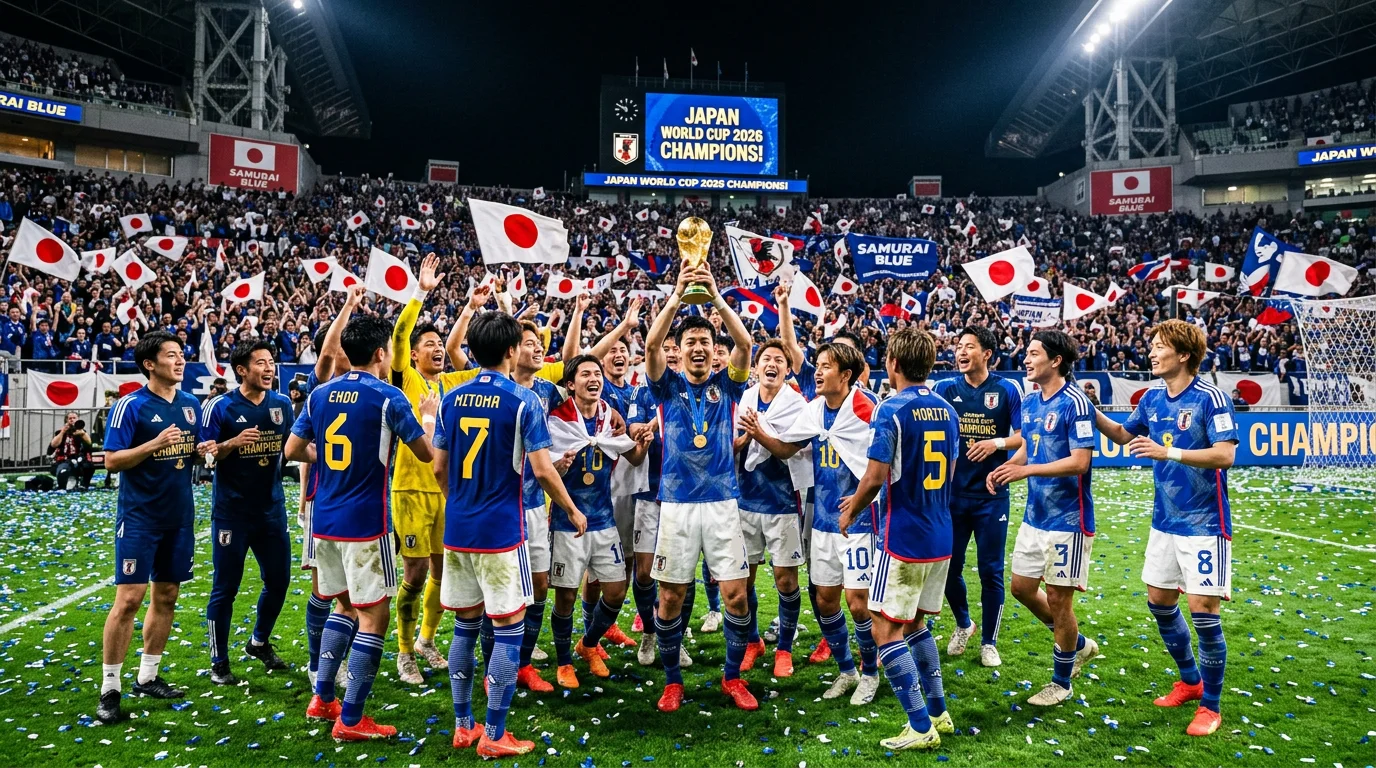
The images still shock: Japan defeating Germany 2-1. Japan defeating Spain 2-1. The same scoreline against two European giants in the same group stage, produced by a team that most observers expected to struggle for advancement. The 2022 World Cup established Japan as Asia’s premier footballing nation with a clarity that previous tournaments hadn’t achieved. Samurai Blue didn’t just compete – they dominated elite opposition through tactical discipline, technical excellence, and a collective mentality that overwhelmed individually superior opponents.
World Cup 2026 arrives with Japanese football riding unprecedented momentum. The European pipeline that produced 2022’s heroes has only strengthened, with more Japanese players contributing at Champions League level than ever before. The question isn’t whether Japan can compete with European powers – 2022 answered that definitively. The question involves whether they can sustain that level across a seven-match tournament, advancing beyond Round of 16 to reach stages that previous Japanese generations couldn’t.
Building on 2022 Success
The 2022 World Cup performances against Germany and Spain represented Japanese football’s tactical evolution reaching maturation. The aggressive pressing, the collective movement, the fearlessness against opponents who expected Japanese deference – everything combined for results that announced a new era rather than an anomalous tournament.
The Round of 16 loss to Croatia on penalties represented familiar Japanese disappointment dressed in new circumstances. Reaching that stage through group victories over elite opponents, then falling in a shootout, suggested the remaining gap involves experience and composure under ultimate pressure rather than tactical or technical deficiency. The tears after that Croatia match reflected how close Japan came to breaking through entirely.
The post-tournament period focused on maintaining momentum while preparing for expanded tournament demands. The same tactical principles – high pressing, quick transitions, technical precision – continue defining Japanese identity. The personnel has evolved slightly, with 2022’s heroes joined by emerging talents who’ve developed through European pathways that barely existed a decade ago.
The managerial continuity under Hajime Moriyasu provides stability that some nations lack between tournaments. His approach to 2026 builds on 2022’s foundation rather than requiring players to learn new systems. The tactical understanding that produced Germany and Spain victories remains embedded in squad muscle memory, available for deployment against whatever Group F presents.
The psychological confidence from 2022 translates directly to 2026 expectations. Japanese players know they belong at elite level – proven through results rather than hoped through projection. This mentality shift from respected underdog to legitimate contender affects how Japan approaches every fixture, including Group F matches against Netherlands that previous generations might have feared.
Squad Analysis
Japanese squad composition for 2026 reflects the European integration that has transformed their football. The majority of expected starters play at Champions League or top-five-league level, providing quality that domestic-based squads of previous generations couldn’t match.
The goalkeeping position features Zion Suzuki among options whose European development has elevated Japanese goalkeeping standards. The distribution quality and shot-stopping that modern football demands comes naturally to keepers trained through European pathways. This position no longer represents Japanese weakness as it historically did.
The defensive structure balances organization with individual quality. Ko Itakura’s defensive presence, Takehiro Tomiyasu’s versatility across the backline, and fullbacks whose attacking contributions create width – Japan defends collectively while threatening through individual quality that previous generations lacked. The high line that enables pressing requires defenders comfortable with recovery runs, and Japan’s current options suit this demand.
Central midfield showcases perhaps Japan’s greatest strength. Wataru Endo’s Liverpool career established him among Europe’s elite defensive midfielders, his reading of the game and distribution quality anchoring Japanese patterns. The supporting options – Hidemasa Morita, Ao Tanaka, others – provide combinations that suit different tactical requirements. This depth allows Japan to control matches against possession-oriented opponents while competing in transitions against direct teams.
The attacking options have evolved beyond Takumi Minamino and Kaoru Mitoma’s established quality. The emergence of additional European-based forwards provides rotation options that tournament football requires. The collective pressing from front positions – everyone contributing defensively before transitioning to attack – defines Japanese offensive identity more than individual brilliance, though that brilliance increasingly exists within the system.
The bench quality represents Japan’s most significant evolution. Substitutions introduce players who would start for many national teams, allowing tactical adjustments and fresh legs that maintain intensity through ninety minutes and beyond. This depth matters enormously in tournament football’s later stages.
The age profile optimizes for sustained performance. The core players enter 2026 in their mid-twenties to early thirties – physical peaks combined with accumulated international experience. Unlike squads relying on aging veterans or unproven youth, Japan’s blend provides both immediate quality and the energy that seven tournament matches demand. This profile suggests 2026 represents their optimal window rather than a developmental tournament.
The tactical versatility within the squad creates matchup advantages. Japan can press high against possession teams or sit deeper against direct opponents. They can control matches through midfield or release quickly into counter-attacks. This adaptability – demonstrated through 2022’s varied approaches against Germany and Spain versus other opponents – makes them difficult to prepare for because their approach changes based on what opponents offer.
Group F Preview
Japan’s draw places them in Group F alongside Netherlands, Sweden, and Tunisia. This composition presents genuine challenges through Dutch quality while providing opportunities that Japan’s 2022 form suggests they can exploit.
Netherlands represents the group’s defining test. The Japan-Netherlands match determines whether 2022’s victories over Germany and Spain translate to continued European success or represented specific circumstances that Dutch quality can avoid. Japanese pressing against Dutch possession creates tactical dynamics that neither team can dominate – expect a competitive match where either result seems plausible.
Sweden provides Scandinavian organization without the individual quality of past generations. Their qualification through European pathways demonstrated capability that Group F opponents respect, but Swedish football has declined from the Ibrahimović era’s heights. Japan should be slight favorites in this fixture, their technical quality and pressing intensity creating problems that Swedish organization struggles to contain.
Tunisia arrives representing African Cup of Nations quality and 2022 World Cup experience that included defeating France in a dead-rubber group match. Against Japan, expect Tunisian defensive organization designed to frustrate before counter-attacking. The match creates trap-game potential where Japanese complacency could produce surprise – but Japanese professionalism typically prevents such lapses.
Group F betting: Japan +150 to top the group presents interesting value for a team whose 2022 performances against superior opposition demonstrated championship-level capability. The Netherlands favoritism reflects FIFA ranking more than recent form comparison. Japan to advance at approximately -200 captures near-certain qualification that their quality level suggests.
Japan World Cup Odds
The outright market prices Japan between +3000 and +5000, positioning them as dark horse contenders whose 2022 performances haven’t fully adjusted market perception. The implied probability of 2-4% reflects Asian-team skepticism that their Germany and Spain victories should have reduced.
I find Japanese odds offering value given their demonstrated European-quality capability. Their ceiling matches second-tier contenders like Germany or Netherlands – the 2022 results proved this directly. At +4000 or longer, Japan represents genuine value if you believe those results reflected actual quality rather than anomaly.
The progression positions offer clearer value. Japan to reach quarterfinals at approximately +140 captures their capability through likely manageable Round of 32 opponents following Group F advancement. The path to quarterfinals could avoid elite opposition entirely depending on bracket draw – making that progression price attractive.
Japan to top Group F at +150 presents the tournament’s most compelling value positions. They defeated better European opponents than Netherlands in 2022. Their current squad has only improved. The Dutch struggle in recent tournaments suggests vulnerability that Japanese quality can exploit. This price potentially undervalues Japan’s actual group-winning probability by significant margin.
Betting on Samurai Blue
Japanese betting patterns reflect their technical-tactical identity. The opportunities exist in positions that leverage their collective excellence against opponents who expect traditional underdog dynamics.
Asian handicap positions suit Japan against all Group F opponents. Their quality justifies covers that pre-tournament assessment might not suggest. Japan -0.5 against Sweden and Tunisia at reasonable prices captures expected victories without requiring margin prediction.
First goal timing in Japanese matches deserves attention. Their pressing intensity creates early chances that translate to goals when finishing converts. Japan first goal before 30 minutes against Tunisia and Sweden at value prices captures their attacking patterns.
Avoid Japan clean sheet bets against Netherlands where Dutch attacking quality creates genuine scoring probability. But consider Japan clean sheet against Tunisia at approximately +150 where their defensive organization should limit Tunisian opportunities significantly.
The Japan-Netherlands match presents specific angles. Under 2.5 goals at reasonable prices reflects tactical respect between teams who understand each other’s capabilities. Draw at approximately +260 captures the possibility of competitive stalemate that leaves group positioning open.
Japan World Cup Record
Japan’s World Cup history features consistent qualification alongside the gradual development of knockout-round capability. The 2002 co-hosted tournament remains their best performance – Round of 16 appearance on home soil – until 2022’s group stage brilliance suggested new heights were possible.
The 2022 results represent the transformation that Japanese football investment has produced. The JFA’s commitment to European development pathways, the tactical evolution that Moriyasu has guided, the collective mentality that prioritizes team over individual – everything combined for performances that exceeded any previous Japanese World Cup showing.
The consistent Round of 16 exits – 2002, 2010, 2018, 2022 – establish both Japanese floor and ceiling. They qualify and advance from groups reliably. They haven’t broken through that Round of 16 barrier despite repeated opportunities. Whether 2026 finally produces that breakthrough depends on draw, form, and the fine margins that decide knockout football.
The penalty shootout losses deserve specific attention for betting purposes. Japan’s 2022 Croatia exit and 2010 Paraguay exit both came through penalties, suggesting their knockout-round capability reaches match conclusions before failing at the final test. If Japan reaches knockout rounds in 2026, understanding their penalty-shootout psychology matters – they’ve shown ability to compete but not win the decisive format.
The North American venue factor affects Japanese preparation differently than Asian or European tournaments. The travel demands, time zone adjustments from Japanese standard time, and summer conditions create challenges that require careful management. Japan’s experience with international travel through their extensive friendly schedule and European-based players’ familiarity with varying conditions should ease adaptation compared to purely domestic-based squads.
My projection for Japan: Round of 16 appearance with approximately 75% probability, quarterfinal at 40%, semifinal at 15%, final at 5%, tournament victory at 2%. These numbers exceed market-implied probability significantly, reflecting my assessment that 2022’s European victories demonstrated quality that betting markets haven’t fully incorporated. The value exists throughout Japanese odds structure – from group winner to quarterfinal progression to longer-shot championship positions. Among the World Cup teams offering genuine value, Japan represents perhaps the clearest mispricing given their proven European-quality capability.
