
Forty-eight national teams. Six confederations. Four continents physically hosting matches. The 2026 FIFA World Cup represents the largest, most geographically diverse field in tournament history – and I have spent the past eighteen months tracking every qualifying campaign, every squad evolution, every tactical shift that will shape competition across 104 matches.
The expansion from 32 to 48 teams changes everything about World Cup participation. Slots that seemed impossible a decade ago now become achievable. New Zealand qualified directly rather than through intercontinental playoff. Canada and the United States entered as co-hosts, their automatic berths eliminating the CONCACAF qualifying chaos that saw both nations miss 2018. African and Asian confederations received additional slots that reflect their growing competitive depth. The tournament that kicks off June 11, 2026 will feature nations appearing on football’s biggest stage for the first time alongside perennial contenders chasing familiar glory.
This guide covers every qualified nation organized by confederation, examines the betting implications of tournament expansion, and identifies which teams matter most for Canadian bettors approaching the home tournament. Whether you are tracking Group B opponents facing Canada or building futures positions on dark horse contenders, understanding the 48-team landscape provides essential context for intelligent World Cup betting.
48-Team Tournament Format
When FIFA announced the expansion in 2017, I assumed the logistical challenges would force a reversal. Three host nations across four time zones? Twelve groups instead of eight? An extra knockout round? Yet here we are, nine months from kickoff, with a format that fundamentally reshapes World Cup dynamics in ways most casual observers have not fully processed.
Twelve groups of four teams replace the previous eight-group structure. Each team plays three group matches, identical to the 32-team format. The top two finishers from each group advance (24 teams), joined by the eight best third-place finishers. This 32-team knockout bracket then proceeds through Round of 32, Round of 16, quarterfinals, semifinals, and final – adding one extra elimination round compared to previous tournaments. See our complete group stage breakdown for detailed analysis of each group.
The third-place advancement rule creates fascinating strategic scenarios. A team finishing third in their group can advance if their point total and goal difference compare favourably against third-place teams in other groups. This means six points might secure advancement from one group while four points fails in another depending on relative group difficulty. For bettors, “to qualify from group” markets become more nuanced – teams can advance without dominating their group, reducing the penalty for difficult draws.
Match distribution across host nations follows FIFA guidelines balancing competitive integrity with commercial considerations. Mexico hosts the opening match (June 11, Azteca) and fourteen additional group stage fixtures. The United States hosts sixty matches including the final (July 19, MetLife Stadium) and both semifinals. Canada hosts ten matches split between Toronto’s BMO Field and Vancouver’s BC Place. Teams assigned to Canadian venues play all group matches domestically with potential knockout round travel required based on bracket placement.
The expanded format extends tournament duration to 39 days, compared to 29 days for the 2022 World Cup. More matches spread across more time zones means more betting opportunities – but also more complexity. Time zones range from Eastern Daylight Time (EDT, UTC-4 during summer) to Pacific Daylight Time (PDT, UTC-7), with Mexican venues in Central Daylight Time (CDT, UTC-5). A bettor in Toronto might watch three matches across twelve hours on busy group stage days.
Host Nations – USA, Mexico, Canada
For the first time in World Cup history, three nations share hosting duties – and all three qualified automatically, bypassing the CONCACAF qualification gauntlet that has historically eliminated one or more of these teams. The automatic qualification provided roster stability and preparation time that other CONCACAF nations could not match. But does hosting actually help teams win matches?
Historical data offers mixed conclusions. Seven of twenty-one World Cups have been won by the host nation (Brazil 1950 excepted as they lost the decisive match). However, recent tournaments show diminishing host advantage – South Korea (2002), Germany (2006), South Africa (2010), Brazil (2014), Russia (2018), and Qatar (2022) all failed to win despite home conditions. The 2026 tri-nation format dilutes host advantage further: no single team plays all their matches at home, and the emotional energy of an entire nation behind one team splits across three. Canada benefits from playing all group matches in Toronto and Vancouver, but a semifinal might require travel to Texas.
The United States enters 2026 with their strongest squad since 2002. Christian Pulisic captains a generation of players competing at elite European clubs – Weston McKennie, Tyler Adams, Gio Reyna, and others whose club experience dwarfs previous American World Cup squads. Drawn into Group D alongside Paraguay, Australia, and Turkey, the Americans face competitive but not insurmountable opposition. Progressing to the quarterfinals represents realistic expectation; reaching the semifinals would constitute historic achievement. Current odds (+2500) price USA as genuine tournament outsiders rather than longshots.
Mexico’s relationship with World Cup knockout rounds has become legendary for the wrong reasons. The “quinto partido” – fifth match curse – references Mexico’s failure to progress beyond the Round of 16 in seven consecutive tournaments since 1994. Whether hosting at Azteca breaks this psychological barrier remains to be seen. Mexico’s Group A draw (South Korea, South Africa, Czechia) should yield comfortable advancement, but knockout round demons are not exorcised through group stage dominance. At +5000, Mexico prices as a dark horse with question marks around knockout round composure.
Canada represents the most intriguing host nation story. Qualifying automatically removed the stress that derailed their 2022 campaign’s final weeks, when losses to Costa Rica and Panama nearly cost advancement. The current generation – Alphonso Davies, Jonathan David, Cyle Larin, Stephen Eustaquio – represents the strongest Canadian squad in history, though squad depth beyond the starting XI raises questions about tournament endurance. Canada’s complete World Cup 2026 profile examines Group B dynamics, match schedule, and realistic betting expectations. At +15000, Canada is the longest-odds host nation, reflecting inexperience rather than lack of talent.
South American Qualifiers – CONMEBOL
I watched every CONMEBOL qualifier during the 2025-26 cycle, and the competition brutality never ceases to amaze. Ten teams play eighteen matches each over two years. Six qualify directly; seventh place earns an intercontinental playoff. Every match matters because the margins are razor thin – a single goal difference separating qualification from elimination in multiple cycles.
Argentina topped the CONMEBOL table with characteristic dominance. Defending World Cup champions rarely need qualification drama, and Lionel Scaloni’s squad treated South American competition as preparation rather than survival. The depth behind Messi, Di Maria (likely retired by 2026), and Lautaro Martinez includes emerging talents who provide genuine squad rotation without quality drop-off. Argentina enters 2026 as tournament favourites at +450 odds.
Brazil’s qualification campaign reflected their current identity crisis. Multiple coaching changes, fluctuating tactical approaches, and an over-reliance on individual brilliance rather than collective structure produced inconsistent results. They qualified – Brazil always qualifies – but without the imperious dominance that characterized their 1990s and 2000s campaigns. At +550, Brazil represents high variance: either their generational talent (Vinicius Jr., Rodrygo, Endrick) coheres into championship form, or tactical dysfunction continues through tournament play.
Uruguay and Colombia secured qualification through veteran leadership and tactical discipline. Uruguay’s midfield core – Fede Valverde, Rodrigo Bentancur, Manuel Ugarte – provides the structure around which Marcelo Bielsa has built a competitive side. Colombia’s resurgence under Nestor Lorenzo features James Rodriguez’s revival alongside emerging attackers like Luis Diaz and Rafael Santos Borre. Both teams price between +3000 and +6000, representing realistic dark horse candidates.
Ecuador and Paraguay filled remaining direct qualification slots, while Peru earned intercontinental playoff berth. Ecuador’s high-altitude advantage in Quito makes them formidable at home but historically inconsistent away from elevation. Paraguay qualified for the first time since 2010, a testament to renewed investment in youth development. Peru’s playoff situation introduces uncertainty – their qualification status depends on results against their intercontinental opponent.
Chile’s failure to qualify represents CONMEBOL’s most significant absence. The generation that won back-to-back Copa America titles (2015, 2016) has aged without adequate replacement. Alexis Sanchez and Arturo Vidal’s declining powers could not carry an otherwise limited squad through qualification. Chilean fans watching 2026 from home will see a tournament without their nation for the second consecutive cycle.
Venezuela’s emergence as a competitive CONMEBOL nation represents South American football’s evolving landscape. Once considered guaranteed points for opponents, Venezuela now produces European-based professionals like Yeferson Soteldo and Salomon Rondon who compete respectably against continental elite. Whether they secured a 2026 berth depends on playoff results, but their competitiveness signals broader South American development outside the traditional powerhouses of Argentina, Brazil, and Uruguay.
European Qualifiers – UEFA
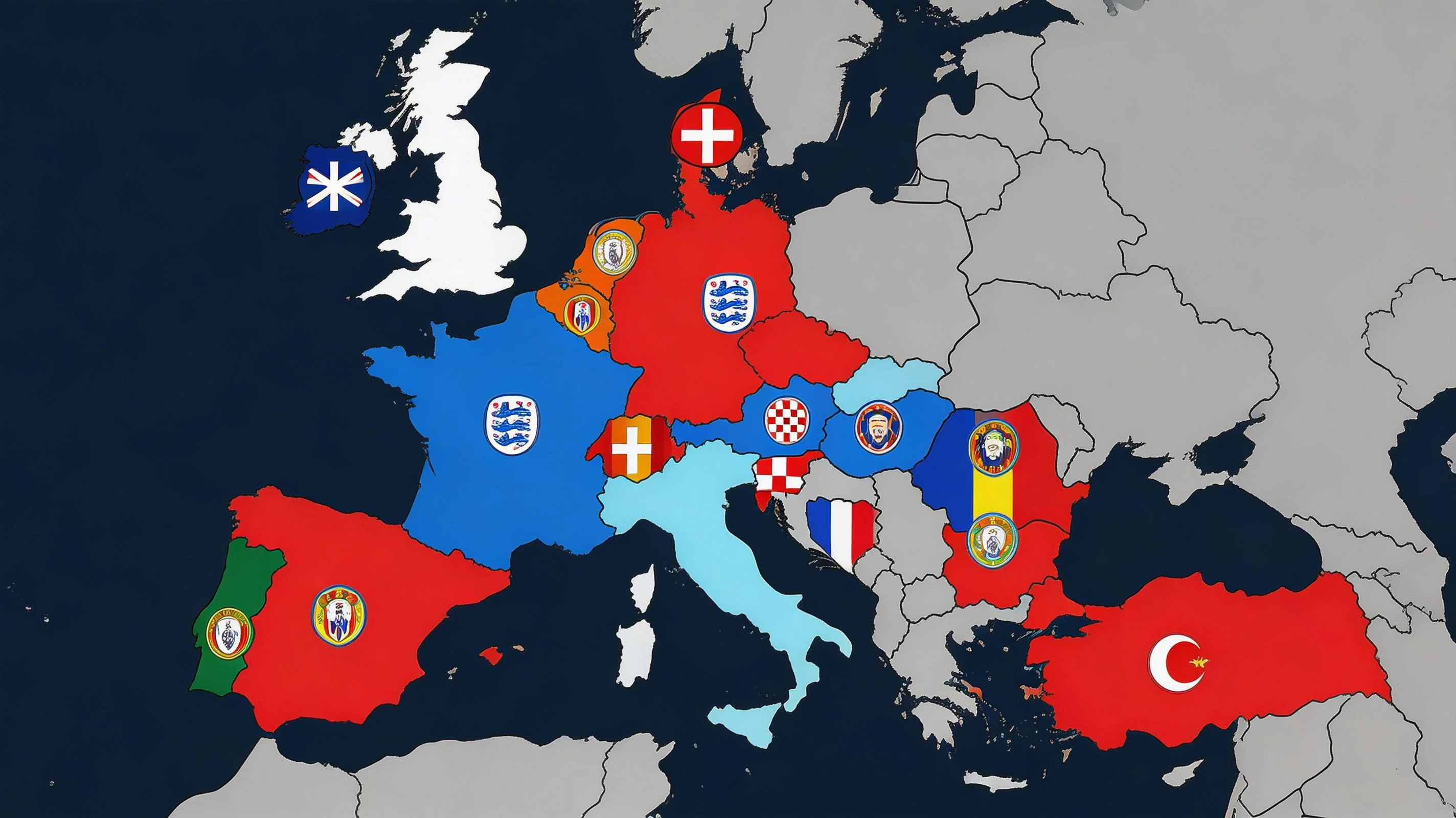
UEFA’s sixteen slots make Europe the most represented confederation at every World Cup – and the qualification system ensures that representation reflects genuine competitive depth. Fifty-five member nations compete for those slots through group stages, playoffs, and Nations League pathways. The survivors are hardened by competition that dwarfs any other continental process.
France leads European entries despite what some observers called disappointing Euro 2024 performance. Didier Deschamps’ pragmatic approach – defensive solidity, rapid transitions, individual brilliance from Mbappe and Griezmann – produces results regardless of aesthetic criticism. France has reached two consecutive World Cup finals (2018 champion, 2022 runner-up), a record that supports their +500 odds positioning.
England’s perpetual “this is our year” narrative continues into 2026. The Three Lions possess generational talent – Jude Bellingham has become one of football’s elite players at just 22 – yet tournament success remains elusive since 1966. Gareth Southgate (or his successor, depending on FA decisions) must solve the same problem that has plagued England for decades: converting individual quality into collective trophy winning. At +550, England prices as their fans would expect despite a trophy case that suggests otherwise.
Germany’s post-Euro 2024 rebuild produced promising results. Hosting the European Championship catalyzed national football investment that has begun yielding returns. Jamal Musiala and Florian Wirtz represent the future, while Toni Kroos’ international retirement removed a crucial midfield presence. Germany at +800 prices reflect both their historical pedigree and recent disappointments (group stage exits in 2018 and 2022).
Spain arrives as Euro 2024 champions with the youngest tournament-winning squad in European Championship history. Lamine Yamal (17), Pedri (22), and Gavi (21) form a midfield core that will dominate international football for a decade. Spain at +900 may represent value if their Euro triumph signals sustained excellence rather than one-off peak performance.
Portugal, Netherlands, Belgium, and Switzerland complete Europe’s top tier. Each brings distinct profile: Portugal’s Cristiano Ronaldo farewell tour versus their talented young generation; Netherlands’ attacking pedigree tempered by defensive vulnerabilities; Belgium’s golden generation aging without World Cup success; Switzerland’s tactical discipline and upset potential. Italy’s shock playoff elimination against Bosnia and Herzegovina creates the tournament’s most notable European absence.
Emerging European nations add intrigue. Bosnia and Herzegovina’s playoff victory over Italy announced their presence on the global stage. Austria’s Red Bull-influenced tactical approach has transformed them from perennial underachievers to genuine knockout round threats. Scotland’s qualification – their second consecutive World Cup appearance after missing 1998-2018 – reflects improved Scottish football infrastructure.
Ukraine’s qualification carries significance beyond football. Competing through wartime conditions, Ukrainian football has maintained competitive viability while players serve dual purposes as athletes and national symbols. Their presence at 2026 demonstrates resilience that transcends sport, though their competitive ceiling depends heavily on player availability and psychological burden management. Croatia continues producing elite talent despite a population under four million – their sustained excellence since 1998 (semifinals 2018, third place 2022) suggests structural advantages in player development that larger nations struggle to replicate.
The Scandinavian representation features Denmark and Sweden alongside Norway. Denmark’s Euro 2020 run to the semifinals – achieved while Christian Eriksen recovered from his on-field cardiac arrest – demonstrated tactical sophistication that translates to World Cup knockout scenarios. Sweden’s more physical approach contrasts with Danish technical play, though both nations compete in Group F where knockout round advancement is the realistic objective. Norway’s return to major tournament football after missing every World Cup since 1998 features Erling Haaland, whose club form with Manchester City positions him as a potential Golden Boot contender if Norway advances deep enough to generate sufficient scoring opportunities.
North and Central America – CONCACAF
The hex is dead. CONCACAF qualification for 2026 featured a new format that expanded opportunities while eliminating the exhausting eight-team round-robin that previously determined qualification. With three automatic host nation berths (USA, Mexico, Canada), remaining slots went to nations forced to navigate a restructured pathway combining preliminary rounds, Nations League integration, and playoff brackets.
Jamaica earned direct qualification for the first time since 1998. The Reggae Boyz feature European-based talent including Michail Antonio (West Ham striker), Leon Bailey (Aston Villa), and Bobby Decordova-Reid (Fulham). Whether this represents a one-cycle peak or sustainable CONCACAF presence remains uncertain, but Jamaica enters 2026 as legitimate Group dark horses. Their +15000 tournament odds mask genuine upset potential in early matches.
Costa Rica’s golden generation has faded, but tactical discipline kept them competitive through qualification. Keylor Navas’ international retirement removes their 2014 World Cup hero, though Oscar Duarte and other veterans provide leadership for a transitional squad. Costa Rica’s ceiling is likely group stage advancement; their floor is three losses and immediate elimination. Honduras qualified through playoff routes, representing Central American football outside Costa Rica and Panama.
Panama’s appearance in Russia 2018 seemed like a one-off, but their presence in qualification conversations since suggests sustainable development. Whether they secure a 2026 berth depends on playoff results against intercontinental opponents. The same uncertainty applies to several CONCACAF nations competing for final slots through expanded playoff pathways.
Caribbean representation expands under the new format. Nations like Curaçao – drawn into Group E alongside Germany, Ivory Coast, and Ecuador – enter their first World Cup as qualified participants rather than tournament hosts or invitees. These debutants carry enormous pride of participation but face significant competitive gaps against established football nations. Betting on Caribbean minnows to achieve anything beyond a single match result seems optimistic.
Asian Qualifiers – AFC
Asia’s expanded slot allocation (8.5 berths, up from 4.5) reflects FIFA’s recognition of the continent’s improved competitive depth. The 2022 World Cup demonstrated Asian quality when Japan defeated Germany and Spain in group play, while Saudi Arabia’s shock Argentina upset became the tournament’s signature shock. The 2026 field includes Asian nations capable of similar surprises.
Japan has transformed from World Cup dark horse to legitimate contender. Their European-based stars – Takumi Minamino, Takehiro Tomiyasu, Wataru Endo, and emerging talents at top clubs – provide squad quality that approaches European second-tier nations. Japan at +6000 may undervalue a side that has defeated Germany and Spain in competitive matches. Their Group F draw (Netherlands, Sweden, Tunisia) presents challenges but no insurmountable opponents.
South Korea’s World Cup experience (11 consecutive appearances) provides institutional knowledge few Asian nations match. Son Heung-min remains their talisman, though his age (33 by tournament time) raises questions about 90-minute dominance. South Korea’s Group A placement (Mexico, South Africa, Czechia) offers realistic knockout round qualification expectations.
Saudi Arabia arrives with 2022’s greatest upset on their resume. Defeating Argentina in group play – Messi’s Argentina, eventual tournament champions – demonstrated psychological fortitude that money cannot buy. Whether that performance reflects their true level or represented peak variance determines their 2026 trajectory. Drawn into Group H alongside Spain, Cape Verde, and Uruguay, Saudi Arabia faces another elite opponent in their opener.
Iran, Qatar, Australia, and Uzbekistan complete Asia’s direct qualifiers. Iran’s political isolation from international football creates roster uncertainty depending on FIFA decisions closer to tournament time. Qatar transitions from 2022 hosts to 2026 guests, their Asian Cup 2023 title suggesting the program has substance beyond World Cup preparation. Australia’s path through Asian qualification has become routine; their Group D placement versus USA, Paraguay, and Turkey presents familiar competitive dynamics. Uzbekistan earns their first World Cup appearance through expanded allocation, representing Central Asian football’s highest achievement.
African Qualifiers – CAF
Nine African nations qualified for 2026, the continent’s largest World Cup representation ever. The expansion acknowledges what football observers have recognized for decades: African talent populates European leagues at every level, yet CAF’s World Cup allocation historically underrepresented continental strength. The 2026 field corrects this imbalance while introducing nations without World Cup experience.
Morocco’s 2022 semifinal run announced African football’s arrival at the highest level. Walid Regragui’s tactical organization – defensive solidity, rapid transitions, set piece mastery – defeated Belgium, Spain, and Portugal before falling to eventual champions Argentina. Morocco enters 2026 at +3500, respectable odds that still may undervalue a side capable of repeating 2022’s surprise. Their Group C placement (Brazil, Haiti, Scotland) requires defeating Brazil or finishing as a competitive second/third.
Senegal qualified as Africa Cup of Nations champions despite Sadio Mane’s international retirement. Their generation of Liverpool, Chelsea, and Bayern Munich players provides squad quality matching European second-tier nations. Drawn into Group I alongside France, Norway, and Iraq, Senegal faces the tournament’s most challenging group for African sides.
Nigeria’s qualification ended years of underperformance. Victor Osimhen (Napoli striker) leads an attacking unit featuring players at Chelsea, Brighton, and top European clubs. Nigeria’s blend of athleticism, technical quality, and tournament experience positions them for potential knockout round advancement if their group draw proves favorable.
Ivory Coast won AFCON 2024 on home soil, and their domestic league development produces players who can compete internationally. Sebastien Haller, Nicolas Pepe, and Franck Kessie provide European experience around a core of locally developed talent. Group E placement (Germany, Ecuador, Curaçao) requires defeating Ecuador and Curaçao while avoiding embarrassment against Germany.
Egypt, Ghana, South Africa, Algeria, and Cape Verde round out African representation. Egypt’s Mohamed Salah – 34 by tournament time – plays what may be his final World Cup. Ghana’s group stage exit in 2022 (losses to Portugal and Uruguay) sets low expectations, though squad talent suggests improvement. South Africa’s opening match assignment (versus Mexico at Azteca) creates immediate pressure on a team without World Cup experience since 2010’s home tournament.
Oceania – OFC
New Zealand’s direct qualification represents Oceania’s first guaranteed World Cup berth in tournament history. Previous OFC champions required intercontinental playoffs against stronger confederations, producing heartbreak (Peru defeat in 2018) and occasional triumph (qualification in 2010). The expanded 48-team format finally provides Oceania automatic representation.
The All Whites enter 2026 with limited expectations but significant national pride. Chris Wood (Nottingham Forest striker) leads a squad featuring several UK-based professionals alongside domestic league players. Their group assignment determines realistic objectives – avoiding elite opponents might enable a single point, while a group of death produces three swift defeats.
New Zealand at +100000 (implied 0.1% probability) prices appropriately for a nation whose qualification represents maximum achievement. Betting on New Zealand to win the World Cup constitutes lottery ticket speculation. Betting on New Zealand to win a single match or draw a specific fixture offers potentially viable propositions depending on opponent and circumstances.
Teams by Betting Tier
Organizing 48 teams into betting tiers clarifies value assessment across different probability levels. The tier structure reflects sportsbook consensus pricing while highlighting where my analysis diverges from market expectations. For current lines across all markets, check our live World Cup 2026 odds page.
The elite tier (sub-+700 odds) contains Argentina, France, England, Brazil, Germany, and Spain. These six nations account for approximately 75% of implied probability to win the tournament. Historical data supports this concentration – every World Cup winner since 1950 came from this tier equivalent of their era. Betting within the elite tier requires identifying which nation offers best relative value, not whether an elite nation wins.
The contender tier (+700 to +2000) includes Portugal, Netherlands, Belgium, Croatia, and the United States. These nations possess the squad quality to reach semifinals and potentially upset elite opponents in knockout rounds. Croatia’s 2018 final appearance and 2022 semifinal run demonstrate contender-tier ceiling. USA’s host nation advantage elevates them into this tier despite squad quality that might otherwise price them lower.
Dark horse territory (+2000 to +10000) features Morocco, Denmark, Colombia, Japan, Mexico, Switzerland, and Uruguay. Each brings specific strengths: Morocco’s 2022 momentum; Denmark’s tactical organization; Colombia’s attacking talent; Japan’s major tournament upset history; Mexico’s home match advantage; Switzerland’s consistency; Uruguay’s South American pedigree. Backing dark horses requires accepting low hit rates offset by significant payouts when surprises occur.
The longshot tier (+10000 and beyond) encompasses remaining participants including Canada (+15000), South Korea (+8000), Senegal (+10000), and all tournament debutants. These teams can achieve individual match upsets without realistic championship expectations. Betting on longshots to win the tournament represents hope over analysis; betting on longshots to win their group, advance from the group stage, or achieve specific match results offers tractable value propositions.
First-Time World Cup Participants
Tournament expansion creates World Cup debutants that would have been eliminated in previous qualification formats. These nations carry immense pressure – representing their country on football’s biggest stage for the first time – while facing opponents with decades of World Cup institutional knowledge. The dynamic creates both betting opportunities and traps.
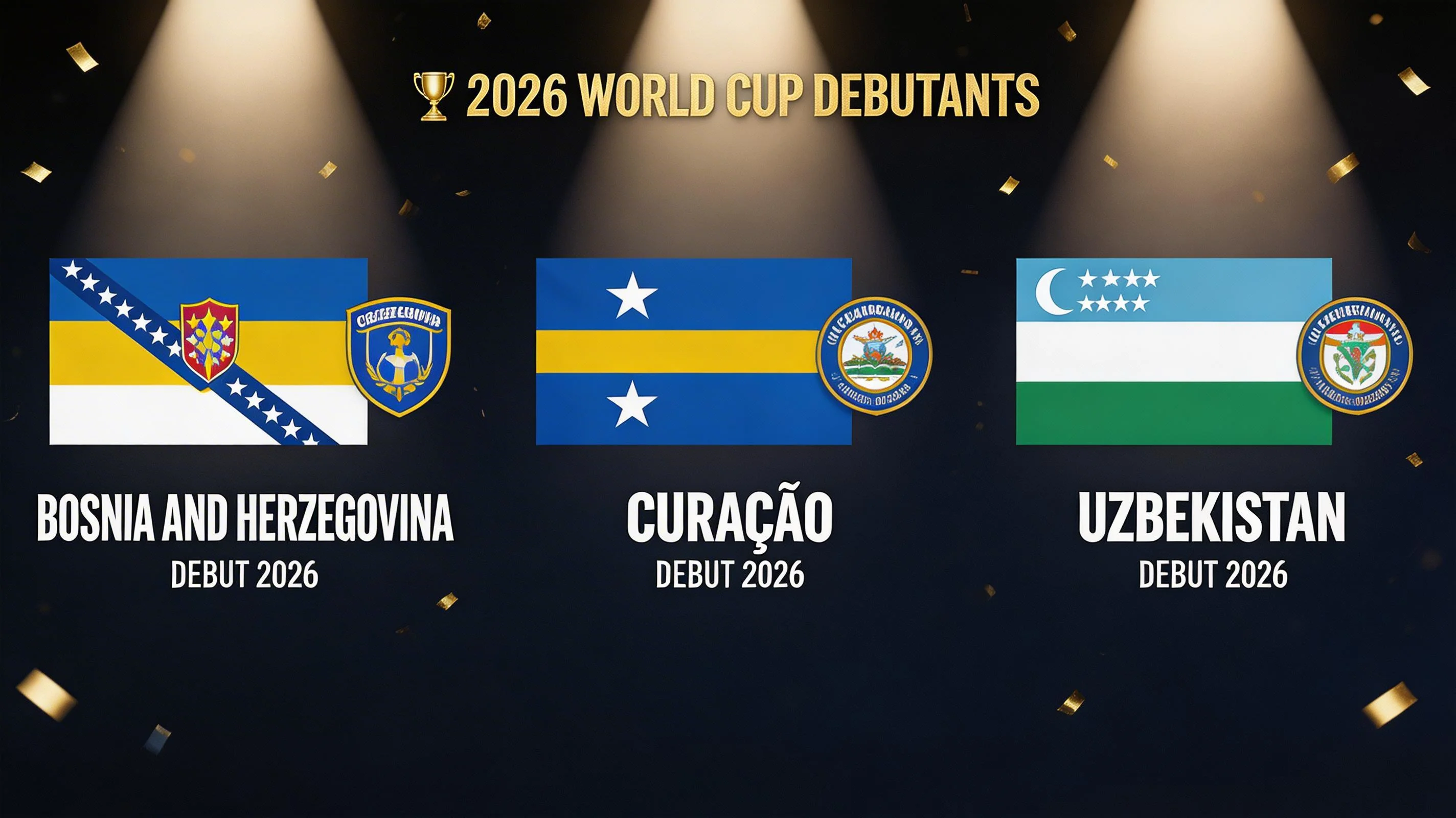
Bosnia and Herzegovina’s qualification method – defeating Italy in a two-leg playoff – announced their presence emphatically. This is not a nation sneaking through expanded allocation but one that earned their berth by eliminating four-time World Cup champions. Their Edin Dzeko-led squad features experienced professionals from top European leagues. Bosnia enters Group B alongside Canada, Switzerland, and Qatar with realistic advancement expectations.
Curaçao represents Caribbean football’s expansion into World Cup territory. The Dutch territory (population 150,000) qualified through CONCACAF pathways that reward consistency over peak performance. Their Group E draw (Germany, Ivory Coast, Ecuador) virtually guarantees three defeats, but individual match moments can create lasting memories. Betting on Curaçao to score against Germany offers better value propositions than backing their tournament advancement.
Uzbekistan’s Central Asian football program has developed methodically since independence. Their AFC qualification represented national achievement despite limited global football profile. Drawn against competitive opponents, Uzbekistan’s realistic objective is avoiding humiliation while gaining tournament experience for future cycles.
Haiti’s CONCACAF qualification creates Caribbean representation distinct from Curaçao’s Dutch heritage. Haiti’s football history includes 1974 World Cup participation when they faced Argentina and Italy, but fifty years separates that appearance from 2026. Their Group C placement (Brazil, Morocco, Scotland) features one winnable match (Scotland) alongside two opponents representing different tiers of global football. A point against Scotland would represent significant achievement.
Betting on debutants requires understanding what constitutes success. Tournament victory is impossible. Group advancement is unlikely. A single match win or draw represents maximum realistic achievement for most first-time participants. Props markets – number of goals scored, specific match totals, player performance bets – offer debutant betting opportunities where expectations align with realistic outcomes.
The Most Diverse World Cup Field
The 48-team World Cup 2026 field represents global football more accurately than any previous tournament. Nations from every inhabited continent, first-time qualifiers alongside perennial contenders, host nation advantages distributed across three countries – the competition structure rewards adaptability over raw talent in ways previous formats did not.
For Canadian bettors, this diversity creates strategic considerations beyond simple “who wins the tournament” futures. Group B dynamics place Canada against beatable opponents (Qatar, Bosnia and Herzegovina) alongside a Swiss side that has historically matched Canadian expectations at major tournaments. The path from group qualification to knockout round survival is clearer than at any previous World Cup Canada has attended.
Understanding all 48 participants – their qualification paths, squad compositions, tactical identities, and betting market positioning – provides foundation for intelligent World Cup wagering. Individual team pages on this site offer deeper analysis of specific nations. The framework established here allows you to evaluate any matchup, any futures bet, any prop market through the lens of who these teams actually are rather than who casual perception assumes them to be.
